Sanno Shrine and the One-Legged Torii
Sanno Jinja · Ippon-bashira Torii · 山王神社
overview
What this place is
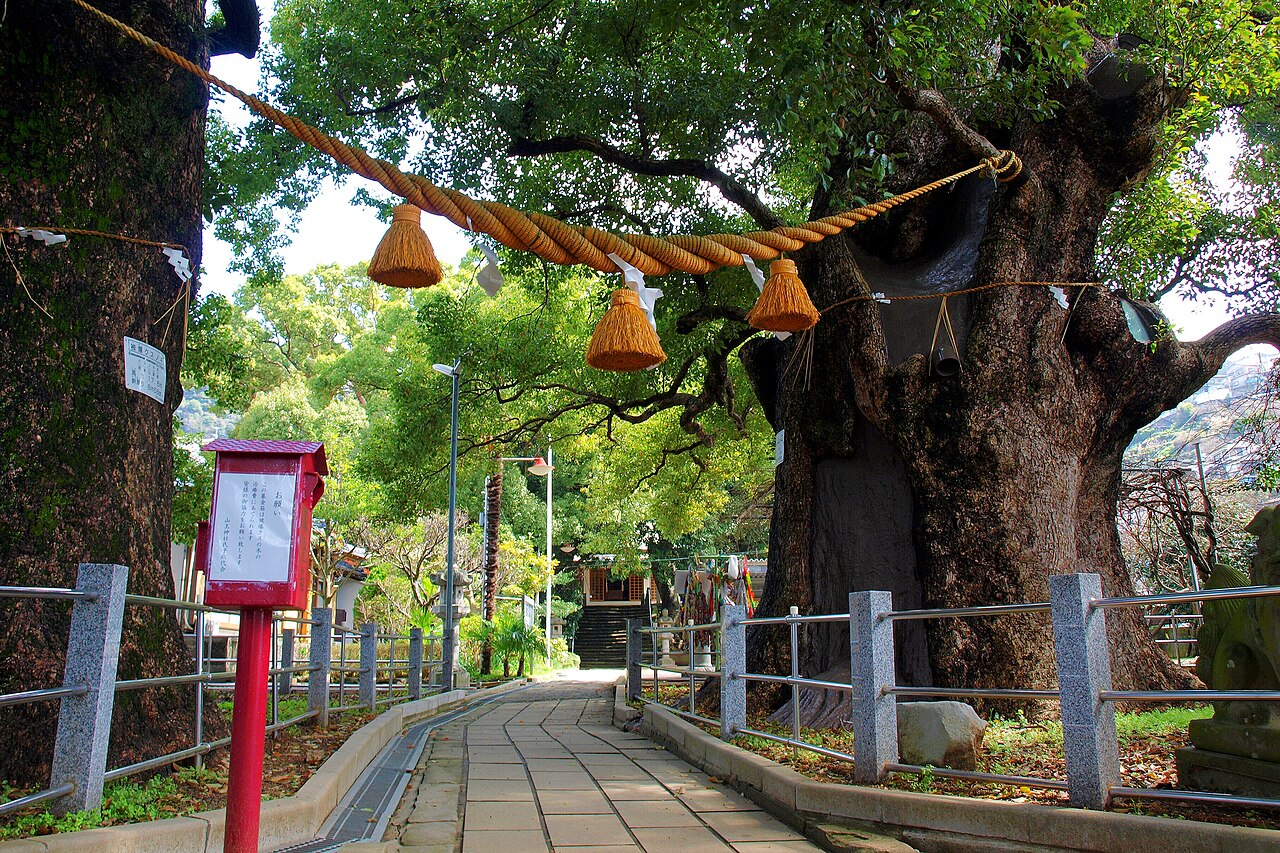
Sanno Shrine in Nagasaki relates a founding of the Sanno Gongen hall in 1638 and its later joining with the Urakami Kotai Jingu. The atomic bomb of 9 August 1945 brought down the halls and left the second torii standing on one leg; the halls were rebuilt in 1950. The city has counted nineteen surviving camphor trees in the grounds and asks that the quiet of the place be kept.
- A torii left standing on one leg by the bomb of 1945
- Halls rebuilt in 1950
- Nineteen surviving camphor trees counted by the city
- A place where quiet is asked for
plan your visit
Visit facts for Sanno Shrine and the One-Legged Torii
- Access
- About 8 minutes on foot from the Daigaku Byoin tram stop, or about 10 minutes from JR Urakami Station. Walk quietly through the residential streets.
- Nearest station
- Daigaku Byoin stop (Nagasaki Electric Tramway)
- Hours
- Ordinary worship and looking at what is opened of the bombed remains are the standard here. Prayers need contact in advance by the shrine’s own notice; ask about hours beforehand.
- Fees
- Ordinary worship and looking at what is opened are by offering. Prayers and amulets are separate and by choice; ask the shrine about cost in advance.
- Parking
- Available in Japanese only: 長崎市は駐車場なしと案内しています。公共交通を利用し、住宅街で路上駐車しません。
- Typical visit
- About 40 minutes (Unmeguri's estimate, not an official figure)
- Facts checked
- 2026-10-22
background
Enshrined deities
Amaterasu Omikami · Toyoukehime-no-Kami · Oyamakui-no-Kami · Omononushi · Izanagi-no-Kami · Takamimusubi-no-Kami
The shrine sets out prayers for the peace of the district and its parishioners, for the passages of life, for warding off misfortune and for household safety; the survival of the torii and the trees is history, not something transferred to anyone’s health or fortune.
etiquette
Visiting with respect
- There are slopes and level changes up to the grounds.
- You need not walk the torii, the halls and the great camphor all in one visit; one opened point, quietly, is enough.
- The city asks that the quiet of the place be kept.
- Do not touch the torii or the trees.
- Do not turn the survival of the bombed remains into anyone’s health or luck.
- Hours, fees and reception can change; check the official information before you go.
faq
Common questions
How do I get to Sanno Shrine and the One-Legged Torii?
About 8 minutes on foot from the Daigaku Byoin tram stop, or about 10 minutes from JR Urakami Station. Walk quietly through the residential streets. Nearest station: Daigaku Byoin stop (Nagasaki Electric Tramway).
How much does it cost to visit Sanno Shrine and the One-Legged Torii?
Ordinary worship and looking at what is opened are by offering. Prayers and amulets are separate and by choice; ask the shrine about cost in advance.
What are the opening hours of Sanno Shrine and the One-Legged Torii?
Ordinary worship and looking at what is opened of the bombed remains are the standard here. Prayers need contact in advance by the shrine’s own notice; ask about hours beforehand.
Is there parking at Sanno Shrine and the One-Legged Torii?
Parking information for Sanno Shrine and the One-Legged Torii is available in Japanese only: 長崎市は駐車場なしと案内しています。公共交通を利用し、住宅街で路上駐車しません。
How long should I spend at Sanno Shrine and the One-Legged Torii?
Unmeguri's estimate for a visit is about 40 minutes. This is an editorial estimate, not an official figure.
What is the one-legged torii?
The second torii, left standing on one leg by the atomic bomb of 9 August 1945.
When were the halls rebuilt?
In 1950, after they were brought down in 1945.
What are the camphor trees?
The city has counted nineteen surviving camphor trees in the grounds.
sources
Sources and checked dates
- 神社の由緒・歴史|山王神社(opens in a new tab)
- 山王神社 公式サイト(opens in a new tab)
- 参拝のご案内|山王神社(opens in a new tab)
- 御祈願・お守り|山王神社(opens in a new tab)
- 山王神社のお守り(opens in a new tab)
- 一本柱鳥居|長崎市公式観光(opens in a new tab)
- 山王神社クスノキ群|長崎市(opens in a new tab)
- 山王神社の大クス|長崎市文化財課(opens in a new tab)
Facts last checked on 2026-10-22. Sources are in Japanese. Unmeguri separates officially documented facts from its own editorial reading, and does not promise that any wish or outcome will be realized.