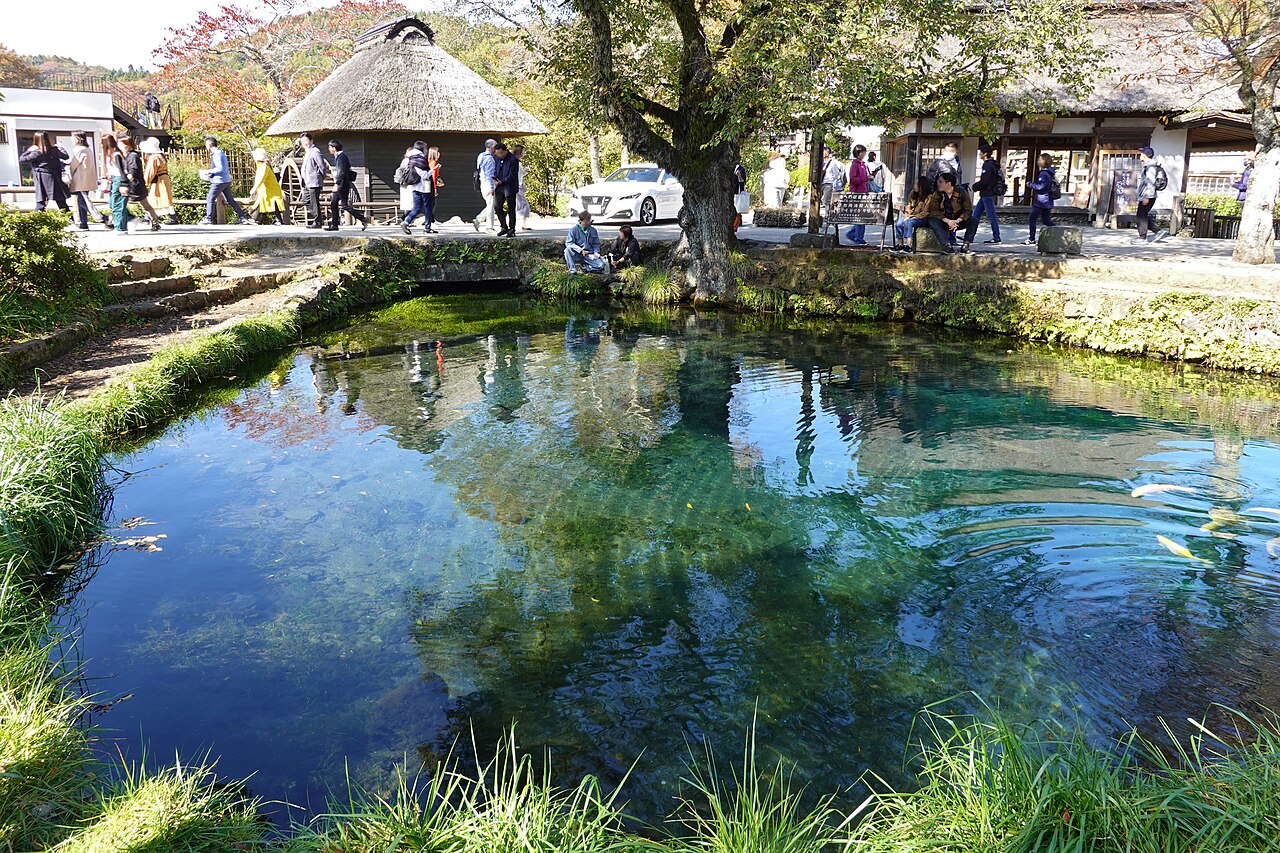
Oshino Hakkai
Oshino Eight Ponds · Oshino-hakkai · 忍野八海
overview
What this place is
Oshino Hakkai is a group of eight spring-fed ponds in Oshino, Yamanashi Prefecture, where rain and snow from Mt. Fuji rise again after decades underground. The ponds became a place of pilgrimage in the late Edo period, when those about to climb Mt. Fuji purified themselves in their water. They were designated a national natural monument in 1934 and became part of the World Heritage site Fujisan in 2013.
- Wakuike, the fifth of the eight ponds, about 152 square metres and 4 metres deep
- Water that stays at about 12 to 13 degrees through the year, with water plants moving in the current
- Stone monuments at each pond bearing its name, its place in the order of purification, a dragon king and a poem
- Deguchiike, the first of the eight, set apart from the others, and Sokonukeike inside a paid museum
plan your visit
Visit facts for Oshino Hakkai
- Access
- About 155 minutes from Tokyo Station via Shinjuku by Chuo highway bus to Oshino Hakkai; the village gives about 140 minutes from Shinjuku. By rail, change at Otsuki and Fujisan Station for a local bus.
- Nearest station
- Oshino Hakkai / Oshino Hakkai (Ohashi) / Oshino Hakkai Iriguchi bus stops
- Hours
- There is no entrance or fixed opening time for the ponds as a whole, but there are few street lights, so walking after dark is not advised. Sokonukeike is inside the Hannokibayashi museum, listed by the prefecture as open from 9:00 to 17:00.
- Fees
- Walking among the outdoor ponds is free. Sokonukeike is inside the paid Hannokibayashi museum; check its current admission and closing days before you visit. Parking is at private car parks nearby.
- Parking
- Available in Japanese only: 周辺には複数の民営有料駐車場があり、料金・支払方法・営業時間は各駐車場で異なります。繁忙期は中心部へ入る細い道が渋滞するため、観光協会は中心から少し離れた駐車場を使って徒歩10分以内を歩く方法を案内しています。駐車した場所の名称を保存してから散策します。
- Typical visit
- About 90 minutes (Unmeguri's estimate, not an official figure)
- Facts checked
- 2026-10-22
background
Central feature
Spring water fed by rain and snow from Mt. Fuji · Eight ponds designated a national natural monument · The stone monuments of the eight sacred ponds
The eight ponds of Oshino Hakkai are fed by rain and snow from Mt. Fuji that passes for decades through porous volcanic rock before rising again. They were known as the eight sacred ponds at the root of Mt. Fuji, where those about to climb performed a water purification. Rather than re-enacting that rite, read the names and the monuments and take care of the water.
etiquette
Visiting with respect
- Do not throw rubbish or coins into the ponds; the village has said that coins burden the water, the landscape and the life in it, and asks that support go to the conservation boxes instead.
- Do not enter the water or put your hands or a container into it in imitation of the old purification; use only facilities marked as drinkable.
- The eight are Deguchiike, Okamaike, Sokonukeike, Choshiike, Wakuike, Nigoriike, Kagamiike and Shobuike; other ponds on the walking map are not among them.
- Wakuike faces a busy street with a water mill and shops opposite; do not block the way or the shops for a photograph, and stay outside the railings.
- Not every pond can be reached on the same terms with a wheelchair: Okamaike has steps and Shobuike a rough path, while the tourist office lends wheelchairs free of charge if booked ahead.
- Hours, fees and reception can change; check the official information before you go.
faq
Common questions
How do I get to Oshino Hakkai?
About 155 minutes from Tokyo Station via Shinjuku by Chuo highway bus to Oshino Hakkai; the village gives about 140 minutes from Shinjuku. By rail, change at Otsuki and Fujisan Station for a local bus. Nearest station: Oshino Hakkai / Oshino Hakkai (Ohashi) / Oshino Hakkai Iriguchi bus stops.
How much does it cost to visit Oshino Hakkai?
Walking among the outdoor ponds is free. Sokonukeike is inside the paid Hannokibayashi museum; check its current admission and closing days before you visit. Parking is at private car parks nearby.
What are the opening hours of Oshino Hakkai?
There is no entrance or fixed opening time for the ponds as a whole, but there are few street lights, so walking after dark is not advised. Sokonukeike is inside the Hannokibayashi museum, listed by the prefecture as open from 9:00 to 17:00.
Is there parking at Oshino Hakkai?
Parking information for Oshino Hakkai is available in Japanese only: 周辺には複数の民営有料駐車場があり、料金・支払方法・営業時間は各駐車場で異なります。繁忙期は中心部へ入る細い道が渋滞するため、観光協会は中心から少し離れた駐車場を使って徒歩10分以内を歩く方法を案内しています。駐車した場所の名称を保存してから散策します。
How long should I spend at Oshino Hakkai?
Unmeguri's estimate for a visit is about 90 minutes. This is an editorial estimate, not an official figure.
Can I drink the water?
Not from the ponds. Use only a facility marked as drinkable, and follow the current guidance on site.
sources
Sources and checked dates
- 構成資産番号17 五番霊場 湧池|忍野村(opens in a new tab)
- 忍野八海|富士の国やまなし観光ネット(opens in a new tab)
- 忍野八海 国指定天然記念物|山梨県文化財ガイド(opens in a new tab)
- 忍野八海|富士山世界遺産センター ふじガイド(opens in a new tab)
- 富士山世界遺産構成資産一覧|富士の国やまなし観光ネット(opens in a new tab)
- Oshino Hakkai|Official Travel Guide Yamanashi(opens in a new tab)
- 忍野八海歩きマップ|忍野村観光協会(opens in a new tab)
- よくある質問|忍野村観光協会(opens in a new tab)
- 忍野八海へのアクセス|忍野村(opens in a new tab)
- 駐車場|忍野村観光協会(opens in a new tab)
- 忍野八海の環境保護に関するお願い|忍野村(opens in a new tab)
- 環境保全協力箱プロジェクト|忍野村(opens in a new tab)
Facts last checked on 2026-10-22. Sources are in Japanese. Unmeguri separates officially documented facts from its own editorial reading, and does not promise that any wish or outcome will be realized.