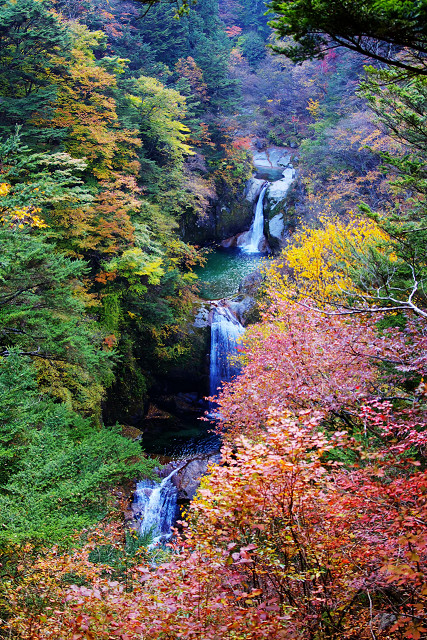
Ojiragawa Valley
Ojiragawa Keikoku · Ojira River Valley · 尾白川渓谷
overview
What this place is
The Ojiragawa valley lies in Hokuto, Yamanashi Prefecture, where the Ojira river runs down from Mt. Kaikoma in the Southern Alps over white granite. The river was chosen in 1985 as one of Japan’s hundred fine waters, and Chiku Komagatake Shrine at the trailhead was the base for the mountain faith of Kaikoma. Sengafuchi pool is about 15 minutes from the car park; the three-tiered Shinda falls lie beyond it on a mountain route of about three hours.
- Sengafuchi, a pool about 15 minutes from the car park, reached over a suspension bridge
- The Shinda falls, which drop in three tiers, seen from a viewpoint on the loop route
- White granite and the green of the pools along a river of the hundred fine waters
- Chiku Komagatake Shrine at the trailhead, about 5 minutes from the car park
plan your visit
Visit facts for Ojiragawa Valley
- Access
- About 165 minutes from Tokyo Station via Shinjuku to JR Kobuchizawa Station, then about 30 minutes by taxi to the Ojiragawa valley car park. Public transport is sparse and the city recommends a taxi from Kobuchizawa, Nagasaka or Hinoharu stations.
- Nearest station
- Ojiragawa valley car park / JR Kobuchizawa, Nagasaka and Hinoharu stations
- Hours
- There are no fixed opening hours. Beyond Sengafuchi the valley route is a mountain path, usually closed from mid-December to mid-April. Rain, high water, rockfall, fallen trees and works change the conditions, so check the city trekking information and the signs on the day.
- Fees
- Walking in the valley and ordinary worship at Chiku Komagatake Shrine are free. The car park holds about 100 cars and about 5 coaches. Taxis, guides, insurance and equipment are separate.
- Parking
- Available in Japanese only: 尾白川渓谷駐車場は普通車約100台・大型バス約5台で、常設トイレがあります。カーナビでは駐車場内の売店「おじろ」を目印にするよう公式案内があります。紅葉期や夏季は混雑を見込み、路上駐車や登山口前での乗降待ちはしません。
- Typical visit
- About 180 minutes (Unmeguri's estimate, not an official figure)
- Facts checked
- 2026-10-22
background
Central feature
The Ojira river, rising on Mt. Kaikoma · The three-tiered Shinda falls · Chiku Komagatake Shrine and the legend of the white-tailed horse
The Ojira river rises on Mt. Kaikoma in the Southern Alps and runs through granite country as one of Japan’s hundred fine waters. Tradition holds that a horse with a white tail lived in these mountains and that its power made right and wrong plain, which is said to have given the river its name. Chiku Komagatake Shrine at the trailhead was the base for the climbing faith of Kaikoma.
etiquette
Visiting with respect
- Do not swim or jump into Sengafuchi: the current is complex and the water is very cold.
- Beyond Sengafuchi the way is a mountain path; do not go on to the falls in everyday clothes or slippery shoes, or with anyone unsure of the climb.
- Take the valley route out and the ridge route back, as signed, and do not walk against the flow on narrow sections; put your phone away and keep both hands free on ladders, chains and crossings.
- No open fires, barbecues or fireworks, and carry all rubbish and leftovers home with you.
- The city has reported bear sightings around the valley; check the latest information, make your presence heard, and turn back if you find any sign of one.
- Being named among the hundred fine waters is not an assurance that the river can be drunk from; bring your own water.
- Hours, fees and reception can change; check the official information before you go.
faq
Common questions
How do I get to Ojiragawa Valley?
About 165 minutes from Tokyo Station via Shinjuku to JR Kobuchizawa Station, then about 30 minutes by taxi to the Ojiragawa valley car park. Public transport is sparse and the city recommends a taxi from Kobuchizawa, Nagasaka or Hinoharu stations. Nearest station: Ojiragawa valley car park / JR Kobuchizawa, Nagasaka and Hinoharu stations.
How much does it cost to visit Ojiragawa Valley?
Walking in the valley and ordinary worship at Chiku Komagatake Shrine are free. The car park holds about 100 cars and about 5 coaches. Taxis, guides, insurance and equipment are separate.
What are the opening hours of Ojiragawa Valley?
There are no fixed opening hours. Beyond Sengafuchi the valley route is a mountain path, usually closed from mid-December to mid-April. Rain, high water, rockfall, fallen trees and works change the conditions, so check the city trekking information and the signs on the day.
Is there parking at Ojiragawa Valley?
Parking information for Ojiragawa Valley is available in Japanese only: 尾白川渓谷駐車場は普通車約100台・大型バス約5台で、常設トイレがあります。カーナビでは駐車場内の売店「おじろ」を目印にするよう公式案内があります。紅葉期や夏季は混雑を見込み、路上駐車や登山口前での乗降待ちはしません。
How long should I spend at Ojiragawa Valley?
Unmeguri's estimate for a visit is about 180 minutes. This is an editorial estimate, not an official figure.
Does the Ojiragawa valley charge admission?
No. Walking in the valley and ordinary worship at Chiku Komagatake Shrine are free. The car park holds about 100 cars and about 5 coaches.
How do I get to the Ojiragawa valley?
About 165 minutes from Tokyo Station via Shinjuku to JR Kobuchizawa Station, then about 30 minutes by taxi. Public transport is sparse, so a taxi is recommended.
How far can I go without mountain gear?
Chiku Komagatake Shrine is about 5 minutes from the car park and Sengafuchi about 15 minutes. Beyond Sengafuchi the route is a graded mountain path with ladders, chains and crossings.
When is the valley route closed?
The route beyond Sengafuchi is usually closed from mid-December to mid-April, and may also close after heavy rain or works. Check the Hokuto city trekking information on the day.
sources
Sources and checked dates
- 尾白川渓谷 登山コースガイド|北杜市(opens in a new tab)
- 尾白川渓谷(千ヶ淵)の利用について|北杜市(opens in a new tab)
- 登山・トレッキング情報|北杜市(opens in a new tab)
- 尾白川渓谷|北杜市観光協会(opens in a new tab)
- 尾白川渓谷|富士の国やまなし観光ネット(opens in a new tab)
- 白州・尾白川|天に選ばれし、名水の地。山梨。(opens in a new tab)
- 南アルプスの水|山梨県(opens in a new tab)
- 日本一の名水の里 北杜市の名水百選|北杜市(opens in a new tab)
- 甲斐駒ケ岳神社|山梨の歴史を旅するサイト(opens in a new tab)
- MOUNTAIN TAXI運行案内|北杜市(opens in a new tab)
- ツキノワグマに関する情報|北杜市(opens in a new tab)
- 登山上の注意事項|山梨県警察(opens in a new tab)
Facts last checked on 2026-10-22. Sources are in Japanese. Unmeguri separates officially documented facts from its own editorial reading, and does not promise that any wish or outcome will be realized.