Amidaji Temple
Todaiji Betsuin Amidaji · Amida-ji · 東大寺別院阿弥陀寺
overview
What this place is
Amidaji in Hofu was founded in 1187 by Shunjobo Chogen as a branch establishment of Todaiji, while he was in Yamaguchi to obtain timber for the rebuilding of that temple. Its principal image is Amida Nyorai, from whom the temple takes its name, and it carries the practice of bathing and invocation that Chogen learned in China. The iron pagoda cast in 1197 became a National Treasure in 1954.
- A branch of Todaiji founded by Chogen in 1187
- An iron pagoda cast in 1197, a National Treasure since 1954
- A stone steam bath, opened for use on the first Sunday of the month
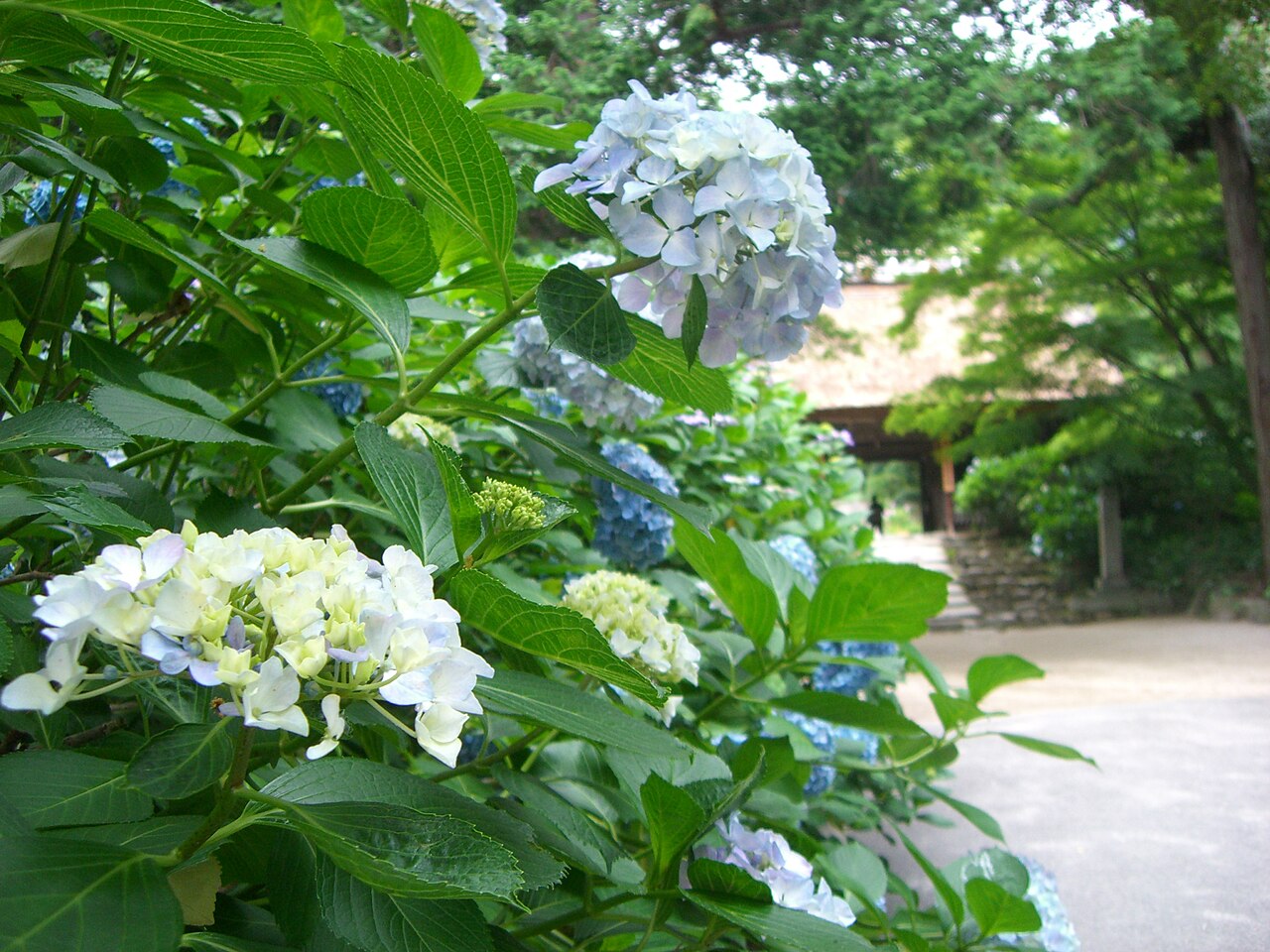
- Hydrangeas, with a festival held in June
plan your visit
Visit facts for Amidaji Temple
- Access
- About 20 minutes by bus for Amidaji from JR Hofu Station to the last stop, then about 2 minutes on foot.
- Nearest station
- Amidaji bus stop (Bocho Kotsu)
- Hours
- Check the temple for the hours of an ordinary visit on the day you go. Seeing the treasures is 9:00 to 17:00 and must be booked; the stone bath is used on the first Sunday of the month from 11:00 to 18:00, and the hydrangea festival is held in June.
- Fees
- Entry is usually free. During the hydrangea festival in June it is 200 yen for adults and free for junior-high students and younger. Seeing the treasures is 400 yen for adults, and the stone bath is 500 yen towards the firewood.
- Parking
- Available in Japanese only: 一般車約80台、大型バス10台の案内があります。6月は混雑と交通誘導に従います。
- Typical visit
- About 75 minutes (Unmeguri's estimate, not an official figure)
- Facts checked
- 2026-10-22
background
Principal image
Amida Nyorai
The Japan Tourism Agency’s material gives Amida Nyorai as the buddha from whom the temple takes its name, and relates the thinking about bathing and invocation that Chogen learned in China.
etiquette
Visiting with respect
- The grounds run up the foot of the hill with slopes, stone steps and earth underfoot; an accessible toilet is provided, but no continuous step-free route to the gate, the treasure hall and the stone bath is described.
- Reaching the grounds is a complete visit; the treasures and the stone bath are further choices with their own conditions.
- Seeing the treasures must be booked; do not plan on it without asking first.
- Do not touch the halls, the images or the iron pagoda.
- Check the bus times both ways before you go.
- Hours, fees and reception can change; check the official information before you go.
faq
Common questions
How do I get to Amidaji Temple?
About 20 minutes by bus for Amidaji from JR Hofu Station to the last stop, then about 2 minutes on foot. Nearest station: Amidaji bus stop (Bocho Kotsu).
How much does it cost to visit Amidaji Temple?
Entry is usually free. During the hydrangea festival in June it is 200 yen for adults and free for junior-high students and younger. Seeing the treasures is 400 yen for adults, and the stone bath is 500 yen towards the firewood.
What are the opening hours of Amidaji Temple?
Check the temple for the hours of an ordinary visit on the day you go. Seeing the treasures is 9:00 to 17:00 and must be booked; the stone bath is used on the first Sunday of the month from 11:00 to 18:00, and the hydrangea festival is held in June.
Is there parking at Amidaji Temple?
Parking information for Amidaji Temple is available in Japanese only: 一般車約80台、大型バス10台の案内があります。6月は混雑と交通誘導に従います。
How long should I spend at Amidaji Temple?
Unmeguri's estimate for a visit is about 75 minutes. This is an editorial estimate, not an official figure.
What is the iron pagoda?
A pagoda cast in 1197 bearing the record of the temple’s founding, designated a National Treasure in 1954.
sources
Sources and checked dates
- 東大寺別院阿弥陀寺|山口県観光公式(opens in a new tab)
- 東大寺別院阿弥陀寺の由来|観光庁 多言語解説文データベース(opens in a new tab)
- 阿弥陀寺鉄宝塔|観光庁 多言語解説文データベース(opens in a new tab)
Facts last checked on 2026-10-22. Sources are in Japanese. Unmeguri separates officially documented facts from its own editorial reading, and does not promise that any wish or outcome will be realized.