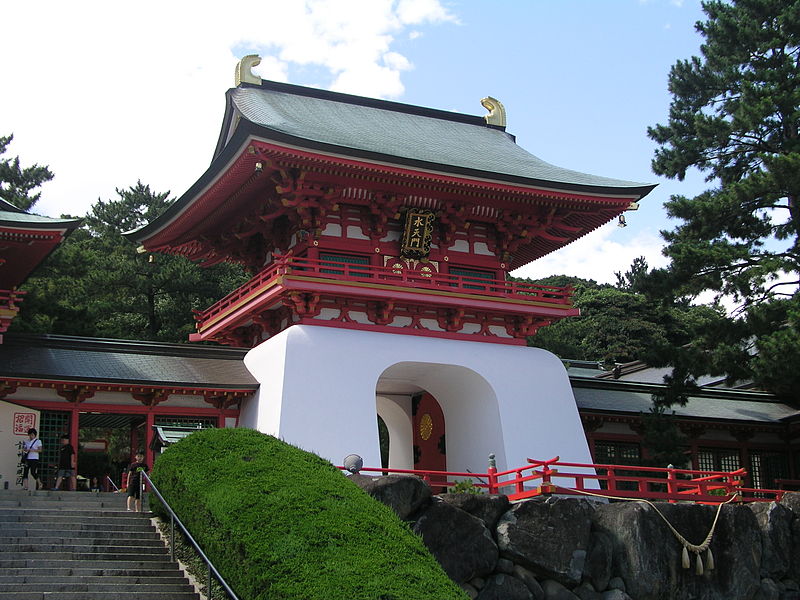
Akama Jingu Shrine
Akama Shrine · Akama Jingu · 赤間神宮
overview
What this place is
Akama Jingu in Shimonoseki enshrines the Emperor Antoku, who was eight years old when he went into the Kanmon strait after the defeat at Dan-no-ura. The shrine that stands here was formerly the temple Amidaji, told of as the setting of Lafcadio Hearn’s tale of Hoichi the Earless, and the Hoichi hall stands in the grounds. The Suitenmon gate is built in the ryugu style and is a registered cultural property.
- The Suitenmon gate in the ryugu style, a registered cultural property
- The Hoichi hall, from the tale of Hoichi the Earless
- The graves of the Heike, in the grounds
- A treasure hall open every day
plan your visit
Visit facts for Akama Jingu Shrine
- Access
- About 9 minutes by local bus from JR Shimonoseki Station to the Akama Jingu-mae stop, then a minute on foot.
- Nearest station
- Akama Jingu-mae bus stop (Sanden Kotsu)
- Hours
- The grounds can be visited freely. The treasure hall is 9:00 to 16:30, open every day, as the prefecture gives it. Festivals, the Sentei festival, the evening lighting and the treasure hall do not all follow the same hours, so check the notices on the day.
- Fees
- An ordinary visit is free. The treasure hall is 100 yen. For amulets and prayers, check on the spot.
- Parking
- Available in Japanese only: 普通車50台の案内があります。先帝祭や連休は周辺道路が混み合うため、路線バスと周辺公式駐車情報を優先します。
- Typical visit
- About 55 minutes (Unmeguri's estimate, not an official figure)
- Facts checked
- 2026-10-22
background
Enshrined deity
Emperor Antoku
The Shimonoseki tourism guide explains that the shrine enshrines the Emperor Antoku, who was eight years old when he went into the Kanmon strait after the defeat at Dan-no-ura.
etiquette
Visiting with respect
- An accessible toilet is provided; ask at the office and read the notices for a route with fewer steps between the gate, the main hall, the graves, the Hoichi hall and the treasure hall.
- The graves in the grounds are a burial place; keep your voice down and do not photograph them if asked not to.
- The tale of Hoichi belongs to the former temple here; it is a story, not an account of the shrine’s rites.
- Do not touch or climb on the gate or the halls.
- Check the notices for festival days, when access changes.
- Hours, fees and reception can change; check the official information before you go.
faq
Common questions
How do I get to Akama Jingu Shrine?
About 9 minutes by local bus from JR Shimonoseki Station to the Akama Jingu-mae stop, then a minute on foot. Nearest station: Akama Jingu-mae bus stop (Sanden Kotsu).
How much does it cost to visit Akama Jingu Shrine?
An ordinary visit is free. The treasure hall is 100 yen. For amulets and prayers, check on the spot.
What are the opening hours of Akama Jingu Shrine?
The grounds can be visited freely. The treasure hall is 9:00 to 16:30, open every day, as the prefecture gives it. Festivals, the Sentei festival, the evening lighting and the treasure hall do not all follow the same hours, so check the notices on the day.
Is there parking at Akama Jingu Shrine?
Parking information for Akama Jingu Shrine is available in Japanese only: 普通車50台の案内があります。先帝祭や連休は周辺道路が混み合うため、路線バスと周辺公式駐車情報を優先します。
How long should I spend at Akama Jingu Shrine?
Unmeguri's estimate for a visit is about 55 minutes. This is an editorial estimate, not an official figure.
How much is the treasure hall?
100 yen. An ordinary visit to the grounds is free.
What is the Hoichi hall?
A hall in the grounds connected with the tale of Hoichi the Earless, set at the temple that stood here before the shrine.
sources
Sources and checked dates
Facts last checked on 2026-10-22. Sources are in Japanese. Unmeguri separates officially documented facts from its own editorial reading, and does not promise that any wish or outcome will be realized.