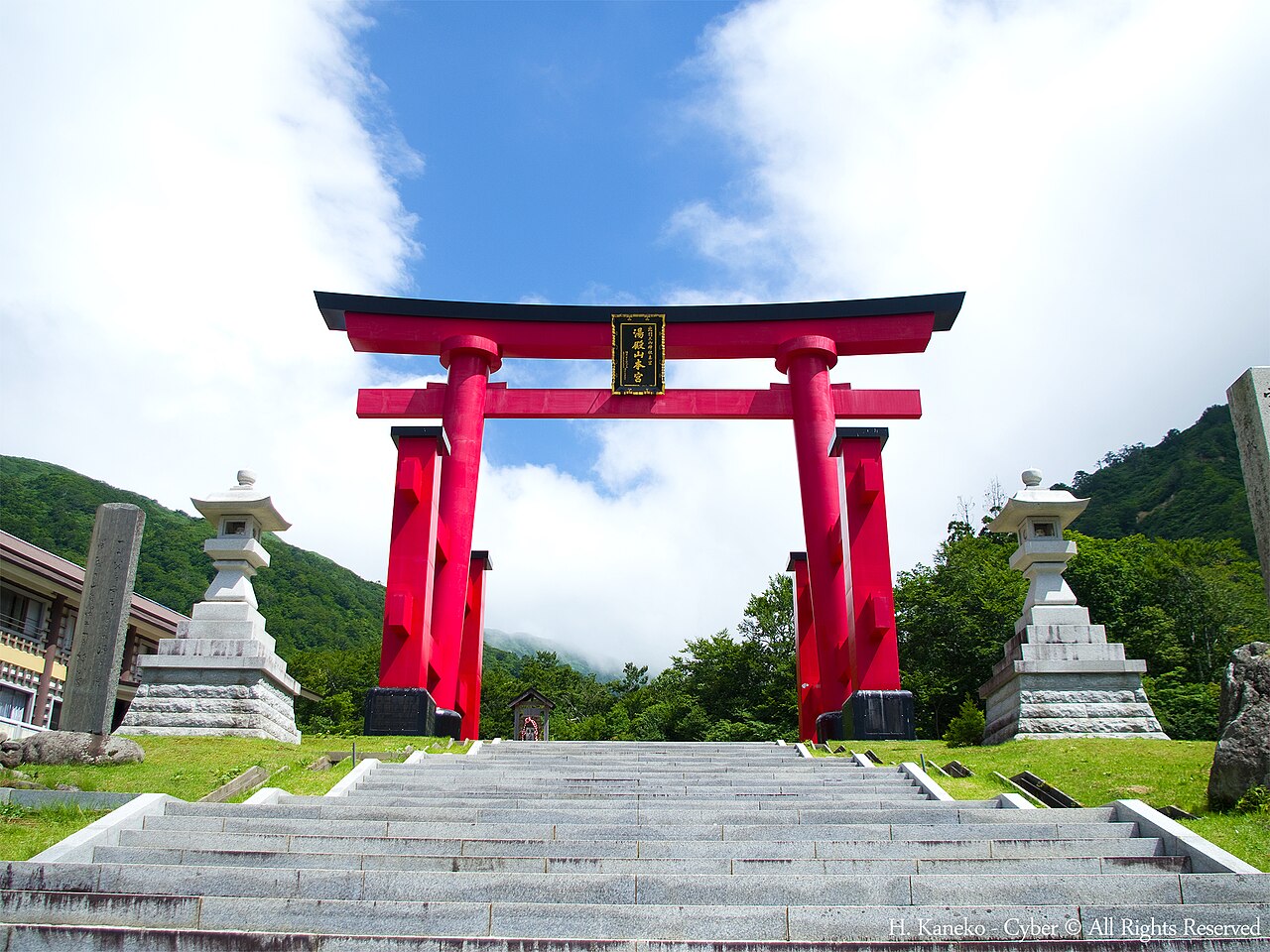
Yudonosan Shrine
Yudonosan Jinja · Yudono-san Shrine · 湯殿山神社
overview
What this place is
Yudonosan Shrine in Tsuruoka enshrines Oyamatsumi-no-Mikoto, Onamuchi-no-Mikoto and Sukunahikona-no-Mikoto, and is held to be the inner shrine of the Dewa Sanzan, where a form of worship before the object of worship itself has been handed down. A rule of not speaking of what is seen or heard at the main hall is related, and photography there is forbidden.
- The inner shrine of the Dewa Sanzan
- A form of worship handed down before the object of worship itself
- A rule of not speaking of what is seen or heard there
- A closed season in winter, with a set opening period
plan your visit
Visit facts for Yudonosan Shrine
- Access
- About 95 minutes from JR Tsuruoka Station by seasonal transport or car to the great torii. Confirm the opening period and the last service before you set out.
- Nearest station
- Yudonosan Senninzawa (seasonal bus or car)
- Hours
- Closed in winter. Check the Dewa Sanzan Shrine’s own notice on the day for the opening period, the shuttle, the road and the reception.
- Fees
- An offering for the purification is required to worship. Transport and the bus are charged separately; check the current notice for amounts.
- Parking
- Available in Japanese only: 大鳥居側の指定駐車場を利用し、本宮方面の車両規制に従います。
- Typical visit
- About 75 minutes (Unmeguri's estimate, not an official figure)
- Facts checked
- 2026-10-22
background
Enshrined deities
Oyamatsumi-no-Mikoto · Onamuchi-no-Mikoto · Sukunahikona-no-Mikoto
The main hall of Yudonosan Shrine is held to be the inner shrine of the Dewa Sanzan, where a form of worship before the object of worship itself has been handed down.
etiquette
Visiting with respect
- Do not photograph, record or describe the inside of the main hall, and do not post what you saw or heard there.
- Follow the priests on the purification, footwear and route, and do not touch the object of worship.
- Do not enter during the closed season, on restricted roads, on the old path or in areas kept for management.
- Check the opening period, the purification, the barefoot section and your return service at the torii, and turn back there if any of them does not hold.
- Keep only your own decision in a public log — that you worshipped, or that you did not — and not what you saw.
- Hours, fees and reception can change; check the official information before you go.
faq
Common questions
How do I get to Yudonosan Shrine?
About 95 minutes from JR Tsuruoka Station by seasonal transport or car to the great torii. Confirm the opening period and the last service before you set out. Nearest station: Yudonosan Senninzawa (seasonal bus or car).
How much does it cost to visit Yudonosan Shrine?
An offering for the purification is required to worship. Transport and the bus are charged separately; check the current notice for amounts.
What are the opening hours of Yudonosan Shrine?
Closed in winter. Check the Dewa Sanzan Shrine’s own notice on the day for the opening period, the shuttle, the road and the reception.
Is there parking at Yudonosan Shrine?
Parking information for Yudonosan Shrine is available in Japanese only: 大鳥居側の指定駐車場を利用し、本宮方面の車両規制に従います。
How long should I spend at Yudonosan Shrine?
Unmeguri's estimate for a visit is about 75 minutes. This is an editorial estimate, not an official figure.
Can I photograph inside the main hall?
No. Photography is forbidden, and a rule of not speaking of what is seen or heard there is handed down.
When is it open?
It is closed in winter and open for a set period. Check the Dewa Sanzan Shrine’s notice on the day.
Which deities are enshrined?
Oyamatsumi-no-Mikoto, Onamuchi-no-Mikoto and Sukunahikona-no-Mikoto.
sources
Sources and checked dates
Facts last checked on 2026-10-22. Sources are in Japanese. Unmeguri separates officially documented facts from its own editorial reading, and does not promise that any wish or outcome will be realized.