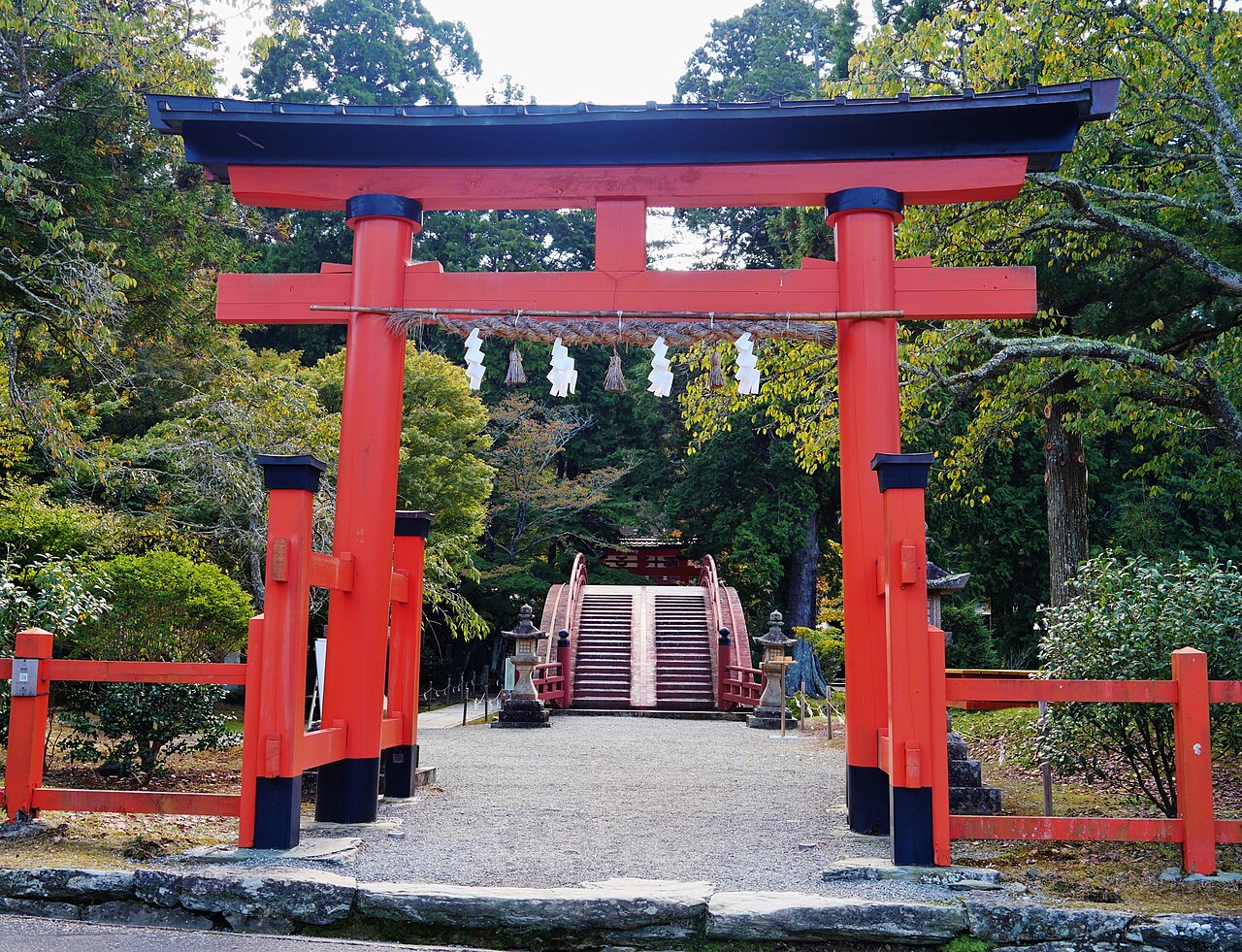
Niutsuhime Shrine
Niutsuhime Jinja · Niu Tsuhime Shrine · 丹生都比売神社
overview
What this place is
Niutsuhime Shrine in Katsuragi, Wakayama, keeps four deities in four halls and is also called the Shisha Myojin. The shrine relates that Niutsuhime-no-Okami granted Mt. Koya to Kobo Daishi, and it has since been honoured as the guardian of that mountain. Registered as World Heritage in 2004 for a religious landscape where Shinto and Buddhism stand together, it was tended by priests and monks alike before the Meiji era.
- Four halls holding four deities, the form of the Shisha Myojin completed in the Kamakura period
- The four main halls and the tower gate, Important Cultural Properties and World Heritage
- The steeply arched rinkyo bridge, closed at present because its planking is damaged
- The basin of Amano, a plateau of rice fields where the shrine has stood for more than 1,700 years
plan your visit
Visit facts for Niutsuhime Shrine
- Access
- About 325 minutes from Tokyo Station by Shinkansen to Shin-Osaka, on through Osaka to Nankai Namba, the Nankai Koya Line to Hashimoto, the JR Wakayama Line to Kaseda and the Katsuragi town community bus to the Niutsuhime Jinja-mae stop. The shrine’s FAQ gives about 30 minutes by bus from Kaseda.
- Nearest station
- Niutsuhime Jinja-mae bus stop (Katsuragi town community bus)
- Hours
- The shrine’s FAQ says the grounds can generally be visited at any time, with prayers from 9:00 to 15:00 and goshuin and amulets from 8:45 to 16:30. The monthly notice for July 2026 shows reception opening, pausing or switching to pre-written sheets from day to day, so confirm on the day.
- Fees
- No admission fee for an ordinary visit is given in the shrine’s own text. The amulet page lists a shrine tablet at 1,000 yen, and the kakkaku hissho, hime, shiawase michihiraki, enmusubi and pet charms at 1,000 yen each. Prayers vary by request and by how they are applied for, so check the day’s notice.
- Parking
- Available in Japanese only: 公式は第一・第二駐車場を合わせ約60台、無料と案内します。障害者用区画、路面、利用時間、祭典・挙式・正月時の誘導、満空は当日確認します。カーナビが案内する場合がある三谷方面の県道109号は狭く、公式は国道480号経由を推奨しています。満車時は路上、バス停、外鳥居前、参道、農地、消防・救急動線で待機や転回をしません。
- Goshuin (seal stamps)
- The official sources we checked do not state whether goshuin (seal stamps) are offered here. Check on site or with the latest official guidance.
- Typical visit
- About 75 minutes (Unmeguri's estimate, not an official figure)
- Facts checked
- 2026-10-22
background
Enshrined deities
Niutsuhime-no-Okami · Takanomiko-no-Okami · Ogetsuhime-no-Okami · Ichikishimahime-no-Okami
Niutsuhime-no-Okami is enshrined in the first hall, Takanomiko-no-Okami in the second, Ogetsuhime-no-Okami in the third and Ichikishimahime-no-Okami in the fourth. The shrine relates Niutsuhime-no-Okami to cinnabar, farming, weaving, warding off misfortune and victory; Takanomiko-no-Okami to the guidance that joined Kobo Daishi to his way; Ogetsuhime-no-Okami to farming and food; and Ichikishimahime-no-Okami to sea travel, fortune and the performing arts.
etiquette
Visiting with respect
- The rinkyo bridge in the middle of the grounds is closed because its planking is damaged; do not count crossing it as part of a visit.
- The timetable shown on the shrine’s access page is based on April 2021, so check the current town information for both directions before you go.
- Stopping at the outer torii is already a complete visit; looking at the rinkyo without crossing, going on to the misogi bridge, or standing before the tower gate to face the four halls are separate choices.
- The shrine does not describe a continuous step-free route from the outer torii to the tower gate, so ask about gravel, steps, wheelchair access and toilets beforehand.
- Crossing a bridge, the size of an offering and the number of charms are not a measure of a wish or of what the deities are said to give.
- Hours, fees and reception can change; check the official information before you go.
faq
Common questions
How do I get to Niutsuhime Shrine?
About 325 minutes from Tokyo Station by Shinkansen to Shin-Osaka, on through Osaka to Nankai Namba, the Nankai Koya Line to Hashimoto, the JR Wakayama Line to Kaseda and the Katsuragi town community bus to the Niutsuhime Jinja-mae stop. The shrine’s FAQ gives about 30 minutes by bus from Kaseda. Nearest station: Niutsuhime Jinja-mae bus stop (Katsuragi town community bus).
How much does it cost to visit Niutsuhime Shrine?
No admission fee for an ordinary visit is given in the shrine’s own text. The amulet page lists a shrine tablet at 1,000 yen, and the kakkaku hissho, hime, shiawase michihiraki, enmusubi and pet charms at 1,000 yen each. Prayers vary by request and by how they are applied for, so check the day’s notice.
What are the opening hours of Niutsuhime Shrine?
The shrine’s FAQ says the grounds can generally be visited at any time, with prayers from 9:00 to 15:00 and goshuin and amulets from 8:45 to 16:30. The monthly notice for July 2026 shows reception opening, pausing or switching to pre-written sheets from day to day, so confirm on the day.
Is there parking at Niutsuhime Shrine?
Parking information for Niutsuhime Shrine is available in Japanese only: 公式は第一・第二駐車場を合わせ約60台、無料と案内します。障害者用区画、路面、利用時間、祭典・挙式・正月時の誘導、満空は当日確認します。カーナビが案内する場合がある三谷方面の県道109号は狭く、公式は国道480号経由を推奨しています。満車時は路上、バス停、外鳥居前、参道、農地、消防・救急動線で待機や転回をしません。
How long should I spend at Niutsuhime Shrine?
Unmeguri's estimate for a visit is about 75 minutes. This is an editorial estimate, not an official figure.
Can I get a goshuin at Niutsuhime Shrine?
The official sources we checked do not state whether goshuin (seal stamps) are offered here. Check on site or with the latest official guidance.
Can I cross the rinkyo bridge?
No. The arched bridge is closed at present because its planking is damaged, so plan a route through the grounds that does not use it.
What is the connection with Mt. Koya?
The shrine relates that Takanomiko-no-Okami led Kobo Daishi to Amano and that Niutsuhime-no-Okami granted him Mt. Koya, which is why it is called that mountain’s guardian.
sources
Sources and checked dates
- 高野山を授けた女神・高野山総鎮守|丹生都比売神社(opens in a new tab)
- 四殿の御祭神・御神徳・高野山との関係|丹生都比売神社(opens in a new tab)
- 創建・丹・弘法大師・神仏習合・世界遺産|丹生都比売神社(opens in a new tab)
- 弘法大師と御神犬・鏡池・女人高野の伝承|丹生都比売神社(opens in a new tab)
- 外鳥居・輪橋閉鎖・禊橋・楼門・本殿・参詣道|丹生都比売神社(opens in a new tab)
- 厄除・赫赫必勝・神恩感謝・祈祷受付|丹生都比売神社(opens in a new tab)
- 神札・各種御守・初穂料・郵送条件|丹生都比売神社(opens in a new tab)
- 参拝・受付・ご神犬・ペット・交通・駐車場|丹生都比売神社(opens in a new tab)
- 笠田駅・コミュニティバス・道路・無料駐車場|丹生都比売神社(opens in a new tab)
- 月次祭・ご神犬公開・年間祭典|丹生都比売神社(opens in a new tab)
- 2026年7月の祈祷・ご朱印受付変更|丹生都比売神社(opens in a new tab)
- 所在地・天野盆地・交通・御祭神|和歌山県公式観光サイト(opens in a new tab)
Facts last checked on 2026-10-22. Sources are in Japanese. Unmeguri separates officially documented facts from its own editorial reading, and does not promise that any wish or outcome will be realized.