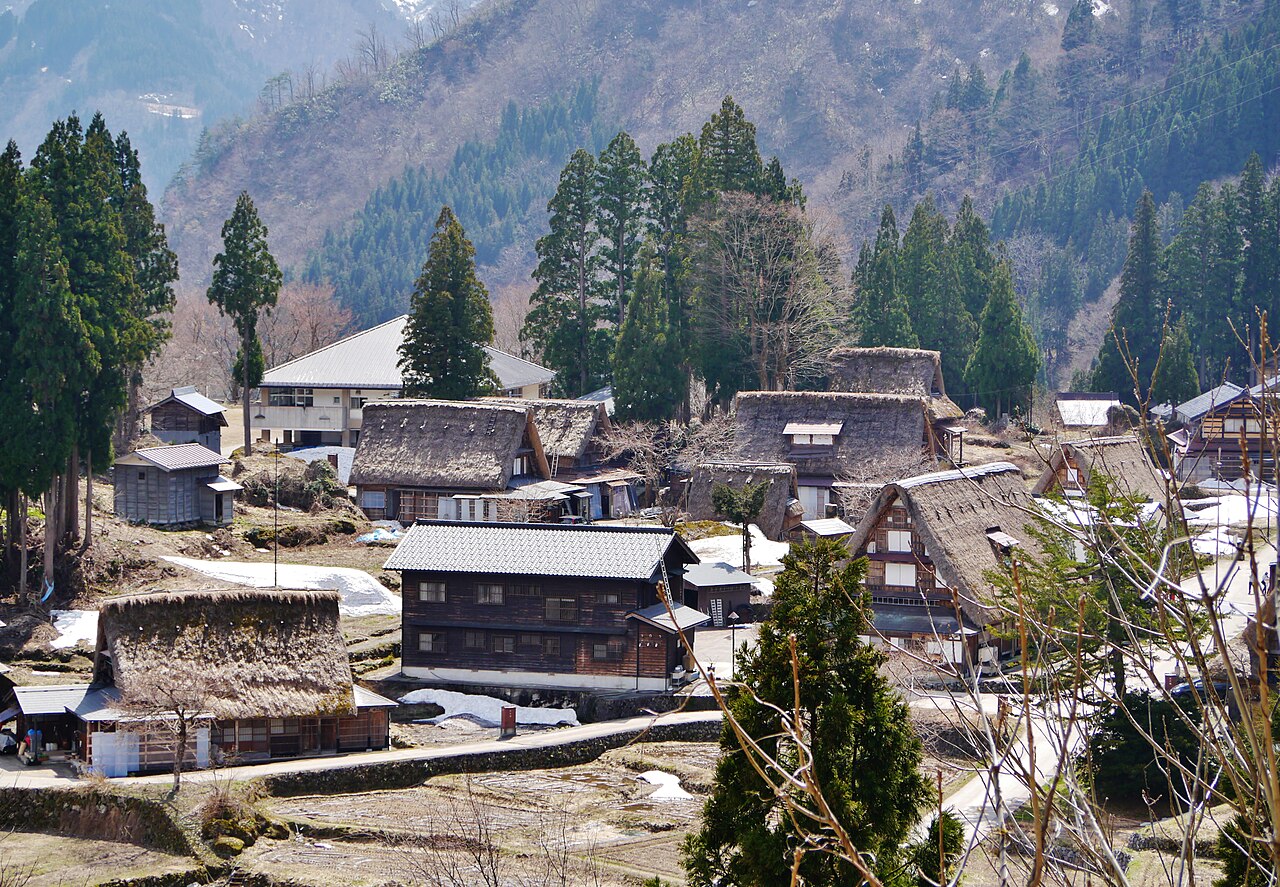
Ainokura Gassho Village
Ainokura · Gokayama Ainokura · 相倉合掌造り集落
overview
What this place is
Ainokura in Nanto is a village of gassho-zukuri houses in Gokayama, registered as World Heritage together with Shirakawa-go. The steep thatched roofs were shaped by life in heavy snow, and the houses stand with their fields and the working life of the community as a single cultural landscape. People still live here and go on maintaining the village.
- Gassho-zukuri houses shaped by life and work in heavy snow
- A cultural landscape of houses, fields and community together
- World Heritage, registered with Shirakawa-go
- A village where people still live and keep the buildings in use
plan your visit
Visit facts for Ainokura Gassho Village
- Access
- About 70 minutes from JR Shin-Takaoka Station on the World Heritage bus to the Ainokura-guchi stop, then about 5 minutes on foot. Check how often the bus runs and when the last one leaves.
- Nearest station
- Ainokura-guchi stop (World Heritage bus)
- Hours
- People live here. Check Gokayama tourist information for the hours when the village may be visited, for parking, for snow and for closures, and stay away early in the morning and at night.
- Fees
- Check the information on the spot for the parking charge, which includes a contribution towards the village’s upkeep, and for admission to the houses that are open.
- Parking
- Available in Japanese only: 集落入口の指定駐車場を利用し、住民用道路・家屋前へ車を入れません。
- Typical visit
- About 90 minutes (Unmeguri's estimate, not an official figure)
- Facts checked
- 2026-10-22
background
Central feature
the gassho-zukuri village of Ainokura and the life kept within it
This is not a religious site. It is treated as a cultural landscape in which the gassho-zukuri houses, the fields and the life of the community belong together.
etiquette
Visiting with respect
- This is a village where people live, with slopes, unpaved ground and snow; do not enter houses or gardens that are not open.
- Reaching the entrance and looking at one house from outside is a complete visit; the viewpoint above is not required.
- Do not photograph residents or the insides of homes, and keep your voice down.
- Avoid early morning and night, when the village is at rest.
- Carry out what you bring in, and use the parking provided rather than the village lanes.
- Hours, fees and reception can change; check the official information before you go.
faq
Common questions
How do I get to Ainokura Gassho Village?
About 70 minutes from JR Shin-Takaoka Station on the World Heritage bus to the Ainokura-guchi stop, then about 5 minutes on foot. Check how often the bus runs and when the last one leaves. Nearest station: Ainokura-guchi stop (World Heritage bus).
How much does it cost to visit Ainokura Gassho Village?
Check the information on the spot for the parking charge, which includes a contribution towards the village’s upkeep, and for admission to the houses that are open.
What are the opening hours of Ainokura Gassho Village?
People live here. Check Gokayama tourist information for the hours when the village may be visited, for parking, for snow and for closures, and stay away early in the morning and at night.
Is there parking at Ainokura Gassho Village?
Parking information for Ainokura Gassho Village is available in Japanese only: 集落入口の指定駐車場を利用し、住民用道路・家屋前へ車を入れません。
How long should I spend at Ainokura Gassho Village?
Unmeguri's estimate for a visit is about 90 minutes. This is an editorial estimate, not an official figure.
Can I go inside the houses at Ainokura?
Only those that are open to visitors. People live in the village, so do not enter houses or gardens that are not open.
Is there a charge?
The parking charge includes a contribution towards the village’s upkeep, and the houses that are open charge admission. Check on the spot.
Do I need to go up to the viewpoint?
No. Reaching the entrance and looking at one house from outside is a complete visit, and the way up is a slope.
sources
Sources and checked dates
- Visiting rules for Ainokura|Gokayama Tourism(opens in a new tab)
- 相倉合掌造り集落|五箇山観光情報(opens in a new tab)
- 世界遺産の背景|世界遺産センター(opens in a new tab)
Facts last checked on 2026-10-22. Sources are in Japanese. Unmeguri separates officially documented facts from its own editorial reading, and does not promise that any wish or outcome will be realized.