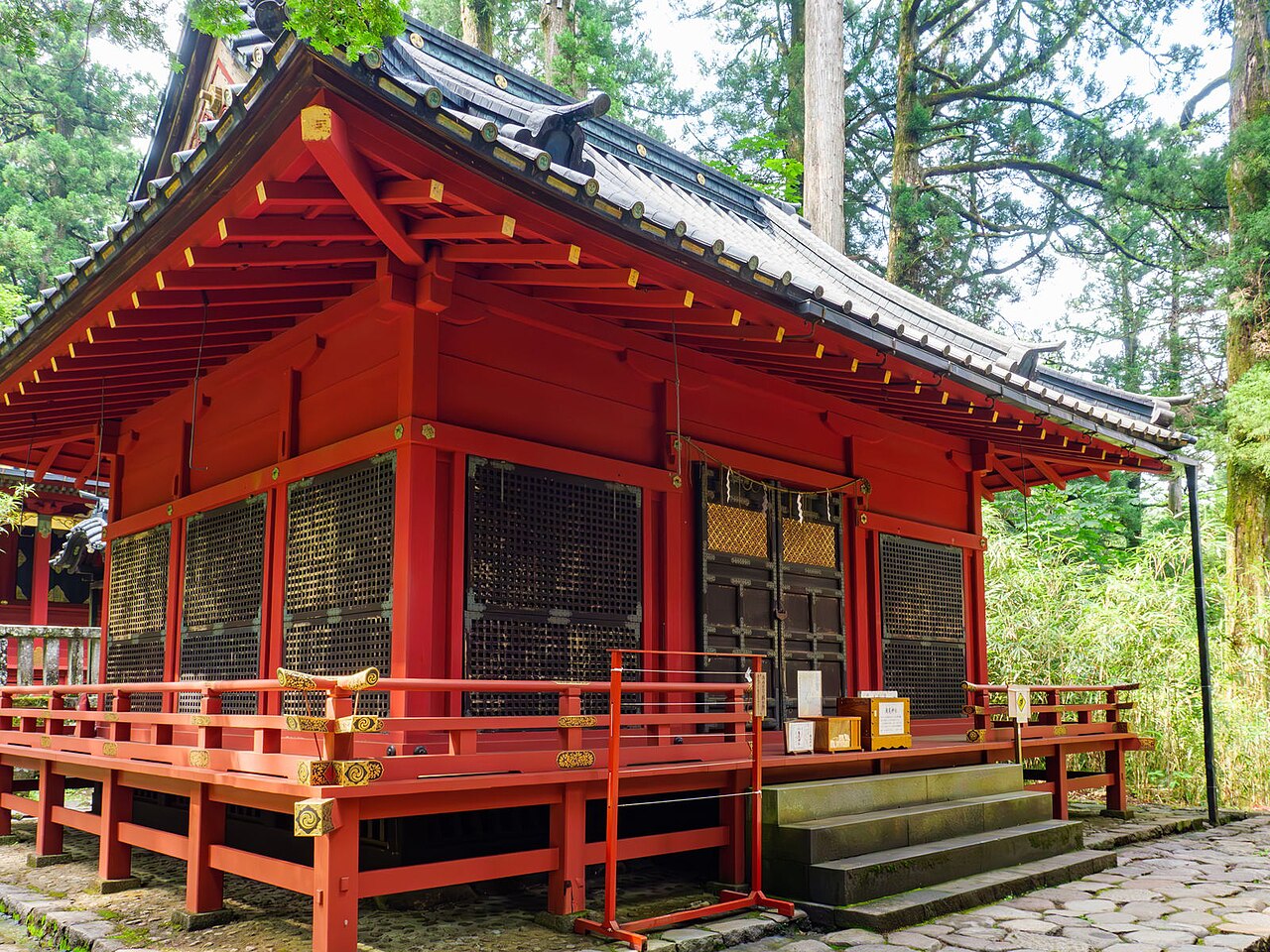
Takinoo Shrine
Takinoo Jinja · 滝尾神社
overview
What this place is
Takinoo Shrine is an auxiliary shrine (betsugu) of Nikko Futarasan Shrine, set deep in the cedar forest of the Sannai district of Nikko, Tochigi Prefecture. It enshrines the goddess Tagorihime-no-Mikoto and is said to have been founded in 820 by the monk Kobo Daishi. A stone-paved path through the cedars leads past Shiraito Falls to the shrine, where traditions such as the fortune-testing torii gate remain.
- A stone-paved approach through cedar forest, passing Shiraito Falls
- The Untameshi-no-torii, a "fortune-testing" torii gate on the grounds
- Traditions handed down on the grounds, including a bamboo grass linked to good relationships and the Kodane-ishi, a stone linked to prayers for children
- An auxiliary shrine of Nikko Futarasan Shrine, reached on foot along a mountain path
plan your visit
Visit facts for Takinoo Shrine
- Access
- About 15 minutes by local bus from Tobu-Nikko Station toward the Futarasan Shrine area, then about 30 minutes on foot along the stone-paved mountain path through the Sannai district.
- Nearest station
- Taiyuin / Futarasan-jinja-mae bus stop (World Heritage sightseeing bus), followed by a mountain walk
- Hours
- The approach and grounds are outdoors. Check rain, snow, fallen trees, wildlife advisories, and the sunset time on the day you visit.
- Fees
- Worship on the grounds is free. Transportation, paid viewing areas nearby, and amulets are separate.
- Parking
- Available in Japanese only: 世界遺産地区の公式駐車場を利用し、山内の管理道・参道へ車で入りません。
- Goshuin (seal stamps)
- The shrine itself may be unstaffed, so for goshuin (shrine seal stamps) check the official reception on the Nikko Futarasan Shrine side.
- Typical visit
- About 70 minutes (Unmeguri's estimate, not an official figure)
- Facts checked
- 2026-10-22
background
Enshrined deity
Tagorihime-no-Mikoto
Takinoo Shrine is an auxiliary shrine of Nikko Futarasan Shrine enshrining Tagorihime-no-Mikoto, and is said to have been founded by the monk Kobo Daishi in 820. Traditions such as the fortune-testing torii, a bamboo grass linked to good relationships, and the Kodane-ishi stone remain on the grounds.
etiquette
Visiting with respect
- Do not throw stones at the fortune-testing torii on your own judgment; follow only the methods explicitly permitted on site.
- On days with bear or leech advisories, snow, fallen trees, or a late start, do not enter the mountain path; worship at the Futarasan main shrine is a complete alternative.
- Do not touch, collect, or take home the bamboo grass, the Kodane-ishi stone, sacred trees, or offerings.
- The common way to pray at a shrine is two bows, two claps, and one final bow.
- Hours, fees and reception can change; check the official information before you go.
faq
Common questions
How do I get to Takinoo Shrine?
About 15 minutes by local bus from Tobu-Nikko Station toward the Futarasan Shrine area, then about 30 minutes on foot along the stone-paved mountain path through the Sannai district. Nearest station: Taiyuin / Futarasan-jinja-mae bus stop (World Heritage sightseeing bus), followed by a mountain walk.
How much does it cost to visit Takinoo Shrine?
Worship on the grounds is free. Transportation, paid viewing areas nearby, and amulets are separate.
What are the opening hours of Takinoo Shrine?
The approach and grounds are outdoors. Check rain, snow, fallen trees, wildlife advisories, and the sunset time on the day you visit.
Is there parking at Takinoo Shrine?
Parking information for Takinoo Shrine is available in Japanese only: 世界遺産地区の公式駐車場を利用し、山内の管理道・参道へ車で入りません。
How long should I spend at Takinoo Shrine?
Unmeguri's estimate for a visit is about 70 minutes. This is an editorial estimate, not an official figure.
Can I get a goshuin at Takinoo Shrine?
The shrine itself may be unstaffed, so for goshuin (shrine seal stamps) check the official reception on the Nikko Futarasan Shrine side.
What is Takinoo Shrine known for?
It is an auxiliary shrine of Nikko Futarasan Shrine enshrining Tagorihime-no-Mikoto, known for its cedar-forest stone path and for traditions such as the fortune-testing torii gate.
sources
Sources and checked dates
Facts last checked on 2026-10-22. Sources are in Japanese. Unmeguri separates officially documented facts from its own editorial reading, and does not promise that any wish or outcome will be realized.