Kanmangafuchi Abyss
Kanman-ga-fuchi · 憾満ヶ淵
overview
What this place is
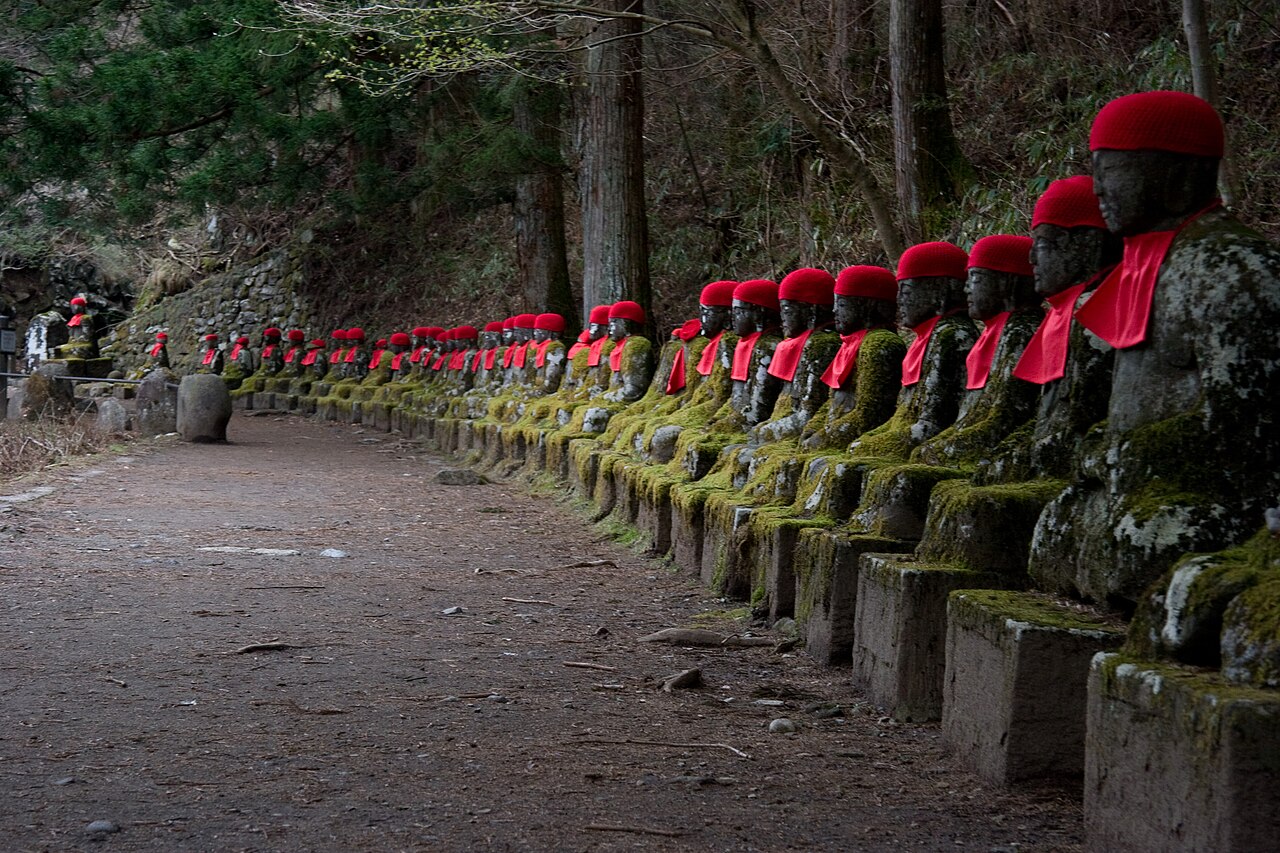
Kanmangafuchi Abyss is a river gorge in Nikko, Tochigi Prefecture, formed where the rapids of the Daiya River run over lava from Mt. Nantai. Along the south bank stands a row of about 70 stone Jizo statues in red bibs, known as the Narabi Jizo; they are also called Bake Jizo, from a legend that their number comes out differently each time you count. The gorge lies within the grounds of Rinnoji temple, and its name comes from "Kanman," the closing syllables of the mantra of Fudo Myoo, to which the sound of the river was likened.
- A row of about 70 stone Jizo statues in red bibs along the Daiya River, known as the Narabi Jizo
- The legend that the statues cannot be counted the same way twice, giving them the name Bake Jizo
- A gorge of Mt. Nantai lava, mossy stone walls, and rushing water
- A Sanskrit "Kanman" character on a boulder across the river, the pedestal of a Fudo Myoo statue lost in a flood in 1902
plan your visit
Visit facts for Kanmangafuchi Abyss
- Access
- About 8 minutes by bus from Tobu-Nikko or JR Nikko Station toward Chuzenji Onsen to the Yasukawacho stop, then about 20 minutes on foot.
- Nearest station
- Yasukawacho bus stop / Tobu-Nikko Station and JR Nikko Station
- Hours
- The riverside path can be walked year-round and has no gates or lighting. Visit in daylight, and turn back in rain, high water, snow, or poor footing.
- Fees
- The walking path is free. Transportation and paid facilities nearby are separate.
- Parking
- Available in Japanese only: 市営の含満橋駐車場・含満公園駐車場は各普通車10台、無料・24時間。満車時は周辺道路へ駐停車せず、別の公営駐車場を利用。
- Typical visit
- About 50 minutes (Unmeguri's estimate, not an official figure)
- Facts checked
- 2026-10-22
background
Central feature
The rapids of the Daiya River · The Narabi Jizo statues · The lava landscape of Mt. Nantai
According to Rinnoji temple, the lava landscape here was long regarded as a sacred place where Fudo Myoo appears, and the gorge was named after "Kanman," the closing syllables of the mantra of Fudo Myoo, to which the sound of the river was likened. The haiku poet Matsuo Basho stopped here in 1689.
etiquette
Visiting with respect
- Stay on the walking path; do not climb down to the riverbed or the boulders of the Daiya River.
- Do not touch the Jizo statues, and keep away from the edge of the path.
- From June to October, leeches are reported on nearby trails on rainy days and the day after, so check the advisories before you go.
- Wear shoes with good grip for the unpaved path, and do not push on at dusk, in high water, or in snow.
- Hours, fees and reception can change; check the official information before you go.
faq
Common questions
How do I get to Kanmangafuchi Abyss?
About 8 minutes by bus from Tobu-Nikko or JR Nikko Station toward Chuzenji Onsen to the Yasukawacho stop, then about 20 minutes on foot. Nearest station: Yasukawacho bus stop / Tobu-Nikko Station and JR Nikko Station.
How much does it cost to visit Kanmangafuchi Abyss?
The walking path is free. Transportation and paid facilities nearby are separate.
What are the opening hours of Kanmangafuchi Abyss?
The riverside path can be walked year-round and has no gates or lighting. Visit in daylight, and turn back in rain, high water, snow, or poor footing.
Is there parking at Kanmangafuchi Abyss?
Parking information for Kanmangafuchi Abyss is available in Japanese only: 市営の含満橋駐車場・含満公園駐車場は各普通車10台、無料・24時間。満車時は周辺道路へ駐停車せず、別の公営駐車場を利用。
How long should I spend at Kanmangafuchi Abyss?
Unmeguri's estimate for a visit is about 50 minutes. This is an editorial estimate, not an official figure.
Why are the Jizo statues called Bake Jizo?
Legend says the number of statues comes out differently each time you count them on the way in and the way back, which earned them the name Bake Jizo. About 70 statues stand in the row.
sources
Sources and checked dates
- 憾満ヶ淵|日光山輪王寺(opens in a new tab)
- 憾満ヶ淵|日光市公式観光サイト(opens in a new tab)
- 化け地蔵(並び地蔵)|日光市(opens in a new tab)
- Route.N #4 究極の瞑想ルート|日光市(opens in a new tab)
- Kanmangafuchi Abyss|Nikko Official Guide(opens in a new tab)
- ヤマビル対策チラシ|栃木県(opens in a new tab)
- 日光地区アラカルト料金表 令和8年6月以降|日光市観光協会(opens in a new tab)
Facts last checked on 2026-10-22. Sources are in Japanese. Unmeguri separates officially documented facts from its own editorial reading, and does not promise that any wish or outcome will be realized.