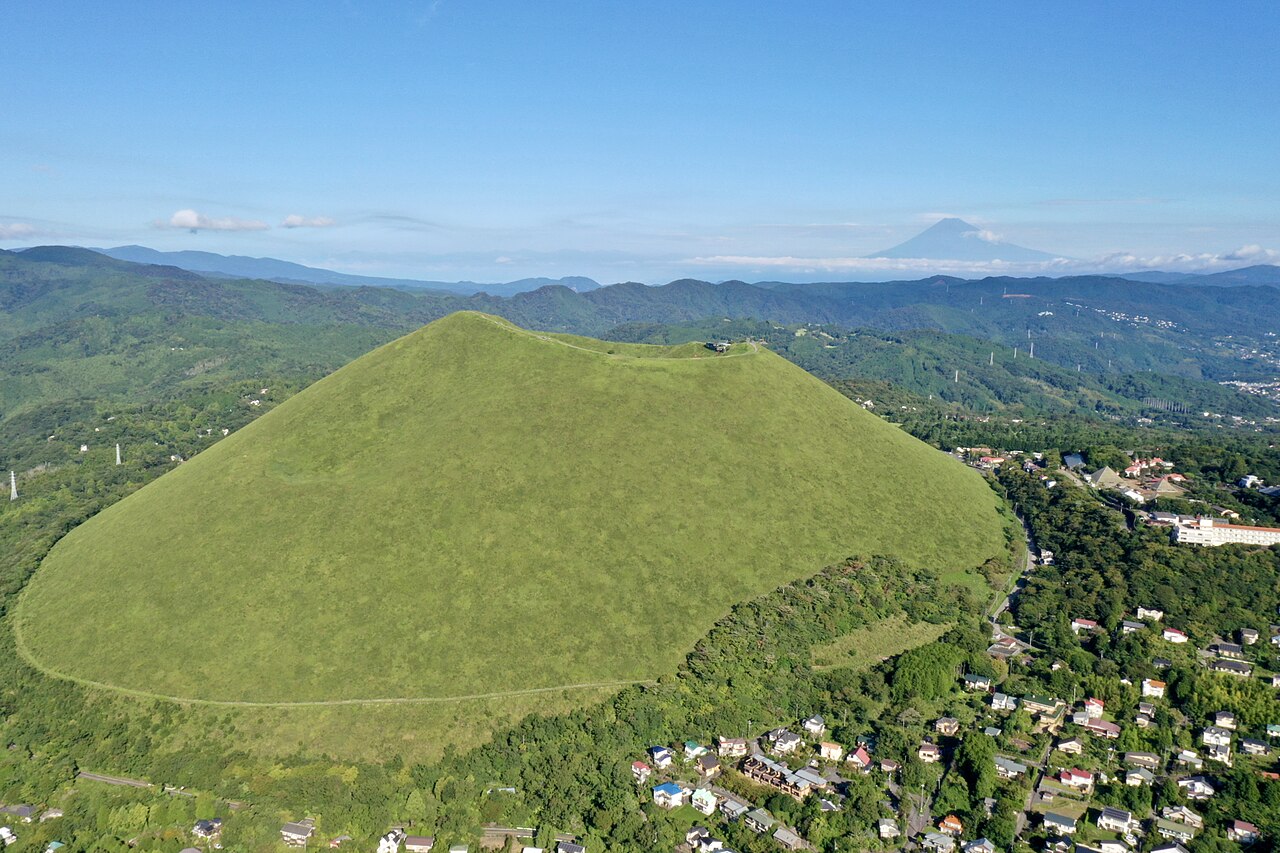
Mt. Omuro
Omuroyama · Mount Omuro · 大室山
overview
What this place is
Mt. Omuro rises to 580 metres in Ito, Shizuoka Prefecture, and is a national natural monument: one of the largest scoria cones of the eastern Izu volcano group, formed by an eruption about 4,000 years ago. Its crater is a bowl 250 to 300 metres across, and a path about 1,000 metres round the rim gives a view in every direction. Climbing on foot is not allowed; the summit is reached by chairlift.
- A crater 250 to 300 metres across, walked round on a rim path about 1,000 metres long
- Views towards Mt. Fuji, the Southern Alps, the Izu islands and the Boso peninsula
- Grassland that turns yellow-green, deep green, silver, gold and black with the seasons and the burning
- The annual burning of the reed field, said to have gone on for about 700 years
plan your visit
Visit facts for Mt. Omuro
- Access
- About 135 minutes from Tokyo Station by the Tokaido Shinkansen and the JR Ito Line to Ito Station, then about 35 minutes by Tokai bus to the Shaboten Koen terminus. Buses also run from Izu-Kogen Station.
- Nearest station
- Shaboten Koen bus stop (Tokai bus) / JR Ito Station and Izu-Kogen Station
- Hours
- The chairlift runs from 9:00 to 17:00 from March to September, with the last car down at 17:15, and from 9:00 to 16:00 from October to February, with the last car down at 16:15. It closes irregularly, in bad weather and for longer maintenance in June and December.
- Fees
- The chairlift is 1,000 yen return for junior-high age and above and 500 yen for primary pupils, and free for younger children. Holders of a disability or rehabilitation certificate and one carer pay half. Archery, food and souvenirs are separate.
- Parking
- Available in Japanese only: 第1〜3駐車場に自家用車約500台分があり、伊豆半島ジオパーク公式は無料と案内しています。いずれもリフト乗場に近く、大型バス専用区画は第1・第2駐車場です。混雑時は代表者だけでなく全員で乗車待ち列へ並ぶよう施設が案内しています。
- Typical visit
- About 70 minutes (Unmeguri's estimate, not an official figure)
- Facts checked
- 2026-10-22
background
Central feature
Mt. Omuro itself, long regarded as the body of a deity · The Sengen Shrine on the crater slope and Iwanaga-hime-no-Mikoto · The Gochi Nyorai figures and the Yatsugatake Jizo
Mt. Omuro is a scoria cone formed by an eruption about 4,000 years ago and the mountain itself has long been regarded as the body of a deity. The Sengen Shrine on the eastern slope of the crater enshrines Iwanaga-hime-no-Mikoto, described in the official guidance in connection with safe childbirth and ties between people. West of the summit stand the Gochi Nyorai figures and the Yatsugatake Jizo, each with its own history.
etiquette
Visiting with respect
- Mt. Omuro is a national natural monument and climbing on foot is not allowed; use the chairlift while it is running and keep off the slopes and outside the fences.
- The colour of the slopes changes with the season and the burning, and Mt. Fuji is not always in view; neither is a measure of how the visit went.
- Lightning, gusts, strong wind, earthquakes, poor visibility and maintenance can stop the lift or bring people down early; follow the staff even if you have a ticket or are part-way round.
- The wheelchair loan, the ramps and the help with boarding at the summit do not mean the rim path can be used: the operator states plainly that it is too steep for a wheelchair.
- The Sengen Shrine, the Gochi Nyorai and the Yatsugatake Jizo come from different histories; treat them as three separate things rather than one.
- Archery in the crater is a separate activity with its own conditions; those not taking part should keep out of the range.
- Hours, fees and reception can change; check the official information before you go.
faq
Common questions
How do I get to Mt. Omuro?
About 135 minutes from Tokyo Station by the Tokaido Shinkansen and the JR Ito Line to Ito Station, then about 35 minutes by Tokai bus to the Shaboten Koen terminus. Buses also run from Izu-Kogen Station. Nearest station: Shaboten Koen bus stop (Tokai bus) / JR Ito Station and Izu-Kogen Station.
How much does it cost to visit Mt. Omuro?
The chairlift is 1,000 yen return for junior-high age and above and 500 yen for primary pupils, and free for younger children. Holders of a disability or rehabilitation certificate and one carer pay half. Archery, food and souvenirs are separate.
What are the opening hours of Mt. Omuro?
The chairlift runs from 9:00 to 17:00 from March to September, with the last car down at 17:15, and from 9:00 to 16:00 from October to February, with the last car down at 16:15. It closes irregularly, in bad weather and for longer maintenance in June and December.
Is there parking at Mt. Omuro?
Parking information for Mt. Omuro is available in Japanese only: 第1〜3駐車場に自家用車約500台分があり、伊豆半島ジオパーク公式は無料と案内しています。いずれもリフト乗場に近く、大型バス専用区画は第1・第2駐車場です。混雑時は代表者だけでなく全員で乗車待ち列へ並ぶよう施設が案内しています。
How long should I spend at Mt. Omuro?
Unmeguri's estimate for a visit is about 70 minutes. This is an editorial estimate, not an official figure.
How much does Mt. Omuro cost?
The chairlift is 1,000 yen return for junior-high age and above and 500 yen for primary pupils; younger children ride free. Holders of a certificate and one carer pay half.
Can I walk up Mt. Omuro?
No. It is a national natural monument and climbing on foot is not allowed. The summit is reached by chairlift while the service is running.
Can I use a wheelchair at the summit?
There are wheelchairs to borrow, ramps and help with boarding, but the operator states that the rim path is too steep for a wheelchair. Ask in advance about transferring to the lift seat.
sources
Sources and checked dates
- 大室山登山リフト オフィシャルサイト(opens in a new tab)
- 大室山とは|大室山登山リフト(opens in a new tab)
- 山頂で楽しむ|大室山登山リフト(opens in a new tab)
- 営業時間・料金|大室山登山リフト(opens in a new tab)
- パワースポット|大室山登山リフト(opens in a new tab)
- 山焼き|大室山登山リフト(opens in a new tab)
- ユニバーサルデザイン|大室山登山リフト(opens in a new tab)
- アクセス|大室山登山リフト(opens in a new tab)
- 大室山地層標本|伊豆半島ジオパーク公式サイト(opens in a new tab)
- 大室山|伊豆半島ジオパーク公式サイト(opens in a new tab)
- 大室山登山リフト ユニバーサルデザイン取組事例|静岡県(opens in a new tab)
- 大室山|静岡県観光公式サイト Hello Navi(opens in a new tab)
Facts last checked on 2026-10-22. Sources are in Japanese. Unmeguri separates officially documented facts from its own editorial reading, and does not promise that any wish or outcome will be realized.