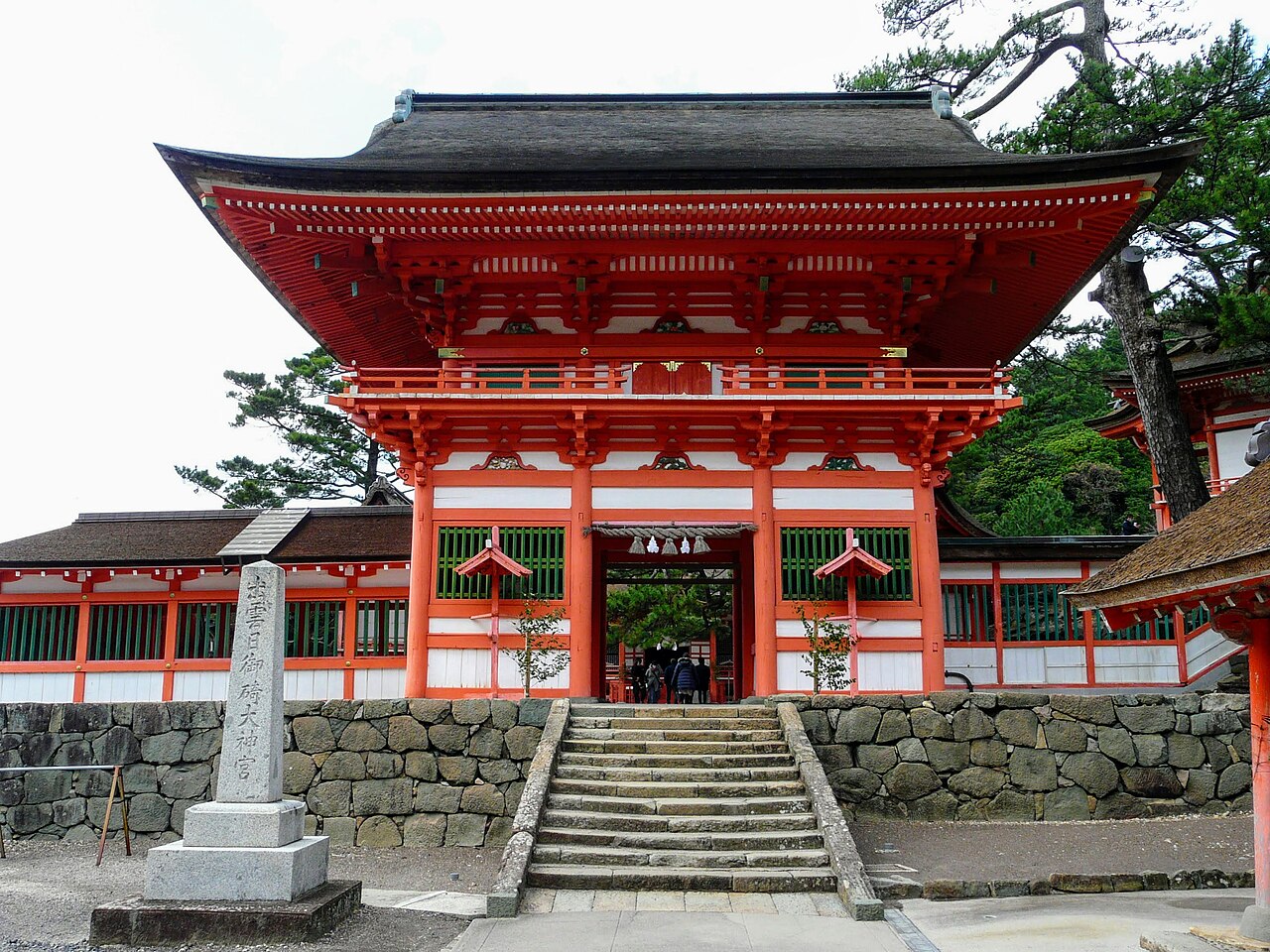
Hinomisaki Shrine
Hinomisaki Jinja · Hinomisaki · 日御碕神社
overview
What this place is
Hinomisaki Shrine is made up of two shrines: the lower Hishizumi-no-Miya, which enshrines Amaterasu Omikami, and the upper Kami-no-Miya above a stair, which enshrines Susanoo-no-Mikoto. The present vermilion halls were begun in 1635, finished in 1643 and transferred to in 1644, and fourteen buildings and two torii were designated Important Cultural Properties in 1953.
- Two shrines set on ground of different heights
- Vermilion halls built between 1635 and 1644
- Fourteen buildings and two torii, Important Cultural Properties since 1953
- More than a hundred carvings, no two of the same design
plan your visit
Visit facts for Hinomisaki Shrine
- Access
- By Ichibata bus to the Hinomisaki stop, then about 2 minutes on foot. As of 16 July 2026 part of prefectural road 29 runs on a temporary single lane, and the shrine states there is no detour if it closes in severe weather. Check road, weather and bus information and your way back first.
- Nearest station
- Hinomisaki bus stop
- Hours
- The prefecture’s tourism site gives worship as unrestricted, which does not mean lighting, staff, first aid or a safe road at all hours. The amulet desk runs from 8:30 to 16:50 and prayers from 8:30 to 16:00, with reception paused from 12:00 to 13:00 outside busy periods.
- Fees
- No admission for ordinary worship is given in the official text. A prayer is from 3,000 yen; the sand, fortune, good-tie and traffic amulets are listed at 700 yen each; goshuin are an offering from 500 yen. Confirm amounts and stock on the spot.
- Parking
- Available in Japanese only: 公式は日御碕神社参拝者駐車場を大型車不可、日御碕公共駐車場と日御碕県営駐車場を大型車可と案内します。神社横の車道は狭いため、バスは鳥居前の公共駐車場を利用するようFAQが案内します。県営駐車場は普通車84台、バス3台、身体障がい者用2台、多目的・オストメイト対応トイレがありますが、神社までの段差のない連続経路は保証しません。県道29号、満空、祭典・異常気象時の閉鎖を当日確認します。
- Goshuin (seal stamps)
- Goshuin are an offering from 500 yen. Check the desk hours and whether they are pre-written on the day.
- Typical visit
- About 60 minutes (Unmeguri's estimate, not an official figure)
- Facts checked
- 2026-10-22
background
Enshrined deities
Amaterasu Omikami (Hishizumi-no-Miya) · Susanoo-no-Mikoto (Kami-no-Miya)
The shrine is made up of the lower Hishizumi-no-Miya, which enshrines Amaterasu Omikami, and the upper Kami-no-Miya, which enshrines Susanoo-no-Mikoto; the expression that it guards the night of the land is a matter of belief and is not presented as an effect on health, safety or an outcome.
etiquette
Visiting with respect
- Treat the torii and the gate, Hishizumi-no-Miya, and Kami-no-Miya above the stair as separate points at which a visit can end.
- There are no toilets in the grounds; plan for that before you arrive.
- The interiors are not normally open; do not look for a way in.
- Do not go onto Fumishima, which is closed as a breeding ground for black-tailed gulls.
- Move to high ground on foot as soon as you feel an earthquake while you are near the coast.
- Hours, fees and reception can change; check the official information before you go.
faq
Common questions
How do I get to Hinomisaki Shrine?
By Ichibata bus to the Hinomisaki stop, then about 2 minutes on foot. As of 16 July 2026 part of prefectural road 29 runs on a temporary single lane, and the shrine states there is no detour if it closes in severe weather. Check road, weather and bus information and your way back first. Nearest station: Hinomisaki bus stop.
How much does it cost to visit Hinomisaki Shrine?
No admission for ordinary worship is given in the official text. A prayer is from 3,000 yen; the sand, fortune, good-tie and traffic amulets are listed at 700 yen each; goshuin are an offering from 500 yen. Confirm amounts and stock on the spot.
What are the opening hours of Hinomisaki Shrine?
The prefecture’s tourism site gives worship as unrestricted, which does not mean lighting, staff, first aid or a safe road at all hours. The amulet desk runs from 8:30 to 16:50 and prayers from 8:30 to 16:00, with reception paused from 12:00 to 13:00 outside busy periods.
Is there parking at Hinomisaki Shrine?
Parking information for Hinomisaki Shrine is available in Japanese only: 公式は日御碕神社参拝者駐車場を大型車不可、日御碕公共駐車場と日御碕県営駐車場を大型車可と案内します。神社横の車道は狭いため、バスは鳥居前の公共駐車場を利用するようFAQが案内します。県営駐車場は普通車84台、バス3台、身体障がい者用2台、多目的・オストメイト対応トイレがありますが、神社までの段差のない連続経路は保証しません。県道29号、満空、祭典・異常気象時の閉鎖を当日確認します。
How long should I spend at Hinomisaki Shrine?
Unmeguri's estimate for a visit is about 60 minutes. This is an editorial estimate, not an official figure.
Can I get a goshuin at Hinomisaki Shrine?
Goshuin are an offering from 500 yen. Check the desk hours and whether they are pre-written on the day.
Why are there two shrines?
The lower Hishizumi-no-Miya enshrines Amaterasu Omikami and the upper Kami-no-Miya enshrines Susanoo-no-Mikoto, set on ground of different heights.
What do prayers and amulets cost?
A prayer is from 3,000 yen, the listed amulets are 700 yen each, and goshuin are an offering from 500 yen.
Is the road reliable?
As of 16 July 2026 part of prefectural road 29 is a temporary single lane, and the shrine states there is no detour if it closes.
sources
Sources and checked dates
- 二社・由緒・建築・彫刻|日御碕神社(opens in a new tab)
- 境内配置・御祭神・御神徳・授与所|日御碕神社(opens in a new tab)
- 参拝作法・御神砂守・トイレ・駐車場|日御碕神社(opens in a new tab)
- 御祈祷・願意・授与品・初穂料|日御碕神社(opens in a new tab)
- 御朱印の受付・書置き条件|日御碕神社(opens in a new tab)
- 参拝者・公共・県営駐車場|日御碕神社(opens in a new tab)
- 県道29号の仮設道路・通行止め・迂回路なし|日御碕神社(opens in a new tab)
- 和布刈神事・例大祭・神幸祭|日御碕神社(opens in a new tab)
- 例大祭時の御祈祷・駐車場・御朱印運用例|日御碕神社(opens in a new tab)
- 授与品の営利利用・代理販売・転売禁止|日御碕神社(opens in a new tab)
- 古社・社殿・文化財・海沿いの立地|出雲市(opens in a new tab)
- 神の宮・1644年・重要文化財|文化庁(opens in a new tab)
- 権現造・朱の社殿・彫刻・二つの入口|観光庁(opens in a new tab)
- 日沉宮・夕日・日が沈む聖地出雲|日本遺産(opens in a new tab)
- 経島の立入禁止・ウミネコ繁殖地|環境省(opens in a new tab)
- 散策路の起伏・階段・県営駐車場設備|島根県公式観光(opens in a new tab)
- 県営駐車場の台数・多目的トイレ|島根県公式観光(opens in a new tab)
- 二社・授与品・参拝情報・経島|島根県公式観光(opens in a new tab)
- 徒歩・揺れ後すぐ・高所への津波避難原則|出雲市(opens in a new tab)
Facts last checked on 2026-10-22. Sources are in Japanese. Unmeguri separates officially documented facts from its own editorial reading, and does not promise that any wish or outcome will be realized.