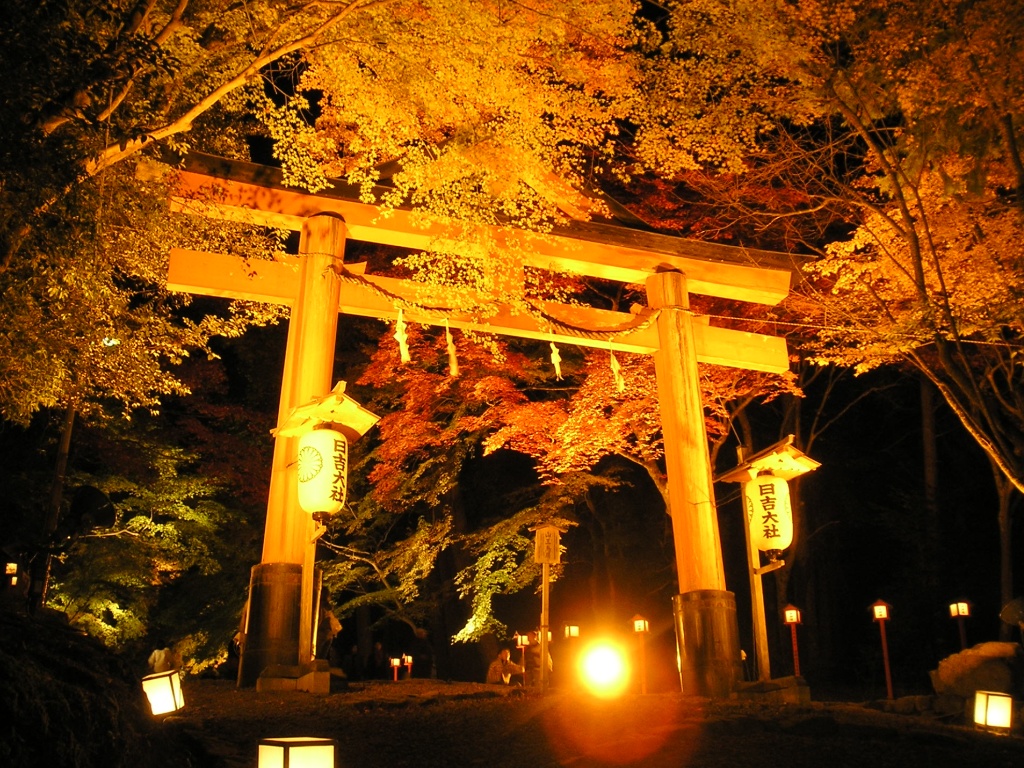
Hiyoshi Taisha Shrine
Hiyoshi Shrine · Hie Taisha · 日吉大社
overview
What this place is
Hiyoshi Taisha in Sakamoto, Otsu, is the head shrine of some 3,800 Hiyoshi, Hie and Sanno shrines across Japan. Onamuchi-no-Kami is enshrined in the West Hongu and Oyamakui-no-Kami in the East Hongu, and the deities of about forty shrines within the grounds are called together the Hiyoshi deity. Standing at the unlucky north-east quarter of the old capital, it was revered for warding off misfortune, and as the guardian of Enryakuji it carries the Sanno faith in which Shinto and Buddhism met.
- The Sanno torii, a gate with a triangular gable set above it, taken as the symbol of the Sanno faith
- Main halls of the East and West Hongu and of Usagu in the distinctive Hiyoshi style, with a lower chamber beneath the floor
- The Sanno shichisha, seven shrines including Usagu, Ushio, Hakusan, Jugu and Sannomiya
- Channels drawn from the Omiya river through the grounds, with the stone bridge marking the way in
plan your visit
Visit facts for Hiyoshi Taisha Shrine
- Access
- About 180 minutes from Tokyo Station by Shinkansen to Kyoto Station and the JR Kosei Line to Hieizan-Sakamoto Station, then about 20 minutes on foot. From Keihan Sakamoto-Hieizanguchi Station it is about 10 minutes.
- Nearest station
- Keihan Sakamoto-Hieizanguchi Station / JR Hieizan-Sakamoto Station
- Hours
- Visiting is generally from 9:00 to 16:00, with the West and East Hongu opening at 6:00 from April to September and at 7:00 from October to March. The amulet office is open from 9:00 to 16:00. The shrine gives two different closing times for prayer reception, so treat 15:30 as the guide and confirm on the day.
- Fees
- The contribution for entering the grounds is 500 yen for adults and 300 yen for junior-high and high-school students, free for primary pupils and younger; for visitors with a disability it is 250 yen and 150 yen. A prayer service is from 5,000 yen for one request, and the special form in the lower chamber is 20,000 yen for up to two.
- Parking
- Available in Japanese only: 境内駐車場は乗用車約50台で通常無料ですが、もみじ祭など繁忙期は有料、11月は毎日有料と公式FAQにあります。満車時は大宮川観光駐車場を利用します。正月・山王祭・紅葉期は公共交通またはパークアンドライドを優先し、赤鳥居前の旧竹林院専用駐車場へ停めません。
- Goshuin (seal stamps)
- A goshuin is given at the amulet office, generally open from 9:00 to 16:00. Confirm the current types and amount on the day.
- Typical visit
- About 90 minutes (Unmeguri's estimate, not an official figure)
- Facts checked
- 2026-10-22
background
Enshrined deities
Onamuchi-no-Kami (West Hongu) · Oyamakui-no-Kami (East Hongu)
Hiyoshi Taisha enshrines Onamuchi-no-Kami in the West Hongu and Oyamakui-no-Kami in the East Hongu, and calls the deities of about forty shrines within the grounds together the Hiyoshi deity. Standing at the north-east quarter of the old capital of Heian, it was revered as a shrine for warding off misfortune, and after Saicho founded Enryakuji it became the guardian of that temple.
etiquette
Visiting with respect
- Bow lightly once before passing through the torii gate, and rinse your hands at the water basin before approaching the halls.
- The direction the shrine guards and the play on words about misfortune departing are not assurances; decide for yourself what to avoid, where your limits are and when to turn back.
- The West and East Hongu stand apart from each other, and the grounds have slopes, bridges and steps; check the route you need before you set out.
- The Okumiya is about a kilometre up a steep mountain path and cannot be reached by car; treat it as a separate plan from the main grounds.
- Do not touch or climb on the halls, the torii, the monkeys carved or kept as messengers of the deity, or the channels and stone bridges.
- Hours, fees and reception can change; check the official information before you go.
faq
Common questions
How do I get to Hiyoshi Taisha Shrine?
About 180 minutes from Tokyo Station by Shinkansen to Kyoto Station and the JR Kosei Line to Hieizan-Sakamoto Station, then about 20 minutes on foot. From Keihan Sakamoto-Hieizanguchi Station it is about 10 minutes. Nearest station: Keihan Sakamoto-Hieizanguchi Station / JR Hieizan-Sakamoto Station.
How much does it cost to visit Hiyoshi Taisha Shrine?
The contribution for entering the grounds is 500 yen for adults and 300 yen for junior-high and high-school students, free for primary pupils and younger; for visitors with a disability it is 250 yen and 150 yen. A prayer service is from 5,000 yen for one request, and the special form in the lower chamber is 20,000 yen for up to two.
What are the opening hours of Hiyoshi Taisha Shrine?
Visiting is generally from 9:00 to 16:00, with the West and East Hongu opening at 6:00 from April to September and at 7:00 from October to March. The amulet office is open from 9:00 to 16:00. The shrine gives two different closing times for prayer reception, so treat 15:30 as the guide and confirm on the day.
Is there parking at Hiyoshi Taisha Shrine?
Parking information for Hiyoshi Taisha Shrine is available in Japanese only: 境内駐車場は乗用車約50台で通常無料ですが、もみじ祭など繁忙期は有料、11月は毎日有料と公式FAQにあります。満車時は大宮川観光駐車場を利用します。正月・山王祭・紅葉期は公共交通またはパークアンドライドを優先し、赤鳥居前の旧竹林院専用駐車場へ停めません。
How long should I spend at Hiyoshi Taisha Shrine?
Unmeguri's estimate for a visit is about 90 minutes. This is an editorial estimate, not an official figure.
Can I get a goshuin at Hiyoshi Taisha Shrine?
A goshuin is given at the amulet office, generally open from 9:00 to 16:00. Confirm the current types and amount on the day.
What is Hiyoshi Taisha known for?
It is known as the head shrine of the Hiyoshi, Hie and Sanno shrines, for the Sanno torii, and for its long connection with Enryakuji on Mt. Hiei.
sources
Sources and checked dates
- 山王総本宮 日吉大社(opens in a new tab)
- 日吉大社について(opens in a new tab)
- よくあるご質問|日吉大社(opens in a new tab)
- 交通アクセス|日吉大社(opens in a new tab)
- 境内案内|日吉大社(opens in a new tab)
- ご祈祷・結婚式|日吉大社(opens in a new tab)
- 授与品・御朱印|日吉大社(opens in a new tab)
- 神猿について|日吉大社(opens in a new tab)
- もみじ祭|日吉大社(opens in a new tab)
- 日吉大社リーフレット(opens in a new tab)
Facts last checked on 2026-10-22. Sources are in Japanese. Unmeguri separates officially documented facts from its own editorial reading, and does not promise that any wish or outcome will be realized.