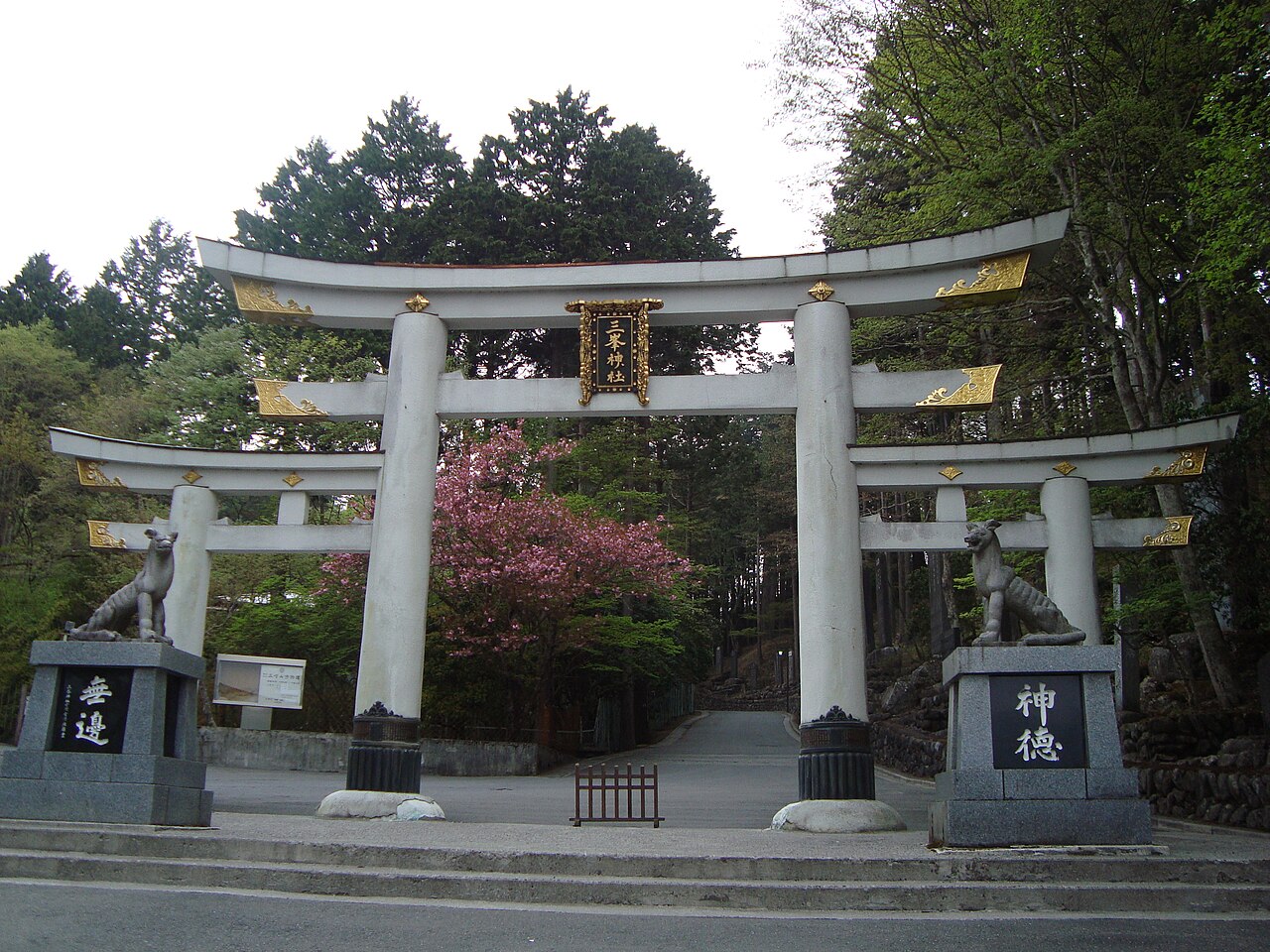
Mitsumine Shrine
Mitsumine Jinja · Mitsuminejinja · 三峯神社
overview
What this place is
Mitsumine Shrine stands high in the mountains of Chichibu, Saitama Prefecture, about 80 minutes by bus from Seibu-Chichibu Station. It enshrines Izanagi-no-Mikoto and Izanami-no-Mikoto, and tradition holds that Yamato Takeru enshrined the two deities of the creation of the land here and honoured the wolf that had guided him as their messenger. The shrine later became a centre of Shugendo mountain practice, and took its present form after the separation of Buddhism and Shinto in the Meiji era.
- A mountain precinct reached through the Zuishinmon gate
- The faith in wolves as messengers of the deities, seen in the guardian statues
- A history that runs from the founding legend of Yamato Takeru through Shugendo practice
- A shrine that can be visited in full at the main hall, without climbing to the Okumiya
plan your visit
Visit facts for Mitsumine Shrine
- Access
- About 80 minutes by Seibu Kanko bus from Seibu-Chichibu Station along mountain roads, then about 10 minutes on foot. Check for delays, snow, suspensions and the last bus back.
- Nearest station
- Mitsumine Jinja bus stop (Seibu Kanko bus)
- Hours
- The main hall can be visited through the year. A bear was sighted on the approach to the Okumiya on 19 June 2026, so avoid that path alone or in the early morning and evening and put safety first.
- Fees
- Visiting the grounds is free. Prayer services, amulets, parking, the museum and the climb to the Okumiya are separate.
- Parking
- Available in Japanese only: 市営駐車場を利用。冬季はスタッドレスタイヤ・チェーン等と道路状況を必ず確認します。
- Typical visit
- About 75 minutes (Unmeguri's estimate, not an official figure)
- Facts checked
- 2026-10-22
background
Enshrined deities
Izanagi-no-Mikoto · Izanami-no-Mikoto
The shrine enshrines Izanagi-no-Mikoto and Izanami-no-Mikoto. Tradition holds that Yamato Takeru enshrined the two deities of the creation of the land here and honoured the wolf that had guided him as their messenger. In later ages Shugendo practice and the faith in the wolf messengers spread from this mountain.
etiquette
Visiting with respect
- Do not treat the Okumiya as a continuation of a visit to the main hall; do not set out on days when the bear notices, the weather or your equipment do not allow it.
- If you do see a bear, do not approach it, move away quietly, and keep children within sight.
- The white "Ki no Omamori" is currently suspended, so do not plan around receiving one or treat resold items as an official amulet.
- There are slopes and steps between the bus stop or car park and the main hall, so allow time on the way up.
- Hours, fees and reception can change; check the official information before you go.
faq
Common questions
How do I get to Mitsumine Shrine?
About 80 minutes by Seibu Kanko bus from Seibu-Chichibu Station along mountain roads, then about 10 minutes on foot. Check for delays, snow, suspensions and the last bus back. Nearest station: Mitsumine Jinja bus stop (Seibu Kanko bus).
How much does it cost to visit Mitsumine Shrine?
Visiting the grounds is free. Prayer services, amulets, parking, the museum and the climb to the Okumiya are separate.
What are the opening hours of Mitsumine Shrine?
The main hall can be visited through the year. A bear was sighted on the approach to the Okumiya on 19 June 2026, so avoid that path alone or in the early morning and evening and put safety first.
Is there parking at Mitsumine Shrine?
Parking information for Mitsumine Shrine is available in Japanese only: 市営駐車場を利用。冬季はスタッドレスタイヤ・チェーン等と道路状況を必ず確認します。
How long should I spend at Mitsumine Shrine?
Unmeguri's estimate for a visit is about 75 minutes. This is an editorial estimate, not an official figure.
Should I climb to the Okumiya inner shrine?
Treat it as a separate mountain walk, not part of this visit. A bear was sighted on the approach on 19 June 2026, and the shrine asks visitors to avoid going alone or in the early morning and evening.
What is Mitsumine Shrine known for?
It is known for enshrining Izanagi-no-Mikoto and Izanami-no-Mikoto, for the founding legend of Yamato Takeru, and for the faith in wolves as messengers of the deities.
sources
Sources and checked dates
Facts last checked on 2026-10-22. Sources are in Japanese. Unmeguri separates officially documented facts from its own editorial reading, and does not promise that any wish or outcome will be realized.