Hodosan Shrine
Hodosan Jinja · Hodozan Shrine · 寳登山神社
overview
What this place is
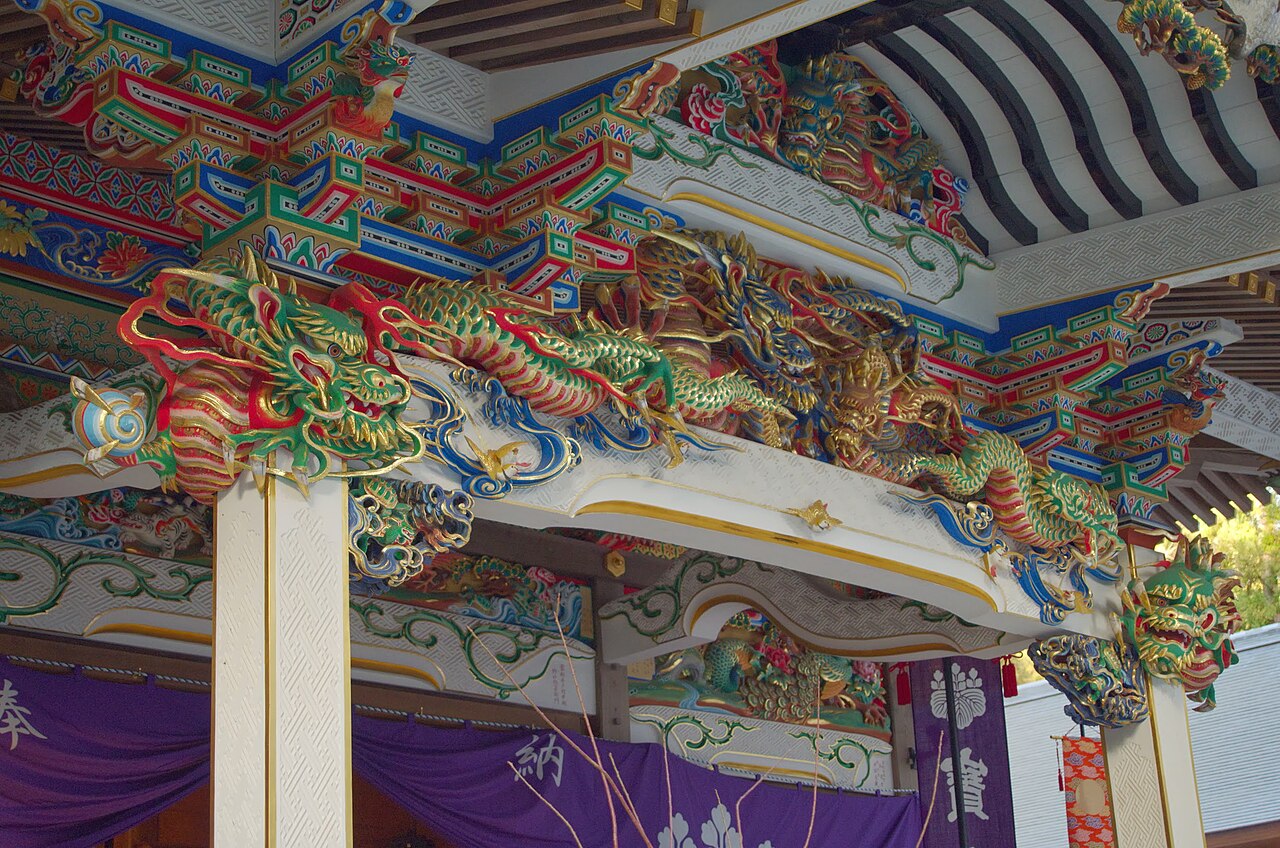
Hodosan Shrine stands at the foot of Mt. Hodo in Nagatoro, Saitama Prefecture, about fifteen minutes on foot from Nagatoro Station. It enshrines Kamu-Yamato-Iwarehiko-no-Mikoto, Oyamatsumi-no-Kami and Homusubi-no-Kami, and the official guidance describes prayers here for protection from fire and theft, from misfortune in general, and for household safety, business and road safety. The present hall is in the gongen style of the late Edo and early Meiji period, with coloured carvings.
- A hall in the gongen style with coloured carvings, from the late Edo and early Meiji period
- An approach that climbs gently from Nagatoro Station towards the mountain
- A founding legend in which divine dogs saved Yamato Takeru from a mountain fire
- A visit that is complete at the foot of the mountain, with the summit Okumiya as a separate trip
plan your visit
Visit facts for Hodosan Shrine
- Access
- About 15 minutes on foot from Nagatoro Station on the Chichibu Railway, along an approach that climbs gently towards the mountain.
- Nearest station
- Nagatoro Station (Chichibu Railway)
- Hours
- The grounds are open for worship all year. Reception hours for prayer services, the amulet office and festival days are given in the official information.
- Fees
- Visiting the grounds is free. Prayer services, amulets and the ropeway to the summit Okumiya are separate.
- Parking
- Available in Japanese only: 神社周辺の駐車場は混雑・利用条件を確認し、路上駐車をしません。
- Goshuin (seal stamps)
- A goshuin for the main shrine is given as a record of your visit. It is distinct from the one for the summit Okumiya, so confirm reception on the day.
- Typical visit
- About 50 minutes (Unmeguri's estimate, not an official figure)
- Facts checked
- 2026-10-22
background
Enshrined deities
Kamu-Yamato-Iwarehiko-no-Mikoto · Oyamatsumi-no-Kami · Homusubi-no-Kami
The shrine enshrines Kamu-Yamato-Iwarehiko-no-Mikoto, Oyamatsumi-no-Kami and Homusubi-no-Kami. The official guidance describes prayers offered here for protection from fire and theft and from misfortune in general, and for household safety, prosperity in business and safety on the road.
etiquette
Visiting with respect
- Bow lightly once before passing through the torii gate, and rinse your hands at the water basin before approaching the hall.
- Do not treat the main shrine and the summit Okumiya as the same in time or effort; they are separate visits.
- Do not touch the carvings on the hall, and do not push into the line of worshippers in order to take a photograph.
- The faith in protection from fire and in business does not replace practical precautions; note the steps you will actually take.
- Hours, fees and reception can change; check the official information before you go.
faq
Common questions
How do I get to Hodosan Shrine?
About 15 minutes on foot from Nagatoro Station on the Chichibu Railway, along an approach that climbs gently towards the mountain. Nearest station: Nagatoro Station (Chichibu Railway).
How much does it cost to visit Hodosan Shrine?
Visiting the grounds is free. Prayer services, amulets and the ropeway to the summit Okumiya are separate.
What are the opening hours of Hodosan Shrine?
The grounds are open for worship all year. Reception hours for prayer services, the amulet office and festival days are given in the official information.
Is there parking at Hodosan Shrine?
Parking information for Hodosan Shrine is available in Japanese only: 神社周辺の駐車場は混雑・利用条件を確認し、路上駐車をしません。
How long should I spend at Hodosan Shrine?
Unmeguri's estimate for a visit is about 50 minutes. This is an editorial estimate, not an official figure.
Can I get a goshuin at Hodosan Shrine?
A goshuin for the main shrine is given as a record of your visit. It is distinct from the one for the summit Okumiya, so confirm reception on the day.
What is Hodosan Shrine known for?
It is known for the legend in which divine dogs saved Yamato Takeru from a mountain fire, for prayers against fire and theft, and for its gongen-style hall with coloured carvings.
sources
Sources and checked dates
Facts last checked on 2026-10-22. Sources are in Japanese. Unmeguri separates officially documented facts from its own editorial reading, and does not promise that any wish or outcome will be realized.