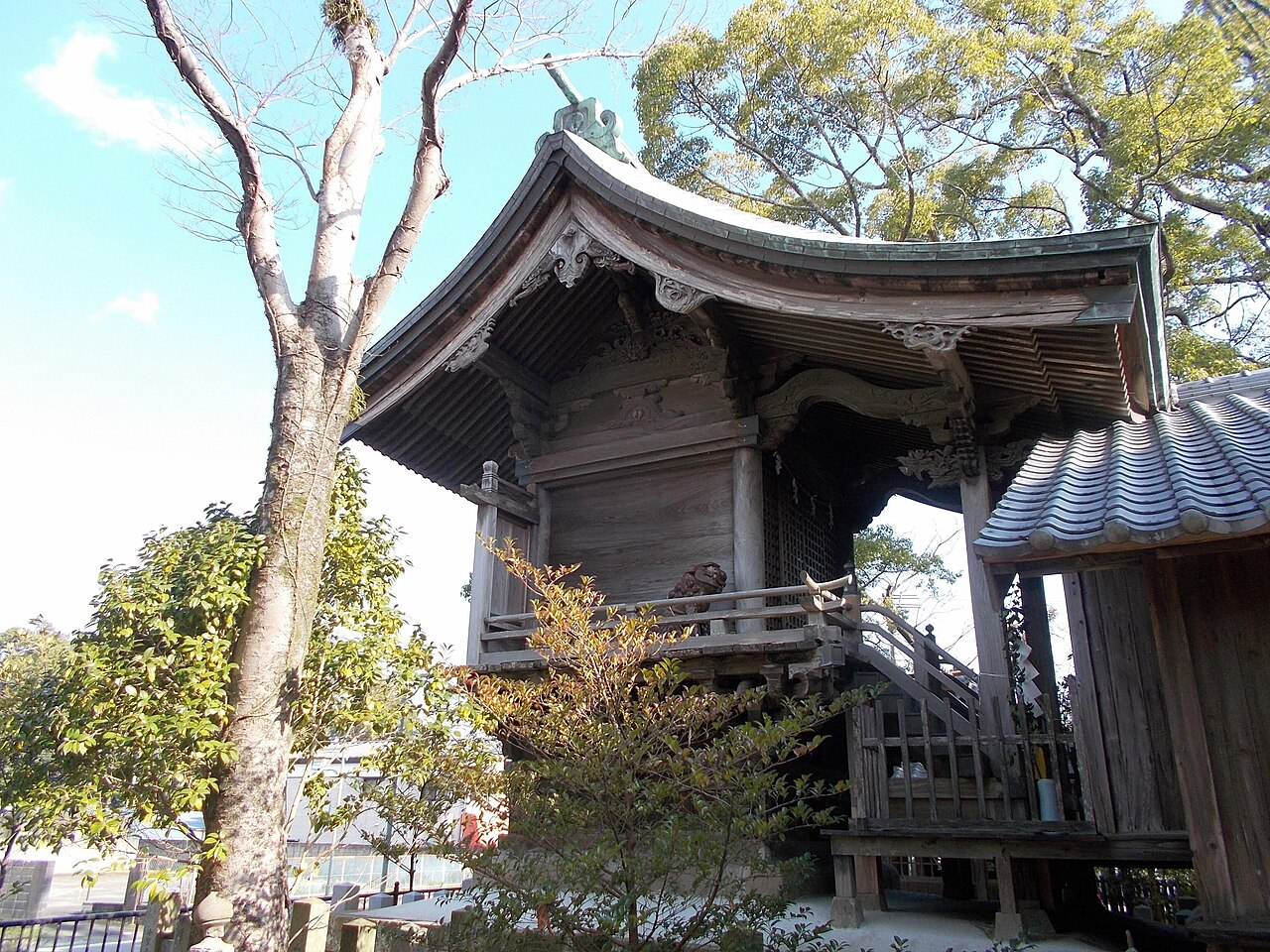
Toyotamahime Shrine
Toyotamahime Jinja · Ureshino Toyotamahime · 豊玉姫神社
overview
What this place is
Toyotamahime Shrine in the hot spring town of Ureshino enshrines Toyotamahime-no-Okami with Kasuga-no-Okami and Sumiyoshi-no-Okami. Public information states plainly that no record of its origin survives, that the halls on the old site were lost to fire in the warring-states period, that it was rebuilt in 1615 and moved to the present site in 1882. A local tradition takes the catfish as the messenger of Toyotamahime.
- Three deities, with Toyotamahime-no-Okami at the centre
- A rebuilding in 1615 and a move to this site in 1882
- Parts of Edo-period building, including the third torii
- A local tradition of the catfish as the deity’s messenger
plan your visit
Visit facts for Toyotamahime Shrine
- Access
- About 15 minutes from Ureshino Onsen Station on the Nishi-Kyushu Shinkansen by local bus or taxi towards the hot spring town, then a short walk from the Ureshino bus centre. Check times and services with the operator on the day.
- Nearest station
- Ureshino bus centre
- Hours
- No year-round hours for the grounds or the desk are given in the pages checked. Ask the shrine on the day about worship, votive tablets, prayers and rites.
- Fees
- No fee for the grounds is given in the public pages checked. Ask on the spot about votive tablets, prayers and amulets.
- Typical visit
- About 30 minutes (Unmeguri's estimate, not an official figure)
- Facts checked
- 2026-10-22
background
Enshrined deities
Toyotamahime-no-Okami · Kasuga-no-Okami · Sumiyoshi-no-Okami
The prefectural shrine agency gives these three as the deities, and public tourism material describes the local tradition of the catfish as the deity’s messenger and visits made with health and the skin in mind; nothing here is stated to act on the body.
etiquette
Visiting with respect
- Check the steps, the gravel and the crowds in the grounds on the spot.
- If your skin or your health is a concern, rest and medical judgment come before a visit.
- Read the catfish as a local tradition rather than as anything acting on the body.
- Do not touch the older parts of the building, including the third torii.
- Follow the notices on photography in the grounds.
- Hours, fees and reception can change; check the official information before you go.
faq
Common questions
How do I get to Toyotamahime Shrine?
About 15 minutes from Ureshino Onsen Station on the Nishi-Kyushu Shinkansen by local bus or taxi towards the hot spring town, then a short walk from the Ureshino bus centre. Check times and services with the operator on the day. Nearest station: Ureshino bus centre.
How much does it cost to visit Toyotamahime Shrine?
No fee for the grounds is given in the public pages checked. Ask on the spot about votive tablets, prayers and amulets.
What are the opening hours of Toyotamahime Shrine?
No year-round hours for the grounds or the desk are given in the pages checked. Ask the shrine on the day about worship, votive tablets, prayers and rites.
How long should I spend at Toyotamahime Shrine?
Unmeguri's estimate for a visit is about 30 minutes. This is an editorial estimate, not an official figure.
Which deities are enshrined?
Toyotamahime-no-Okami, with Kasuga-no-Okami and Sumiyoshi-no-Okami.
When was the shrine founded?
Public information states plainly that no record of its origin survives; it was rebuilt in 1615 and moved here in 1882.
What is the catfish about?
A local tradition takes the catfish as the messenger of Toyotamahime; it is not a claim about the body.
sources
Sources and checked dates
- 豊玉姫神社の歴史|地域観光資源の多言語解説文データベース(opens in a new tab)
- 御祭神・鎮座地|佐賀県神社庁(opens in a new tab)
- 豊玉姫神社・なまず様・絵馬|佐賀県公式観光サイト(opens in a new tab)
Facts last checked on 2026-10-22. Sources are in Japanese. Unmeguri separates officially documented facts from its own editorial reading, and does not promise that any wish or outcome will be realized.