Sumiyoshi Taisha Shrine
住吉大社 · Sumiyoshi Grand Shrine · Sumiyoshi-taisha
overview
What this place is
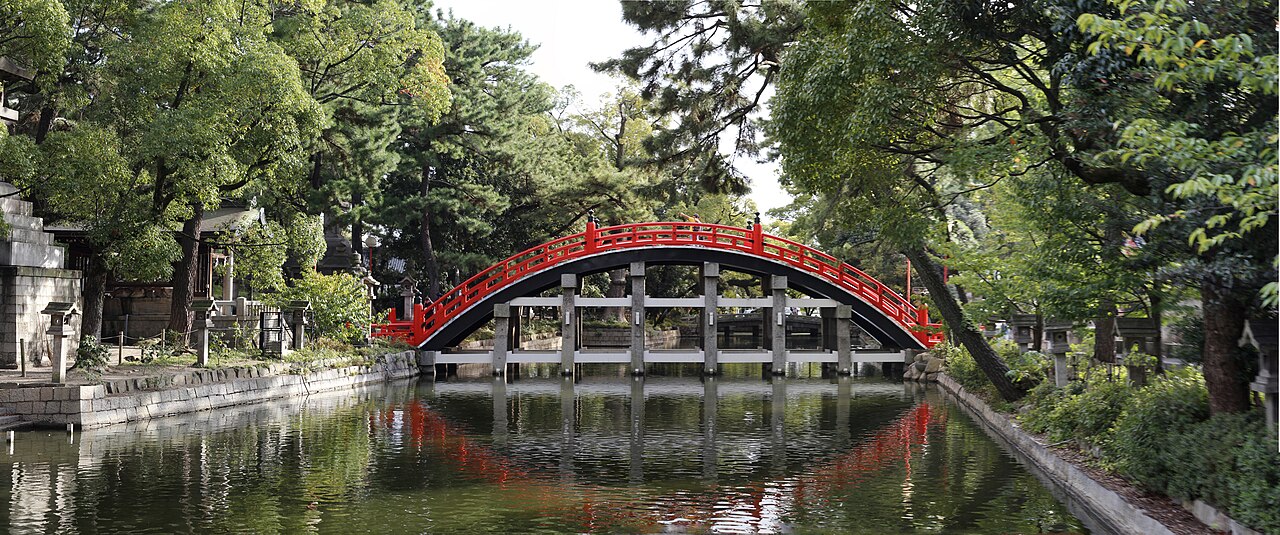
Sumiyoshi Taisha is a Shinto shrine in Sumiyoshi Ward, Osaka City, revered as the head shrine of about 2,300 Sumiyoshi shrines across Japan. Shrine tradition dates its founding to the year 211, and its four main sanctuaries, rebuilt in 1810 in the Sumiyoshi-zukuri style — regarded as one of the oldest styles of shrine architecture — are all designated National Treasures. The vermilion Sorihashi arched bridge over the shrine pond is a landmark of the approach, and the shrine has long been revered for purification and safety at sea.
- The Sorihashi arched bridge, about 20 meters long and 3.6 meters high with a maximum slope of about 48 degrees
- Four main sanctuaries rebuilt in 1810 in the Sumiyoshi-zukuri style, all designated National Treasures
- A layout in which the sanctuaries line up like a fleet of ships setting out to sea, as the shrine itself describes it
- The Godairiki pebbles at the Gosho Gozen and the Omokaru stone at the Otoshi-sha, both tied to long-standing worship customs
plan your visit
Visit facts for Sumiyoshi Taisha Shrine
- Access
- From Sumiyoshitaisha Station on the Nankai Main Line, walk about 3 minutes east. The shrine is also right by the Sumiyoshi Toriimae stop on the Hankai Tramway, and about 5 minutes west of Sumiyoshihigashi Station on the Nankai Koya Line.
- Nearest station
- Sumiyoshitaisha Station (Nankai Main Line) / Sumiyoshi Toriimae stop (Hankai Tramway)
- Hours
- The gates usually open at 6:00 from April to September and 6:30 from October to March; the outer gates close at 16:00 and the inner precinct at 17:00. The amulet office is open 9:00 to 17:00 and prayer reception 9:00 to 15:50. Closing times and traffic change during the Sumiyoshi Matsuri in late July and early August, so check the official information.
- Fees
- The grounds are free to visit. A prayer service is 10,000 yen per wish, or 5,000 yen for a prayer received without attending. Ordinary parking is 200 yen per 30 minutes, free for 2 hours for those receiving a prayer service, with different rates during the Sumiyoshi Matsuri and the New Year period.
- Parking
- Available in Japanese only: 公式FAQは参拝者駐車場約200台、通常期は普通車30分200円、祈祷を受ける場合2時間無料と案内しています。年末年始は12月31日〜1月3日閉鎖し、参拝者の多い1月4日〜2月初旬は料金が変わります。2026年7月31日・8月1日は1時間1,000円で最大料金なし、7月26日は周辺交通規制があります。満車待ちや路上停車をせず、公共交通または延期を選びます。
- Goshuin (seal stamps)
- Goshuin are offered at the main shrine reception, usually from 9:00 to 17:00; formats, waiting times, and festival-day changes are confirmed on the day.
- Typical visit
- About 90 minutes (Unmeguri's estimate, not an official figure)
- Facts checked
- 2026-10-22
background
Enshrined deities
Sokotsutsuno-o-no-Mikoto · Nakatsutsuno-o-no-Mikoto · Uwatsutsuno-o-no-Mikoto · Empress Jingu (Okinagatarashihime-no-Mikoto)
The shrine's official history explains that the three Sumiyoshi deities appeared from the sea during the purification rite of Izanagi, and that they are enshrined in the four main sanctuaries together with Empress Jingu, who established the shrine. They have long been revered as deities of purification and of safety at sea.
etiquette
Visiting with respect
- Hold the handrails when crossing the steep Sorihashi bridge, as the official guidance advises; crossing the bridge is not required to complete a visit.
- Do not stop for photographs on the bridge, climb the railings, or throw anything into the shrine pond.
- Follow the official manner for the Godairiki pebbles: pick up only the three lettered stones as one set, and return them together with thanks-stones from the office when your wish has been fulfilled.
- Eating and drinking, smoking, feeding animals, and flying drones are prohibited on the grounds.
- The common way to pray at a shrine is two bows, two claps, and one final bow.
- Hours, fees and reception can change; check the official information before you go.
faq
Common questions
How do I get to Sumiyoshi Taisha Shrine?
From Sumiyoshitaisha Station on the Nankai Main Line, walk about 3 minutes east. The shrine is also right by the Sumiyoshi Toriimae stop on the Hankai Tramway, and about 5 minutes west of Sumiyoshihigashi Station on the Nankai Koya Line. Nearest station: Sumiyoshitaisha Station (Nankai Main Line) / Sumiyoshi Toriimae stop (Hankai Tramway).
How much does it cost to visit Sumiyoshi Taisha Shrine?
The grounds are free to visit. A prayer service is 10,000 yen per wish, or 5,000 yen for a prayer received without attending. Ordinary parking is 200 yen per 30 minutes, free for 2 hours for those receiving a prayer service, with different rates during the Sumiyoshi Matsuri and the New Year period.
What are the opening hours of Sumiyoshi Taisha Shrine?
The gates usually open at 6:00 from April to September and 6:30 from October to March; the outer gates close at 16:00 and the inner precinct at 17:00. The amulet office is open 9:00 to 17:00 and prayer reception 9:00 to 15:50. Closing times and traffic change during the Sumiyoshi Matsuri in late July and early August, so check the official information.
Is there parking at Sumiyoshi Taisha Shrine?
Parking information for Sumiyoshi Taisha Shrine is available in Japanese only: 公式FAQは参拝者駐車場約200台、通常期は普通車30分200円、祈祷を受ける場合2時間無料と案内しています。年末年始は12月31日〜1月3日閉鎖し、参拝者の多い1月4日〜2月初旬は料金が変わります。2026年7月31日・8月1日は1時間1,000円で最大料金なし、7月26日は周辺交通規制があります。満車待ちや路上停車をせず、公共交通または延期を選びます。
How long should I spend at Sumiyoshi Taisha Shrine?
Unmeguri's estimate for a visit is about 90 minutes. This is an editorial estimate, not an official figure.
Can I get a goshuin at Sumiyoshi Taisha Shrine?
Goshuin are offered at the main shrine reception, usually from 9:00 to 17:00; formats, waiting times, and festival-day changes are confirmed on the day.
Do I have to cross the Sorihashi arched bridge?
No. The bridge has a maximum slope of about 48 degrees, and the official guidance asks visitors to hold the handrails. You can also ask at the shrine office about routes that avoid the bridge on the way to the main sanctuaries.
What is Sumiyoshi Taisha Shrine known for?
It is known as the head shrine of about 2,300 Sumiyoshi shrines, for its four National Treasure sanctuaries in the Sumiyoshi-zukuri style rebuilt in 1810, and for the vermilion Sorihashi arched bridge.
sources
Sources and checked dates
- 住吉大社 公式サイト(opens in a new tab)
- 住吉大社の由緒(opens in a new tab)
- 住吉大社の神様(opens in a new tab)
- 建築様式|住吉大社(opens in a new tab)
- 本殿|住吉大社(opens in a new tab)
- 住吉っさんの見所(opens in a new tab)
- 参拝の作法|住吉大社(opens in a new tab)
- アクセス・参拝時間|住吉大社(opens in a new tab)
- よくある質問|住吉大社(opens in a new tab)
- 祈祷の種類|住吉大社(opens in a new tab)
- 御守・授与品|住吉大社(opens in a new tab)
- ご参拝と境内の利用について|住吉大社(opens in a new tab)
- 令和8年 住吉祭について|住吉大社(opens in a new tab)
- 住吉大社|大阪観光局(opens in a new tab)
Facts last checked on 2026-10-22. Sources are in Japanese. Unmeguri separates officially documented facts from its own editorial reading, and does not promise that any wish or outcome will be realized.