Shirumichu
シルミチュー · Shirumichu Cave · Hamahiga Shirumichu
overview
What this place is
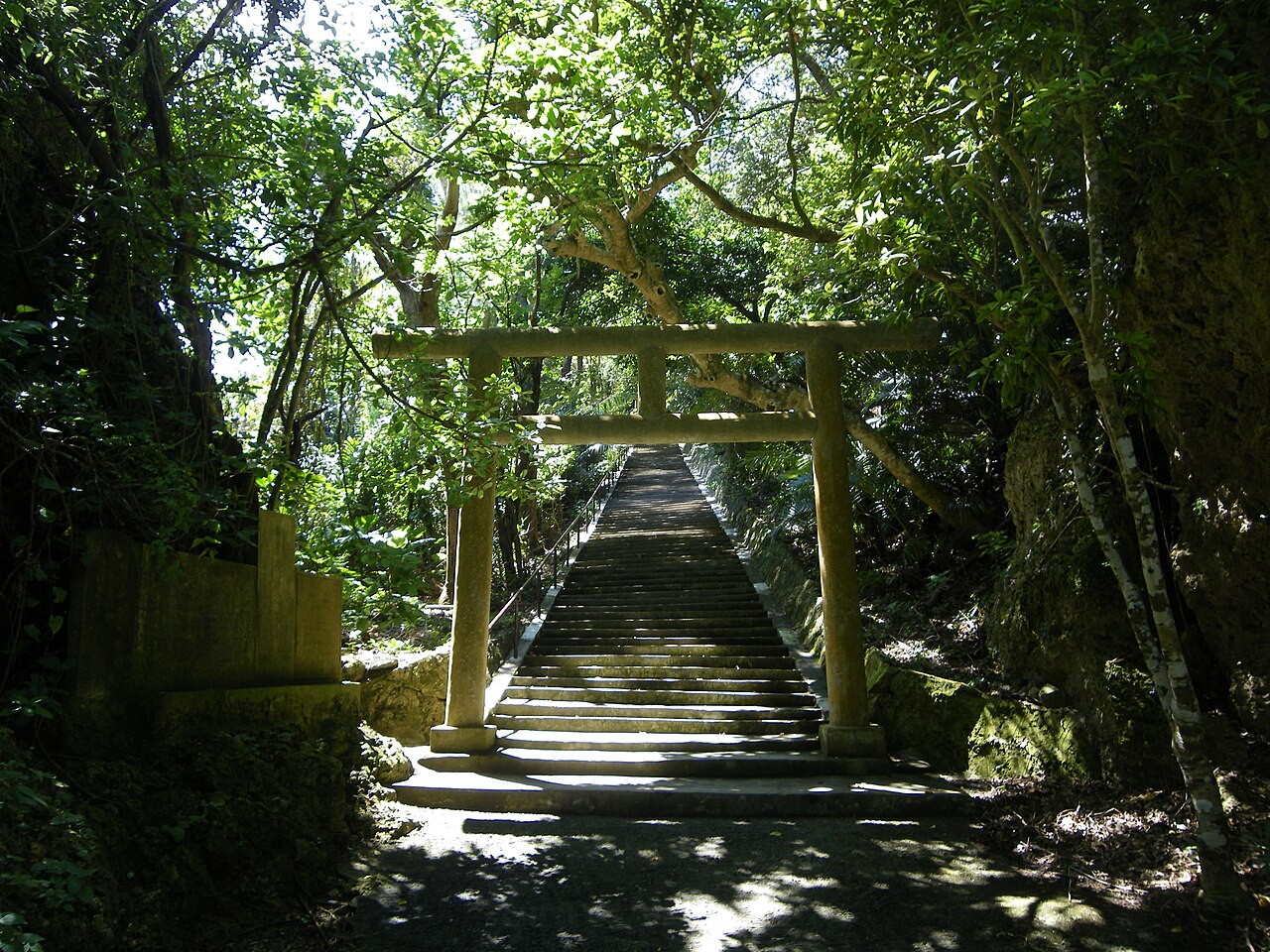
Shirumichu is a cave site on Hamahiga Island in Katsuren-Higa, Uruma City, Okinawa, approached by a stone stairway said to number 108 steps through the forest. Tradition holds that Amamichu and Shirumichu, the ancestral pair of Ryukyuan creation, lived in the cave, and a stalactite inside has long been regarded as a symbol of the blessing of children. Once a year, the noro priestess of Higa carries out a rite of adding a small stone to a pot in the cave, and the cave interior is entered only when local guidance explicitly allows it.
- A stone stairway said to number 108 steps, climbing through forest to the space before the cave
- The tradition that Amamichu and Shirumichu, the ancestral pair of Ryukyuan creation, lived in the cave
- A yearly rite recorded by the city, in which the noro priestess of Higa adds a small stone to a pot inside the cave
plan your visit
Visit facts for Shirumichu
- Access
- From the Heanza Sogo Kaihatsu-mae bus stop, the way across Hamahiga Island is a long walk of about 30 minutes; cars and taxis from the main island are also used, so settle your return transport first.
- Nearest station
- Heanza Sogo Kaihatsu-mae bus stop
- Hours
- The forest approach and the stone steps are outdoors, but rites and local management take priority. Treat the cave interior as open only when the signs on the day and explicit guidance from the local caretakers allow it.
- Fees
- No current official listing of a fee for the open outdoor area could be confirmed. Follow any donation boxes or notices on site.
- Parking
- Available in Japanese only: 現地の案内表示と地域の指定箇所を利用し、集落、畑、住宅前、狭い進入路に駐車しません。
- Typical visit
- About 30 minutes (Unmeguri's estimate, not an official figure)
- Facts checked
- 2026-10-22
background
Central feature
The tradition of Amamichu and Shirumichu and the cave as a local place of prayer
Uruma City introduces the cave as the traditional dwelling of Amamichu and Shirumichu and records a yearly rite in which the noro priestess of Higa adds a small stone to a pot inside; this local practice is not restated as a visitor ritual or a promise about childbirth.
etiquette
Visiting with respect
- Do not imitate the rite of the small stones, which belongs to the noro priestess of Higa, and do not touch the pot, the stones, the stalactite, or the incense holder, or add anything to them.
- Do not photograph the priestess, people praying, or rites without permission, and do not treat the utaki or the cave as a place for collecting spiritual energy.
- The steep stone steps can be slippery with damp and moss; climb only as far as is comfortable, and pausing before the torii gate or the steps counts as a full visit.
- Hours, fees and reception can change; check the official information before you go.
faq
Common questions
How do I get to Shirumichu?
From the Heanza Sogo Kaihatsu-mae bus stop, the way across Hamahiga Island is a long walk of about 30 minutes; cars and taxis from the main island are also used, so settle your return transport first. Nearest station: Heanza Sogo Kaihatsu-mae bus stop.
How much does it cost to visit Shirumichu?
No current official listing of a fee for the open outdoor area could be confirmed. Follow any donation boxes or notices on site.
What are the opening hours of Shirumichu?
The forest approach and the stone steps are outdoors, but rites and local management take priority. Treat the cave interior as open only when the signs on the day and explicit guidance from the local caretakers allow it.
Is there parking at Shirumichu?
Parking information for Shirumichu is available in Japanese only: 現地の案内表示と地域の指定箇所を利用し、集落、畑、住宅前、狭い進入路に駐車しません。
How long should I spend at Shirumichu?
Unmeguri's estimate for a visit is about 30 minutes. This is an editorial estimate, not an official figure.
Can I go inside the cave?
Only when the signs on the day and explicit local guidance allow it. Rites and local management take priority, and viewing from before the cave or the torii gate is a complete visit.
sources
Sources and checked dates
- シルミチューの伝承・祭祀|うるま市(opens in a new tab)
- 108段の石段と浜比嘉島の神話|うるま市観光物産協会(opens in a new tab)
- 所在地・アクセス|沖縄観光情報WEBサイト(opens in a new tab)
- 御嶽・祭祀・集落への配慮|沖縄県世界自然遺産(opens in a new tab)
Facts last checked on 2026-10-22. Sources are in Japanese. Unmeguri separates officially documented facts from its own editorial reading, and does not promise that any wish or outcome will be realized.