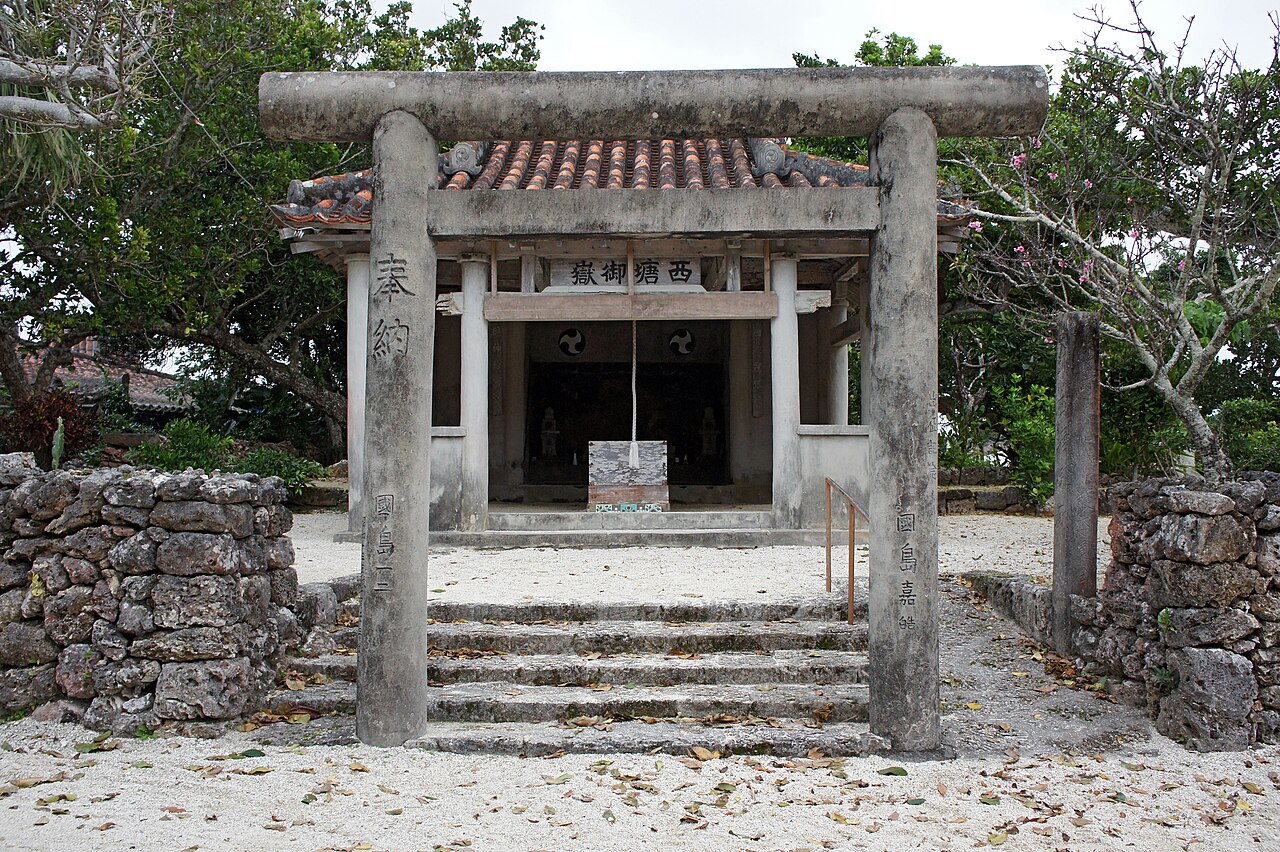
Nishito Utaki
西塘御嶽 · Nishito-on · Nishito Utaki, Taketomi Island
overview
What this place is
Nishito Utaki is an utaki within the village of Taketomi Island in Taketomi Town, Okinawa, that grew from the resting place of Nishito, a man of the island recorded as having taken part in building the Sonohyan Utaki Stone Gate at Shuri. The Taketomi Island Visitor Center explains that the place where he was laid to rest after his death became an utaki, where he is revered as a guardian deity and spiritual pillar of the island. Visitors view the stone torii gate and the surrounding green from the public path, without entering the space of prayer inside.
- An utaki that grew from the resting place of Nishito, revered as a guardian deity and spiritual pillar of the island
- The record that Nishito, born on Taketomi Island, took part in building the Sonohyan Utaki Stone Gate at Shuri
- A stone torii gate and the traditional village landscape of white-sand lanes, seen from the public path
plan your visit
Visit facts for Nishito Utaki
- Access
- From the Ishigaki Island remote-island terminal, the high-speed boat takes about 15 minutes to Taketomi East Port, and the utaki is about 15 minutes on foot. Check the festival and entry information for the day first at the Taketomi Island Yugafu-kan visitor center by the port.
- Nearest station
- Taketomi East Port
- Hours
- The utaki stands within the village, and restrictions during rites take absolute priority. Do not enter the inner space of prayer; view the stone torii gate from the public path, and confirm the conditions of the day at the Yugafu-kan.
- Fees
- No current official listing of a fee for viewing from the public path could be confirmed. Follow any cooperation-fee notices on site.
- Parking
- Available in Japanese only: レンタサイクルや送迎車は事業者の指定場所を利用し、御嶽、住宅、農地の前に駐輪しません。
- Typical visit
- About 25 minutes (Unmeguri's estimate, not an official figure)
- Facts checked
- 2026-10-22
background
Central feature
The utaki that grew from the resting place of Nishito and the island’s faith in him as its guardian
The Taketomi Island Visitor Center explains that the place where Nishito was laid to rest became an utaki, where he is revered as a guardian deity and spiritual pillar of the island; that local faith is kept separate from any suggested effect on individual visitors.
etiquette
Visiting with respect
- Do not cross into the space of prayer inside the utaki, areas cleared for rites, homes, or the boundaries between the utaki and private land.
- Do not photograph the priestesses, people praying, or rites; commercial filming follows the advance-notification rules of Taketomi Town.
- Do not ride a bicycle up to the front of the utaki or block its entrance or the village lanes, and park only at the places designated by the rental businesses.
- Hours, fees and reception can change; check the official information before you go.
faq
Common questions
How do I get to Nishito Utaki?
From the Ishigaki Island remote-island terminal, the high-speed boat takes about 15 minutes to Taketomi East Port, and the utaki is about 15 minutes on foot. Check the festival and entry information for the day first at the Taketomi Island Yugafu-kan visitor center by the port. Nearest station: Taketomi East Port.
How much does it cost to visit Nishito Utaki?
No current official listing of a fee for viewing from the public path could be confirmed. Follow any cooperation-fee notices on site.
What are the opening hours of Nishito Utaki?
The utaki stands within the village, and restrictions during rites take absolute priority. Do not enter the inner space of prayer; view the stone torii gate from the public path, and confirm the conditions of the day at the Yugafu-kan.
Is there parking at Nishito Utaki?
Parking information for Nishito Utaki is available in Japanese only: レンタサイクルや送迎車は事業者の指定場所を利用し、御嶽、住宅、農地の前に駐輪しません。
How long should I spend at Nishito Utaki?
Unmeguri's estimate for a visit is about 25 minutes. This is an editorial estimate, not an official figure.
Who was Nishito?
Nishito was born on Taketomi Island and is recorded as having taken part in building the Sonohyan Utaki Stone Gate at Shuri; the visitor center explains that the place where he was laid to rest later became this utaki.
sources
Sources and checked dates
- 西塘御嶽の由来・信仰|竹富島ビジターセンター(opens in a new tab)
- 西塘御嶽と西塘の歴史|竹富島交通(opens in a new tab)
- 御嶽の立入境界・文化散策|竹富島ビジターセンター(opens in a new tab)
- 御嶽・私有地・撮影のルール|竹富町(opens in a new tab)
- 石垣島から竹富島へのアクセス|竹富町(opens in a new tab)
- 竹富島ゆがふ館の開館・利用情報|竹富島ビジターセンター(opens in a new tab)
- 西塘と園比屋武御嶽石門の記録|竹富町(opens in a new tab)
Facts last checked on 2026-10-22. Sources are in Japanese. Unmeguri separates officially documented facts from its own editorial reading, and does not promise that any wish or outcome will be realized.