Wake Shrine
Wake Jinja · Wake no Kiyomaro Shrine · 和氣神社
overview
What this place is
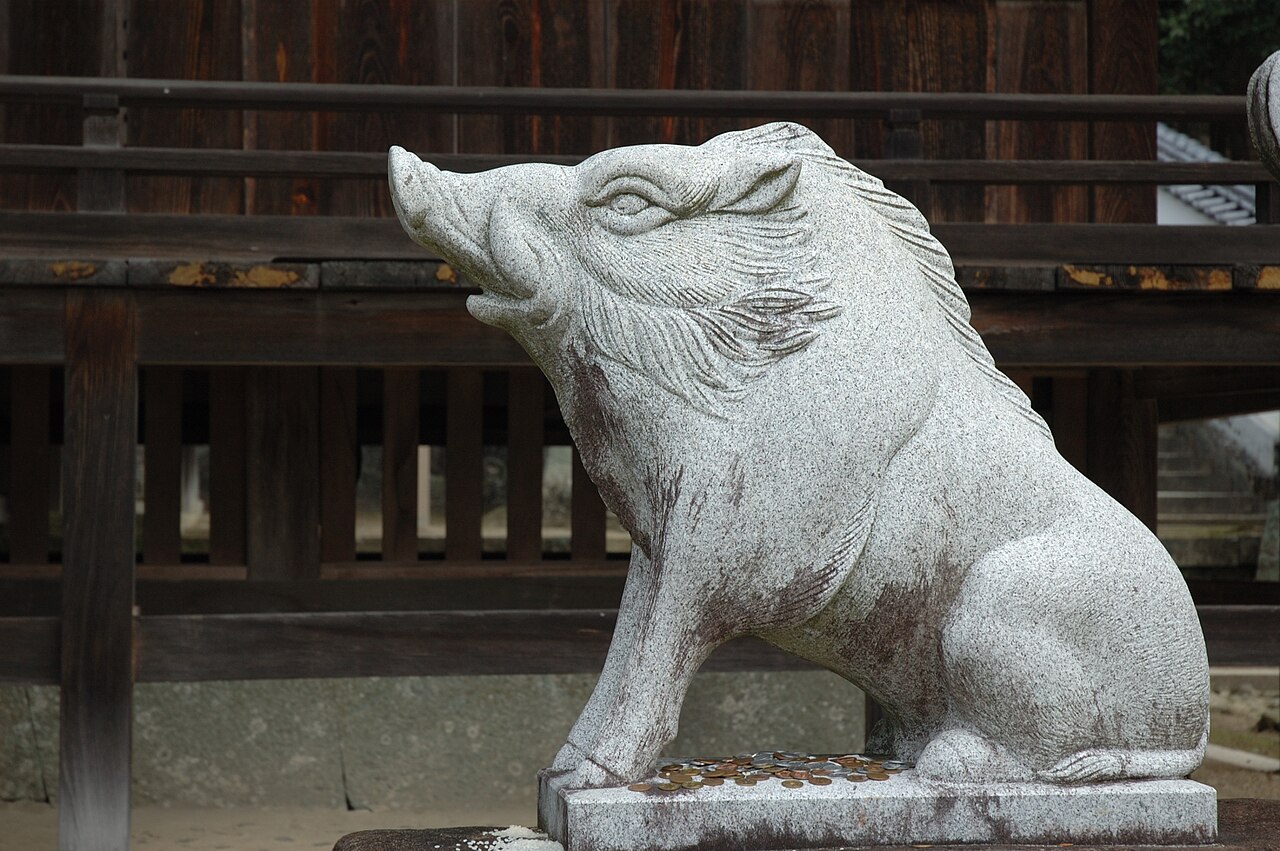
Wake Shrine in Wake was long the clan shrine of the Wake family, enshrining Nudeshiwake-no-Mikoto and, later, Wake no Kiyomaro and Wake no Hiromushi among others. It is known for its boar guardians, from an account in the Nihon Koki that some three hundred boars protected Kiyomaro in exile. The halls standing now were built between 1885 and 1895 by the carpenter Tabuchi Katsuyoshi of Oku.
- Boar guardians rather than lion-dogs, from the account of Kiyomaro in exile
- Halls of 1885 to 1895 by the Oku carpenter Tabuchi Katsuyoshi
- A move to the present site in 1591, after flood took the halls downstream
- The town’s wisteria park next door, opened in 1985
plan your visit
Visit facts for Wake Shrine
- Access
- About 220 minutes from Tokyo Station by Shinkansen to Okayama and the JR Sanyo Line to Wake Station, then about 10 minutes by taxi as the shrine gives it, or about 2 minutes on foot from the Fuji-koen bus stop. Check the bus route, times and days, and the restrictions during the wisteria festival.
- Nearest station
- Wake Station (JR Sanyo Line)
- Hours
- The amulet desk is 9:00 to 16:30, prayers are received 9:00 to 16:00 and enquiries 8:00 to 17:00. Prayers are booked, up to two days before, and without a booking they may not be possible because of rites and events. The opening of the grounds themselves is not stated in the text consulted.
- Fees
- No admission fee for an ordinary visit is given in the shrine’s text. A prayer for an individual is 5,000 yen, 7,000 yen, 10,000 yen or from 20,000 yen; for a group 7,000 yen, 10,000 yen, 20,000 yen or from 30,000 yen. The town’s wisteria park next door charges 500 yen for junior-high students and above during the festival only.
- Parking
- Available in Japanese only: 神社公式と岡山県公式観光は普通車600台・大型バス10台、和気町の藤まつり案内は普通車約650台・大型バス8台と案内します。対象区画や祭り時の運用が同一かは確定できないため、数を合算せず、藤まつり、正月、例祭時の開放区画、料金、満空、車いす区画、交通規制を当日確認します。藤公園と神社の所在地・管理主体を混同せず、参道、橋、駐車場出入口、近隣道路で待機・路上駐車・乗降・撮影をしません。
- Goshuin (seal stamps)
- Goshuin are given at the amulet desk, 9:00 to 16:30, for their own offering. Confirm the current types on the day.
- Typical visit
- About 75 minutes (Unmeguri's estimate, not an official figure)
- Facts checked
- 2026-10-22
background
Enshrined deities
Nudeshiwake-no-Mikoto · Otohiko-o · Sawara-no-Mikoto · Kihazu-no-Mikoto · Sukuna-no-Mikoto · Omaro-no-Mikoto · Wake no Kiyomaro · Wake no Hiromushi
The shrine names the ancestors of the Wake family, Wake no Kiyomaro and Wake no Hiromushi as its deities. The Okayama shrine agency describes nine deities of the Wake line, while the published list of names gives eight; the difference is not resolved here, so the eight named are listed and the current form is best confirmed with the shrine.
etiquette
Visiting with respect
- No continuous step-free route from the car park or bus stop to the bridge, the gate, the hall of worship, the prayer hall, the desk and the toilets is set out; the accessible pricing of the wisteria park does not describe the shrine grounds.
- The bridge, the front of the hall of worship, the prayer hall and the wisteria park are separate destinations, and the park is a different facility run by the town.
- The account of the boars is what the shrine relates from the Nihon Koki, read as tradition rather than as settled history.
- The words on the stone in the grounds are explained by the shrine as a call to modesty; they are not to be used to press anyone into isolation or obedience.
- Do not touch or climb on the halls or the boar guardians.
- Hours, fees and reception can change; check the official information before you go.
faq
Common questions
How do I get to Wake Shrine?
About 220 minutes from Tokyo Station by Shinkansen to Okayama and the JR Sanyo Line to Wake Station, then about 10 minutes by taxi as the shrine gives it, or about 2 minutes on foot from the Fuji-koen bus stop. Check the bus route, times and days, and the restrictions during the wisteria festival. Nearest station: Wake Station (JR Sanyo Line).
How much does it cost to visit Wake Shrine?
No admission fee for an ordinary visit is given in the shrine’s text. A prayer for an individual is 5,000 yen, 7,000 yen, 10,000 yen or from 20,000 yen; for a group 7,000 yen, 10,000 yen, 20,000 yen or from 30,000 yen. The town’s wisteria park next door charges 500 yen for junior-high students and above during the festival only.
What are the opening hours of Wake Shrine?
The amulet desk is 9:00 to 16:30, prayers are received 9:00 to 16:00 and enquiries 8:00 to 17:00. Prayers are booked, up to two days before, and without a booking they may not be possible because of rites and events. The opening of the grounds themselves is not stated in the text consulted.
Is there parking at Wake Shrine?
Parking information for Wake Shrine is available in Japanese only: 神社公式と岡山県公式観光は普通車600台・大型バス10台、和気町の藤まつり案内は普通車約650台・大型バス8台と案内します。対象区画や祭り時の運用が同一かは確定できないため、数を合算せず、藤まつり、正月、例祭時の開放区画、料金、満空、車いす区画、交通規制を当日確認します。藤公園と神社の所在地・管理主体を混同せず、参道、橋、駐車場出入口、近隣道路で待機・路上駐車・乗降・撮影をしません。
How long should I spend at Wake Shrine?
Unmeguri's estimate for a visit is about 75 minutes. This is an editorial estimate, not an official figure.
Can I get a goshuin at Wake Shrine?
Goshuin are given at the amulet desk, 9:00 to 16:30, for their own offering. Confirm the current types on the day.
Why are there boars instead of lion-dogs?
From an account the shrine relates from the Nihon Koki, that some three hundred boars protected Wake no Kiyomaro in exile.
Is the wisteria park part of the shrine?
No. It is a separate park run by the town, opened in 1985, charging 500 yen for junior-high students and above during the festival.
sources
Sources and checked dates
- 最新のお知らせ・御祭神・季節案内|和氣神社(opens in a new tab)
- 狛亥・由緒・社殿・アクセス・受付時間|和氣神社(opens in a new tab)
- 御祭神・和気清麻呂公・和気広虫姫・御神徳|和氣神社(opens in a new tab)
- 本殿・拝殿・随神門・狛亥・境内各所|和氣神社(opens in a new tab)
- 個人・団体祈祷・願意・予約・初穂料|和氣神社(opens in a new tab)
- 椿・桜・藤・紅葉・春秋例大祭の季節案内|和氣神社(opens in a new tab)
- 御朱印・祈祷変更・年中行事の最新告知|和氣神社(opens in a new tab)
- 2026年6月30日の大祓・一般祈祷時刻変更|和氣神社(opens in a new tab)
- 2026年正月の祈祷・御朱印・行事|和氣神社(opens in a new tab)
- 安産祈願の流れ・御守・体調優先|和氣神社(opens in a new tab)
- 個人情報の取扱い|和氣神社(opens in a new tab)
- 御祭神・由緒・町指定文化財|岡山県神社庁(opens in a new tab)
- 和気神社本殿の町指定文化財掲載|和気町(opens in a new tab)
- 藤公園の管理・開花・料金・駐車・ペット条件|和気町(opens in a new tab)
- 町営バス・運賃・路線・時刻表|和気町(opens in a new tab)
- 所在地・バス・駐車場・観光概要|岡山県公式観光(opens in a new tab)
- 狛亥・清麻呂公・所在地の英語案内|岡山県公式観光(opens in a new tab)
- 勅撰国史「日本後紀」の成立と清麻呂公伝|国立公文書館(opens in a new tab)
- 狛亥写真・撮影日・作者・ライセンス|Wikimedia Commons(opens in a new tab)
Facts last checked on 2026-10-22. Sources are in Japanese. Unmeguri separates officially documented facts from its own editorial reading, and does not promise that any wish or outcome will be realized.