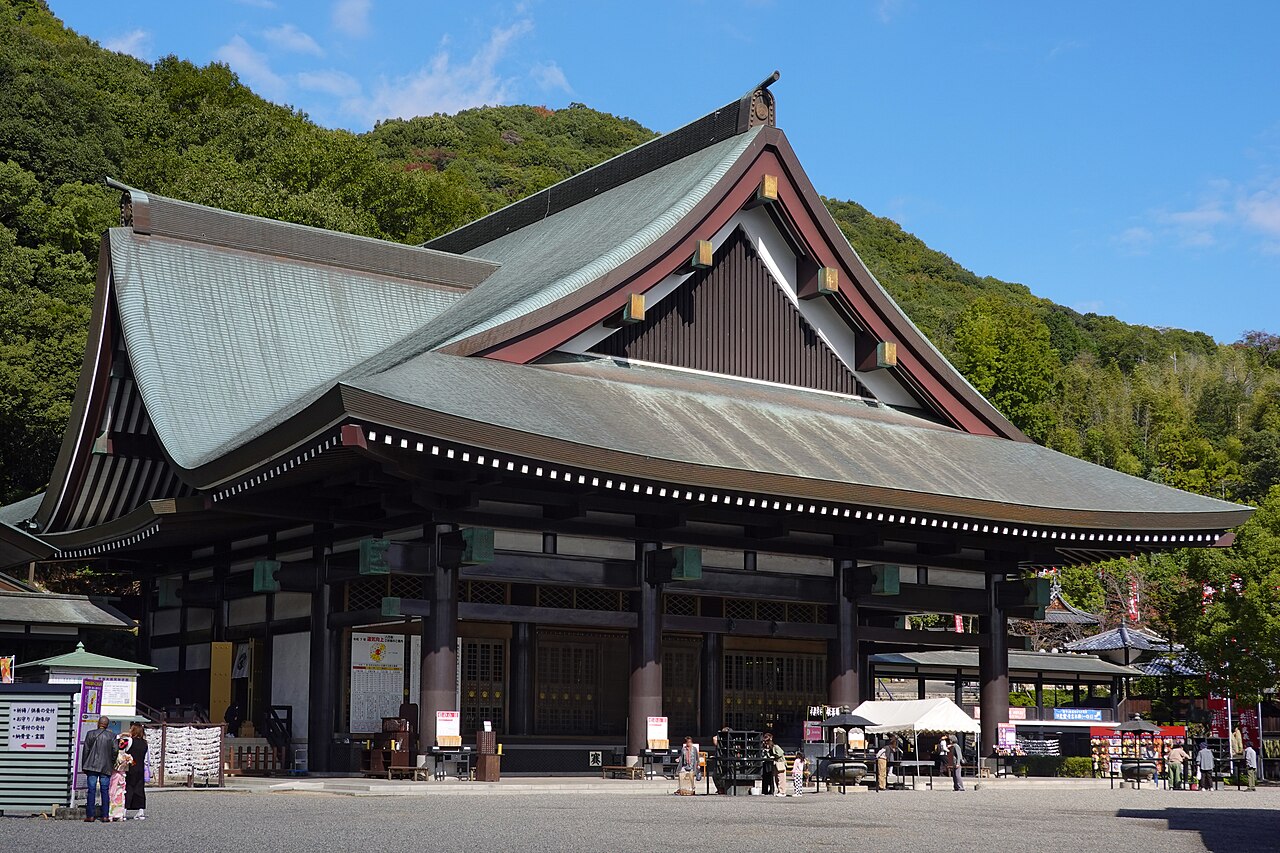
Saijo Inari Myokyoji Temple
Saijo Inari · Saijo Inarisan Myokyoji · 最上稲荷山妙教寺
overview
What this place is
Saijo Inari in Okayama is a Nichiren temple whose full name is Saijo Inarisan Myokyoji. Its principal image for prayer is Saijo-i Kyoo Daibosatsu, with Hachidai Ryuo-son and Sanmen Daikoku-sonten beside it as the three Saijo deities. It kept its combined Shinto and Buddhist form through the Meiji separation, so a torii and a hall in shrine style stand within a temple. It is not a shrine, and the form of worship is to join the hands and say the Nichiren invocation.
- A Nichiren temple that kept its combined form through the Meiji separation
- A great torii of 1972, given as 27.5 metres high with pillars 4.6 metres across
- The former main hall of 1741, a city-designated cultural property
- The Kanshotei garden, designated a prefectural place of scenic beauty in 2026
plan your visit
Visit facts for Saijo Inari Myokyoji Temple
- Access
- About 220 minutes from Tokyo Station by Shinkansen to Okayama and the JR Kibi Line to Bitchu-Takamatsu Station, then about 2 kilometres, roughly 5 minutes by taxi. A free shuttle is planned on Sundays and public holidays from March to November 2026, but does not run on event days.
- Nearest station
- Bitchu-Takamatsu Station (JR Kibi Line)
- Hours
- The grounds can be visited at any hour through the year, with the desks and shops 9:00 to 16:30. As of 16 July 2026 the front page gives prayer reception 5:30 to 16:30 and prayers in the main hall at 6:00 and each hour from 9:00 to 16:00, closing 15 minutes before; the detail page notes days ending at 15:00 and changes for events.
- Fees
- An ordinary visit is free. The Kanshotei garden is from 300 yen, or 200 yen for students and groups, and free for primary pupils and younger. Prayers in the main hall are from 3,000 yen, 5,000 yen, 10,000 yen or 30,000 yen, a vehicle prayer from 5,000 yen, the monthly ryoen visit on the 7th from 1,300 yen, and an ordinary goshuin from 500 yen.
- Parking
- Available in Japanese only: 公式交通案内は周辺に合計5,000台収容の民間駐車場、境内に身体障がい者駐車場4台があると案内します。周辺駐車場は寺院直営・無料・一律料金・常時空車とは限りません。満空、料金、営業時間、車種、障がい者区画の利用条件、祈祷車両の経路、正月・節分・朔日の規制を当日確認します。大鳥居、門前町、参道、民家前、駐車場出入口で待機・路上駐車・乗降・撮影をしません。
- Goshuin (seal stamps)
- An ordinary goshuin is from 500 yen, received at the desk, generally 9:00 to 16:30. Confirm on the day.
- Typical visit
- About 90 minutes (Unmeguri's estimate, not an official figure)
- Facts checked
- 2026-10-22
background
Principal image
Saijo-i Kyoo Daibosatsu
Saijo Inari is a Nichiren temple whose full name is Saijo Inarisan Myokyoji. The temple gives Saijo-i Kyoo Daibosatsu as the principal image for prayer, with Hachidai Ryuo-son and Sanmen Daikoku-sonten beside it as the three Saijo deities, and keeps a combined Shinto and Buddhist form with a torii and a hall in shrine style. Do not take it for a shrine: worship is with hands joined and the Nichiren invocation.
etiquette
Visiting with respect
- The temple lists four accessible parking spaces; no continuous step-free route from the car park or the station to the main hall is set out, nor the current use of any lift.
- Reaching the front of the main hall, worshipping there, the cultural property area, the memorial area and the mountain path are separate destinations.
- This is a temple: join your hands and follow the invocation the temple gives, rather than clapping as at a shrine.
- The founding in 752 is what the temple relates, not settled history.
- Do not touch the halls or the images, and follow the notices on photography.
- Hours, fees and reception can change; check the official information before you go.
faq
Common questions
How do I get to Saijo Inari Myokyoji Temple?
About 220 minutes from Tokyo Station by Shinkansen to Okayama and the JR Kibi Line to Bitchu-Takamatsu Station, then about 2 kilometres, roughly 5 minutes by taxi. A free shuttle is planned on Sundays and public holidays from March to November 2026, but does not run on event days. Nearest station: Bitchu-Takamatsu Station (JR Kibi Line).
How much does it cost to visit Saijo Inari Myokyoji Temple?
An ordinary visit is free. The Kanshotei garden is from 300 yen, or 200 yen for students and groups, and free for primary pupils and younger. Prayers in the main hall are from 3,000 yen, 5,000 yen, 10,000 yen or 30,000 yen, a vehicle prayer from 5,000 yen, the monthly ryoen visit on the 7th from 1,300 yen, and an ordinary goshuin from 500 yen.
What are the opening hours of Saijo Inari Myokyoji Temple?
The grounds can be visited at any hour through the year, with the desks and shops 9:00 to 16:30. As of 16 July 2026 the front page gives prayer reception 5:30 to 16:30 and prayers in the main hall at 6:00 and each hour from 9:00 to 16:00, closing 15 minutes before; the detail page notes days ending at 15:00 and changes for events.
Is there parking at Saijo Inari Myokyoji Temple?
Parking information for Saijo Inari Myokyoji Temple is available in Japanese only: 公式交通案内は周辺に合計5,000台収容の民間駐車場、境内に身体障がい者駐車場4台があると案内します。周辺駐車場は寺院直営・無料・一律料金・常時空車とは限りません。満空、料金、営業時間、車種、障がい者区画の利用条件、祈祷車両の経路、正月・節分・朔日の規制を当日確認します。大鳥居、門前町、参道、民家前、駐車場出入口で待機・路上駐車・乗降・撮影をしません。
How long should I spend at Saijo Inari Myokyoji Temple?
Unmeguri's estimate for a visit is about 90 minutes. This is an editorial estimate, not an official figure.
Can I get a goshuin at Saijo Inari Myokyoji Temple?
An ordinary goshuin is from 500 yen, received at the desk, generally 9:00 to 16:30. Confirm on the day.
Is Saijo Inari a shrine?
No. It is a Nichiren temple, Saijo Inarisan Myokyoji, which kept its combined form and so has a torii and a hall in shrine style.
How much is the garden?
The Kanshotei garden is from 300 yen, or 200 yen for students and groups, and free for primary pupils and younger.
sources
Sources and checked dates
- 日蓮宗寺院・神仏習合・最上三神・縁起|最上稲荷(opens in a new tab)
- 祈祷・文化財・供養の三区分と境内施設|最上稲荷(opens in a new tab)
- 本殿・七十七末社・旧本殿・根本大堂の参拝コース|最上稲荷(opens in a new tab)
- 基本30分コース・合掌・御朱印・寒松庭・大鳥居|最上稲荷(opens in a new tab)
- 現行の祈祷受付・祈祷・売店時刻|最上稲荷(opens in a new tab)
- 通年参拝・拝観料・神仏習合の英語案内|最上稲荷(opens in a new tab)
- 交通・民間駐車場・身体障がい者駐車場|最上稲荷(opens in a new tab)
- 本殿祈祷・旧本殿代替・車体祈祷|最上稲荷(opens in a new tab)
- 祈祷受付・執行時刻・所要・祈祷料・入力事項|最上稲荷(opens in a new tab)
- 当日受付・Web予約・札送付・決済条件|最上稲荷(opens in a new tab)
- お願い事とお札一覧|最上稲荷(opens in a new tab)
- 縁の末社・両縁参り・絵馬・札・御朱印|最上稲荷(opens in a new tab)
- 縁切り特別祈祷の受付と祈祷料|最上稲荷(opens in a new tab)
- 先祖・水子・ペット供養の予約・時間・供養料|最上稲荷(opens in a new tab)
- 根本大堂と供養・回向の役割|最上稲荷(opens in a new tab)
- 御守・念珠・朱印帳・売店営業時間|最上稲荷(opens in a new tab)
- 寺院の作法・三大稲荷の説明・札と御守|最上稲荷(opens in a new tab)
- 毎日の心がけ・最上徳目|最上稲荷(opens in a new tab)
- 祈祷と供養・冥利と冥福の指針|最上稲荷(opens in a new tab)
- 朔日参りの夜間・早朝祈祷と限定授与|最上稲荷(opens in a new tab)
- 2026年の備中高松駅無料シャトルバス|最上稲荷(opens in a new tab)
- 寒松庭の2026年岡山県名勝指定|最上稲荷(opens in a new tab)
- 撮影時の不法侵入・肖像権・プライバシー注意|最上稲荷(opens in a new tab)
- 妙教寺仁王門の国登録有形文化財情報|文化遺産オンライン(opens in a new tab)
- 妙教寺建造物群の国登録有形文化財解説|岡山県(opens in a new tab)
- 神仏習合・所在地・交通の英語観光案内|岡山県公式観光(opens in a new tab)
Facts last checked on 2026-10-22. Sources are in Japanese. Unmeguri separates officially documented facts from its own editorial reading, and does not promise that any wish or outcome will be realized.