Koryu Shrine
Koryu Jinja · Takatatsu Shrine · 高龍神社
overview
What this place is
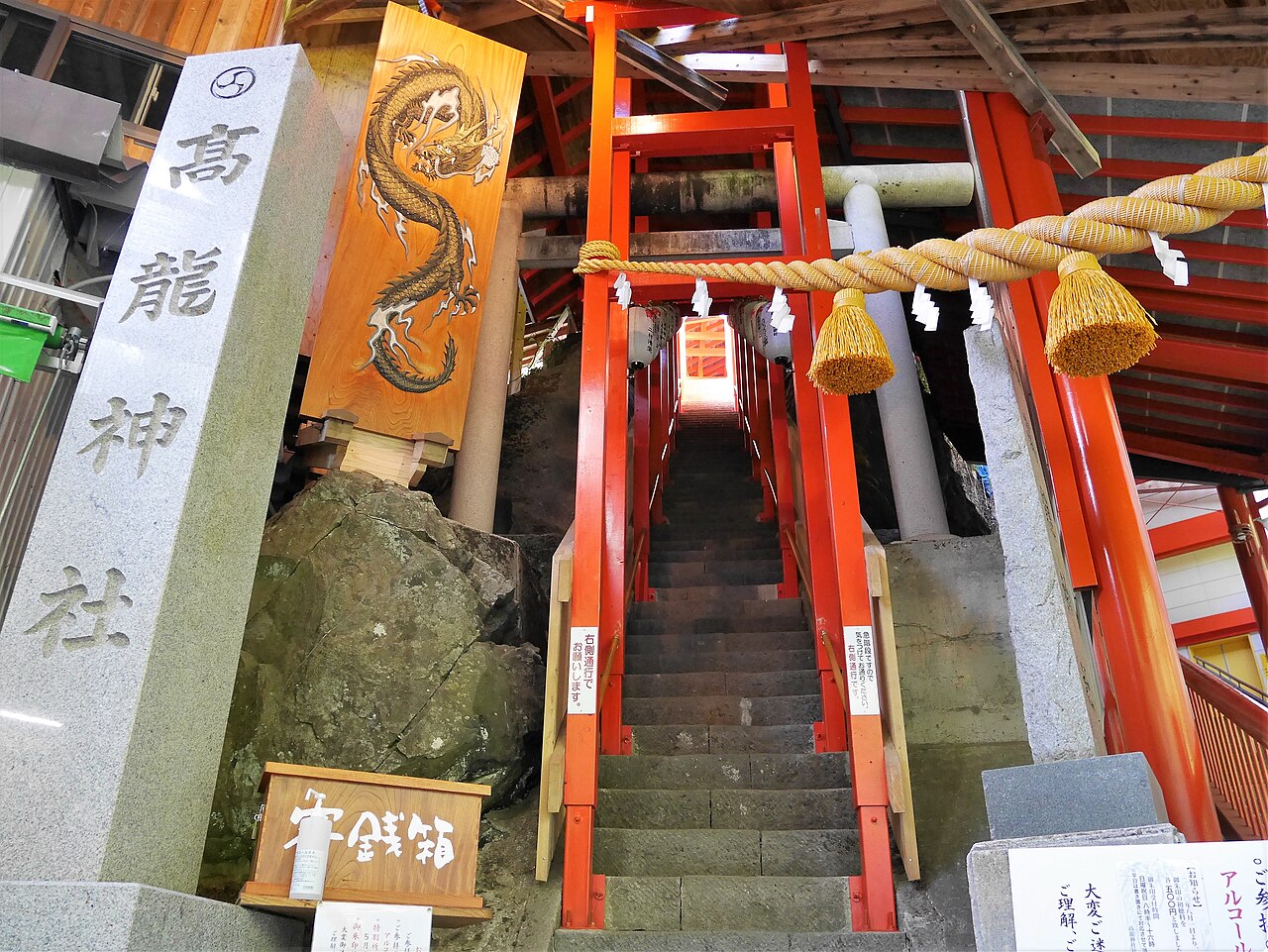
Koryu Shrine at Yomogihira in Nagaoka enshrines Koryu-no-Okami and is known for a tradition in which white snakes are the deity’s messengers, and for a following among people in trade. The present hall dates from the Taisho period, but the district has kept a story, some 630 years old, of help received from a dragon deity in the mountains. A lift reaches the middle of the 118 stone steps.
- A flight of 118 stone steps, with a lift as far as the middle
- A tradition in which white snakes are taken as the deity’s messengers
- A hall of the Taisho period, in a hot-spring village in the hills
- A separate inner shrine and middle shrine above the main one
plan your visit
Visit facts for Koryu Shrine
- Access
- About 40 minutes from JR Nagaoka Station by Echigo Kotsu bus or by car to Yomogihira Onsen, then about 10 minutes on foot. Check how often the bus runs, the return service and the snow.
- Nearest station
- Yomogihira Onsen bus stop (Echigo Kotsu)
- Hours
- The shrine can be visited throughout the year. Goshuin are given on Sundays and public holidays from 8:30 to 16:00 according to public information; confirm this for the day you go.
- Fees
- Visiting the grounds is free. Amulets, prayers and transport are separate.
- Parking
- Available in Japanese only: 参拝者駐車場を利用し、積雪・凍結時は道路と除雪状況を確認します。
- Goshuin (seal stamps)
- Goshuin are given on Sundays and public holidays from 8:30 to 16:00 according to public information. Confirm before you travel, as this can change.
- Typical visit
- About 55 minutes (Unmeguri's estimate, not an official figure)
- Facts checked
- 2026-10-22
background
Enshrined deity
Koryu-no-Okami
The shrine enshrines Koryu-no-Okami and is known for a tradition in which white snakes serve as the deity’s messengers, and for a following among people in trade.
etiquette
Visiting with respect
- A lift reaches the middle of the 118 steps, but not the top; check the conditions if steps are difficult for you.
- The main shrine, the inner shrine and the middle shrine are separate; the main shrine alone is a complete visit.
- The white snakes are a tradition of the place, not something to look for or to feed.
- Snow changes the road and the steps; check both before you set out.
- Do not touch or climb on the hall, and follow the notices on photography.
- Hours, fees and reception can change; check the official information before you go.
faq
Common questions
How do I get to Koryu Shrine?
About 40 minutes from JR Nagaoka Station by Echigo Kotsu bus or by car to Yomogihira Onsen, then about 10 minutes on foot. Check how often the bus runs, the return service and the snow. Nearest station: Yomogihira Onsen bus stop (Echigo Kotsu).
How much does it cost to visit Koryu Shrine?
Visiting the grounds is free. Amulets, prayers and transport are separate.
What are the opening hours of Koryu Shrine?
The shrine can be visited throughout the year. Goshuin are given on Sundays and public holidays from 8:30 to 16:00 according to public information; confirm this for the day you go.
Is there parking at Koryu Shrine?
Parking information for Koryu Shrine is available in Japanese only: 参拝者駐車場を利用し、積雪・凍結時は道路と除雪状況を確認します。
How long should I spend at Koryu Shrine?
Unmeguri's estimate for a visit is about 55 minutes. This is an editorial estimate, not an official figure.
Can I get a goshuin at Koryu Shrine?
Goshuin are given on Sundays and public holidays from 8:30 to 16:00 according to public information. Confirm before you travel, as this can change.
How many steps are there at Koryu Shrine?
118 stone steps, with a lift reaching the middle of them. The upper section is still climbed on foot.
When can I receive a goshuin?
On Sundays and public holidays from 8:30 to 16:00 according to public information. Confirm for the day you visit.
What is the shrine known for?
For enshrining Koryu-no-Okami, for a tradition in which white snakes are the deity’s messengers, and for a following among people in trade.
sources
Sources and checked dates
Facts last checked on 2026-10-22. Sources are in Japanese. Unmeguri separates officially documented facts from its own editorial reading, and does not promise that any wish or outcome will be realized.