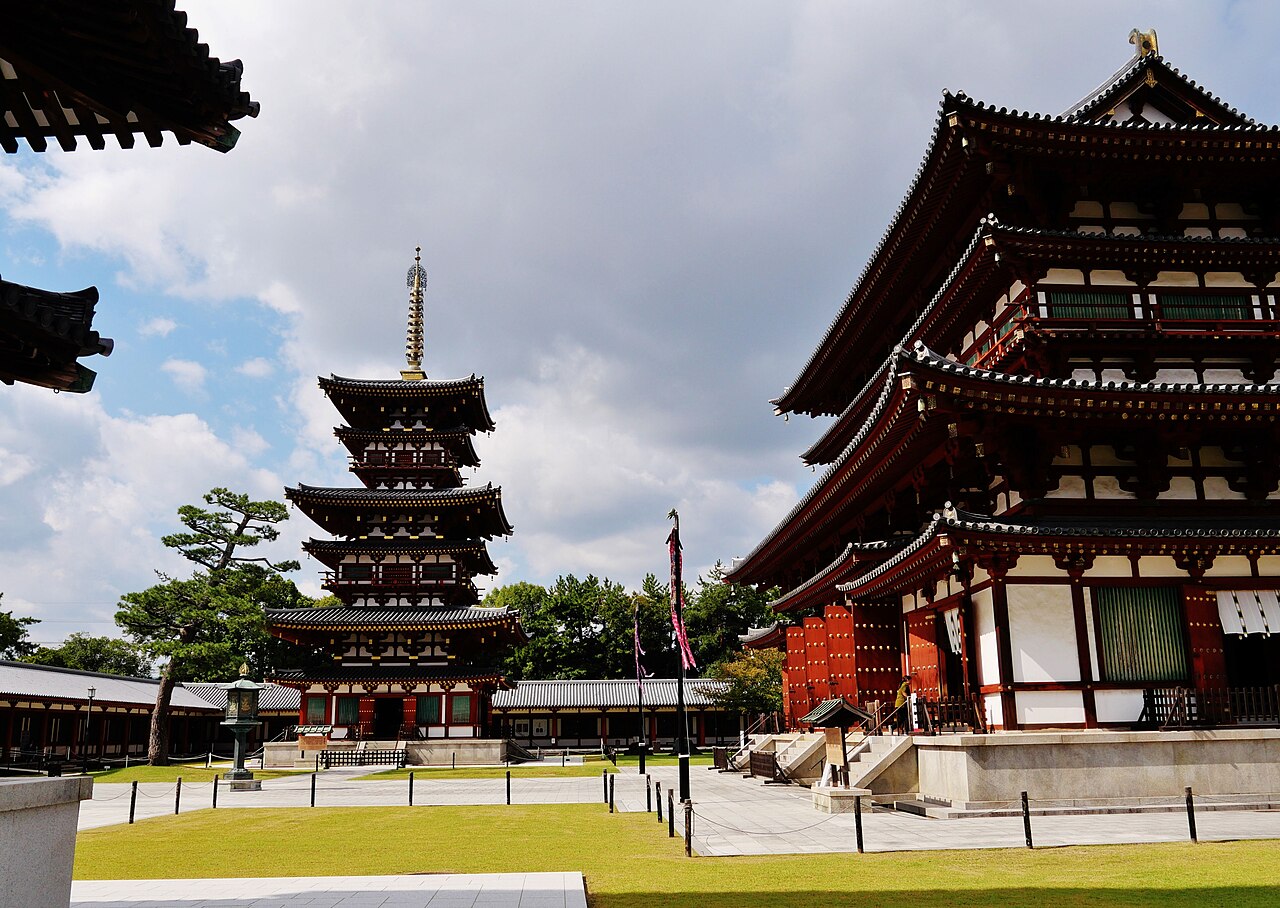
Yakushi-ji Temple
薬師寺 · Yakushiji · Yakushiji Nara
overview
What this place is
Yakushi-ji is the head temple of the Hosso school of Buddhism in the Nishinokyo district of Nara. Emperor Tenmu vowed its founding in 680, praying for the recovery of his empress — the later Empress Jito — and the principal image was consecrated in 697 before the temple moved to its present site with the Heijo capital. A fire in 1528 destroyed most of the compound, leaving the East Pagoda as the only building surviving from the founding era; the present Kondo was completed in 1976 through a revival funded by a million copied sutras.
- The National Treasure Yakushi Triad in the Kondo: Yakushi Nyorai flanked by Nikko and Gakko Bosatsu
- The East Pagoda, the only building surviving from the founding era, described as built by 730
- A Kondo rebuilt in 1976 through a sutra-copying campaign begun in 1968 that gathered a million copies
- A sutra-copying hall open daily where individuals may take part without reservation
plan your visit
Visit facts for Yakushi-ji Temple
- Access
- The temple is immediately by Nishinokyo Station on the Kintetsu Kashihara Line, about 40 minutes from Kyoto or Namba via Yamato-Saidaiji, according to the official guide. From JR or Kintetsu Nara Station, a bus bound for the prefectural medical center takes about 18 minutes to the Yakushiji stop.
- Nearest station
- Nishinokyo Station (Kintetsu Kashihara Line)
- Hours
- Regular visiting hours are 9:00 to 17:00 with reception until 16:30, covering the Kondo, the Daikodo, and the Toindo. The sutra-copying hall is open daily 9:00 to 17:00 with reception until 16:00, no reservation needed for individuals. Monthly rites include the Yakushi rite on the 8th from 11:00 and the Genjo rite on the 5th from 13:00, so check for changes before you visit.
- Fees
- Regular admission is 1,000 yen for adults, 600 yen for junior and senior high school students, and 200 yen for elementary school students, covering the Kondo, Daikodo, and Toindo; holders of a disability certificate and one carer pay half, cash only. Sutra copying is 2,000 yen for the Heart Sutra, 4,000 yen for the Yakushi Sutra, and 5,000 yen for the Yuishiki verses, and interior openings of other compounds are not always included.
- Parking
- Available in Japanese only: 公式掲載は大型車3,000円、中型車2,500円、普通車800円、バイク200円。入庫は8:45から、最終入庫16:20、閉場17:15です。奈良市観光協会は無料駐輪場も案内しています。カーナビが南駐車場ではなく南門前へ案内する場合があるため、公式の注意に従い、南門前、参道、駅前、バス停、生活道路、緊急車両動線で待機・転回・乗降をしません。満空、大型車条件、車いす区画、行事規制を当日確認します。
- Typical visit
- About 90 minutes (Unmeguri's estimate, not an official figure)
- Facts checked
- 2026-10-22
background
Principal image
Yakushi Nyorai · Nikko Bosatsu · Gakko Bosatsu
The temple explains that the Kondo enshrines the National Treasure Yakushi Triad — Yakushi Nyorai in the center, Nikko Bosatsu on the right, and Gakko Bosatsu on the left — and that Yakushi Nyorai has been venerated in tradition as a buddha who relieves illness and misfortune and grants health and happiness.
etiquette
Visiting with respect
- At the halls, place a donation in the offering box, put your hands together quietly, and bow; unlike at a shrine, you do not clap at a temple.
- Check the posted rules on photography inside the halls, and step aside during rites and guided rounds rather than crossing in front of worshippers.
- Faith in Yakushi Nyorai is a devotional tradition, not medical care; visits do not replace diagnosis or treatment, and the temple offers sutra copying as a practice anyone may join.
- Hours, fees and reception can change; check the official information before you go.
faq
Common questions
How do I get to Yakushi-ji Temple?
The temple is immediately by Nishinokyo Station on the Kintetsu Kashihara Line, about 40 minutes from Kyoto or Namba via Yamato-Saidaiji, according to the official guide. From JR or Kintetsu Nara Station, a bus bound for the prefectural medical center takes about 18 minutes to the Yakushiji stop. Nearest station: Nishinokyo Station (Kintetsu Kashihara Line).
How much does it cost to visit Yakushi-ji Temple?
Regular admission is 1,000 yen for adults, 600 yen for junior and senior high school students, and 200 yen for elementary school students, covering the Kondo, Daikodo, and Toindo; holders of a disability certificate and one carer pay half, cash only. Sutra copying is 2,000 yen for the Heart Sutra, 4,000 yen for the Yakushi Sutra, and 5,000 yen for the Yuishiki verses, and interior openings of other compounds are not always included.
What are the opening hours of Yakushi-ji Temple?
Regular visiting hours are 9:00 to 17:00 with reception until 16:30, covering the Kondo, the Daikodo, and the Toindo. The sutra-copying hall is open daily 9:00 to 17:00 with reception until 16:00, no reservation needed for individuals. Monthly rites include the Yakushi rite on the 8th from 11:00 and the Genjo rite on the 5th from 13:00, so check for changes before you visit.
Is there parking at Yakushi-ji Temple?
Parking information for Yakushi-ji Temple is available in Japanese only: 公式掲載は大型車3,000円、中型車2,500円、普通車800円、バイク200円。入庫は8:45から、最終入庫16:20、閉場17:15です。奈良市観光協会は無料駐輪場も案内しています。カーナビが南駐車場ではなく南門前へ案内する場合があるため、公式の注意に従い、南門前、参道、駅前、バス停、生活道路、緊急車両動線で待機・転回・乗降をしません。満空、大型車条件、車いす区画、行事規制を当日確認します。
How long should I spend at Yakushi-ji Temple?
Unmeguri's estimate for a visit is about 90 minutes. This is an editorial estimate, not an official figure.
Can I try sutra copying at Yakushi-ji?
Yes. The sutra-copying hall is open daily 9:00 to 17:00 with reception until 16:00, individuals need no reservation, and the Heart Sutra course is 2,000 yen.
sources
Sources and checked dates
- 拝観時間・料金・拝観可能場所・駐車場|薬師寺(opens in a new tab)
- 創建・平城京遷寺・伽藍復興|薬師寺(opens in a new tab)
- 法相宗・唯識・玄奘三蔵・歴史年表|薬師寺(opens in a new tab)
- 金堂・薬師三尊像・薬師如来信仰|薬師寺(opens in a new tab)
- 写経時間・種類・納経料・作法・FAQ|薬師寺(opens in a new tab)
- 薬師縁日・八日札・玄奘縁日・弥勒縁日|薬師寺(opens in a new tab)
- 年中行事・定例行事・変更注意|薬師寺(opens in a new tab)
- 所在地・西ノ京駅・車の経路|薬師寺(opens in a new tab)
- 拝観・交通・駐車・国宝・行事|奈良市観光協会(opens in a new tab)
- 創建・東塔・災害の歴史|文化庁 文化遺産オンライン(opens in a new tab)
- 迷わず119番を要請する症状|厚生労働省(opens in a new tab)
Facts last checked on 2026-10-22. Sources are in Japanese. Unmeguri separates officially documented facts from its own editorial reading, and does not promise that any wish or outcome will be realized.