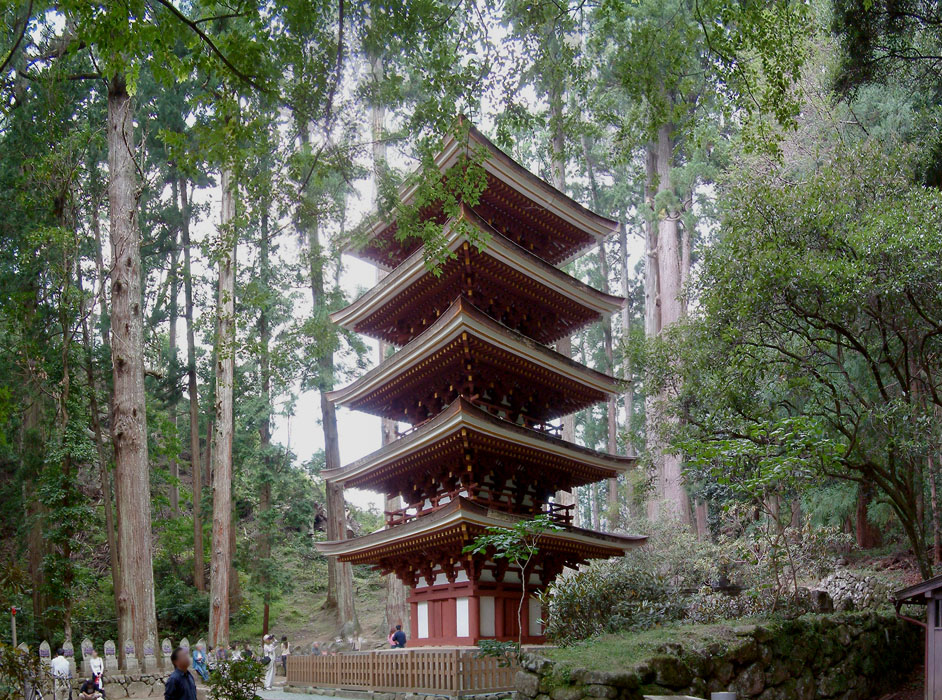
Muro-ji Temple
室生寺 · Muroji · Nyonin Koya
overview
What this place is
Muro-ji is the head temple of the Muroji school of Shingon Buddhism, standing in the forested valley of Mount Muro in Uda, Nara. Founded in the late Nara period after prayers for the recovery of Prince Yamabe, the later Emperor Kanmu, it became known as "Nyonin Koya" — a Koya for women — because it welcomed women at a time when Mount Koya did not. Its five-story pagoda, a National Treasure of the late Nara period, is described as the smallest outdoor pagoda in Japan and one of the oldest after Horyu-ji.
- A five-story pagoda of the late Nara period, a National Treasure described as the smallest outdoor pagoda in Japan
- The tradition of "Nyonin Koya", a Shingon training ground open to women when Mount Koya was closed to them
- The main hall (Kanjodo) with its mid-Heian image of Nyoirin Kannon
- A pagoda restored after severe damage from a fallen tree in the typhoon of September 1998
plan your visit
Visit facts for Muro-ji Temple
- Access
- From Muroguchi-Ono Station on the Kintetsu Osaka Line, take a Nara Kotsu bus for about 14 minutes to the Muroji-mae stop, then walk about 5 minutes, according to the official guide. The March 2026 timetable lists no regular buses in the noon hour, so decide your return bus before you set out.
- Nearest station
- Muroji-mae bus stop (from Muroguchi-Ono Station, Kintetsu Osaka Line)
- Hours
- Regular visiting hours are 8:30 to 17:00 from April to November and 9:00 to 16:00 from December to March. The treasure hall is open 9:00 to 16:30 from April to November and 9:30 to 15:30 from December to March, with reception until 15:00. The arched Taiko-bashi bridge is under repair from July 10, 2026 to around mid-September, so use the detour via the lower bridge.
- Fees
- Admission is 600 yen for adults and 400 yen for children, with a flat 400 yen extra for the treasure hall. The spring 2026 special viewing of the Kondo, 500 yen extra, ended on July 5. Goshuin are 500 yen as a rule, with some pilgrimage-association stamps at 300 yen or under revision.
- Parking
- Available in Japanese only: 2026年7月8日の公式告知は、太鼓橋工事中も門前の有料駐車場を利用し、下の橋から先の駐車場は関係者用のため駐車しないよう案内しています。公式サイトに料金、台数、時間、車いす区画の一覧はありません。空車や山内送迎を想定せず、門前、迂回路、橋、バス転回、緊急車両動線で待機しません。
- Goshuin (seal stamps)
- Goshuin are 500 yen as a rule following the April 2024 revision, with some pilgrimage-association stamps at 300 yen or under revision; pray at the relevant hall first and confirm the reception details with the staff.
- Typical visit
- About 120 minutes (Unmeguri's estimate, not an official figure)
- Facts checked
- 2026-10-22
background
Principal image
Nyoirin Kannon
The temple explains that the shrine cabinet at the front of the main hall, the Kanjodo, houses a mid-Heian image of Nyoirin Kannon. The standing Shaka Nyorai in the Kondo, originally made as Yakushi Nyorai, is a separate image from the main-hall principal image.
etiquette
Visiting with respect
- The precinct climbs the mountainside in long flights of stone steps; rest as needed, and visiting only the lower halls is a complete visit in itself.
- At the halls, place a donation in the offering box, put your hands together quietly, and bow; unlike at a shrine, you do not clap at a temple.
- Follow the detour signs while the Taiko-bashi bridge is under repair, and check bus times for the return leg before extending your visit toward the inner precinct.
- Hours, fees and reception can change; check the official information before you go.
faq
Common questions
How do I get to Muro-ji Temple?
From Muroguchi-Ono Station on the Kintetsu Osaka Line, take a Nara Kotsu bus for about 14 minutes to the Muroji-mae stop, then walk about 5 minutes, according to the official guide. The March 2026 timetable lists no regular buses in the noon hour, so decide your return bus before you set out. Nearest station: Muroji-mae bus stop (from Muroguchi-Ono Station, Kintetsu Osaka Line).
How much does it cost to visit Muro-ji Temple?
Admission is 600 yen for adults and 400 yen for children, with a flat 400 yen extra for the treasure hall. The spring 2026 special viewing of the Kondo, 500 yen extra, ended on July 5. Goshuin are 500 yen as a rule, with some pilgrimage-association stamps at 300 yen or under revision.
What are the opening hours of Muro-ji Temple?
Regular visiting hours are 8:30 to 17:00 from April to November and 9:00 to 16:00 from December to March. The treasure hall is open 9:00 to 16:30 from April to November and 9:30 to 15:30 from December to March, with reception until 15:00. The arched Taiko-bashi bridge is under repair from July 10, 2026 to around mid-September, so use the detour via the lower bridge.
Is there parking at Muro-ji Temple?
Parking information for Muro-ji Temple is available in Japanese only: 2026年7月8日の公式告知は、太鼓橋工事中も門前の有料駐車場を利用し、下の橋から先の駐車場は関係者用のため駐車しないよう案内しています。公式サイトに料金、台数、時間、車いす区画の一覧はありません。空車や山内送迎を想定せず、門前、迂回路、橋、バス転回、緊急車両動線で待機しません。
How long should I spend at Muro-ji Temple?
Unmeguri's estimate for a visit is about 120 minutes. This is an editorial estimate, not an official figure.
Can I get a goshuin at Muro-ji Temple?
Goshuin are 500 yen as a rule following the April 2024 revision, with some pilgrimage-association stamps at 300 yen or under revision; pray at the relevant hall first and confirm the reception details with the staff.
Why is Muro-ji called "Nyonin Koya"?
The temple welcomed women as a place of Shingon practice at a time when Mount Koya was closed to them, and so came to be known as "Nyonin Koya", a Koya for women.
sources
Sources and checked dates
- 女人高野室生寺・水の神の聖地|室生寺(opens in a new tab)
- 拝観時間・料金・交通・禁止事項|室生寺(opens in a new tab)
- 伽藍・太鼓橋・鎧坂・石楠花|室生寺(opens in a new tab)
- 本堂・金堂・五重塔・奥之院|室生寺(opens in a new tab)
- 五重塔の被災と復興|室生寺(opens in a new tab)
- 創建・祈雨信仰・女人高野|室生寺(opens in a new tab)
- 本堂本尊・如意輪観音菩薩|室生寺(opens in a new tab)
- 金堂中尊・釈迦如来立像|室生寺(opens in a new tab)
- 太鼓橋工事に伴う参拝順路変更|室生寺(opens in a new tab)
- 2026年金堂特別拝観・行事日程|室生寺(opens in a new tab)
- 御朱印料について|室生寺(opens in a new tab)
- 参拝・災害・行事の最新情報|室生寺(opens in a new tab)
- Murouji Temple・境内と交通|奈良県公式観光サイト(opens in a new tab)
Facts last checked on 2026-10-22. Sources are in Japanese. Unmeguri separates officially documented facts from its own editorial reading, and does not promise that any wish or outcome will be realized.