Hase-dera Temple
長谷寺 · Hasedera · Hase Temple
overview
What this place is
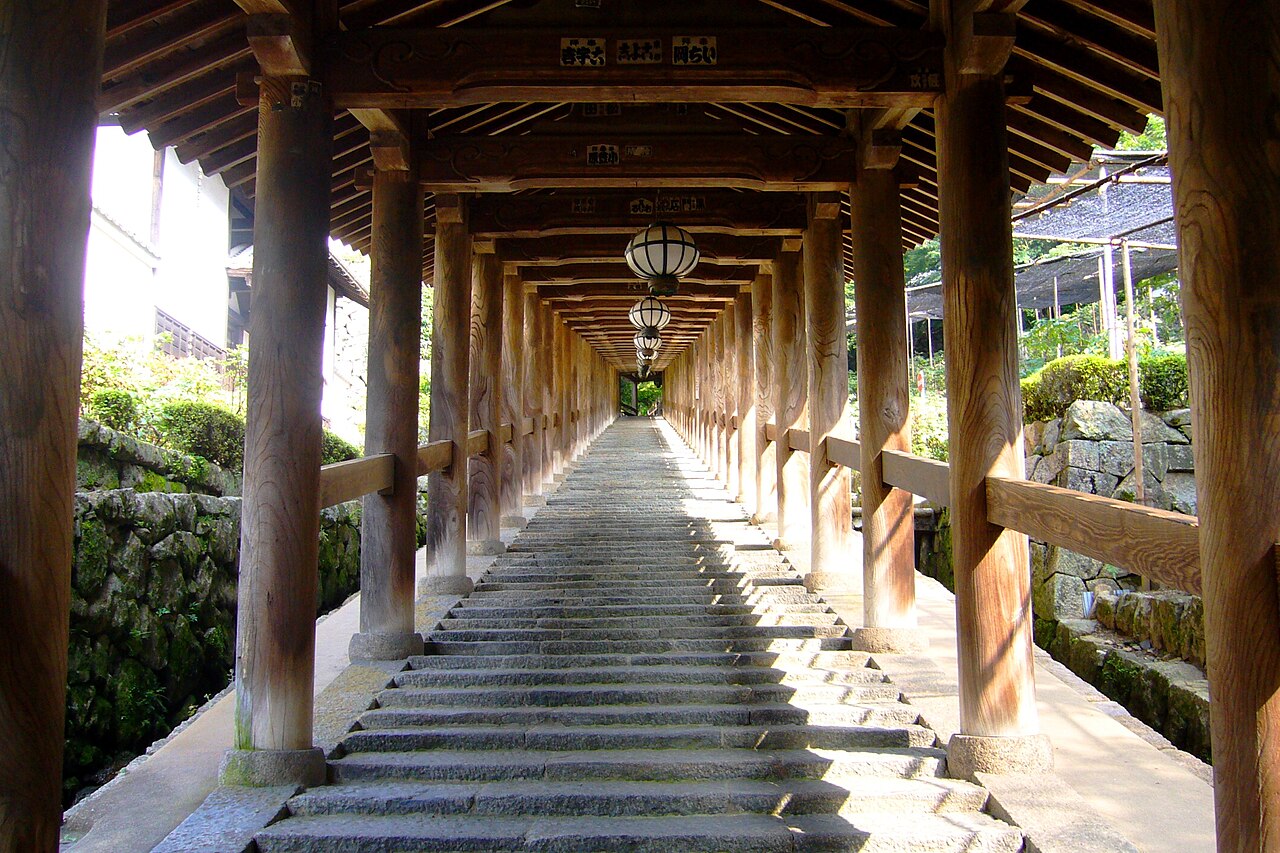
Hase-dera is the head temple of the Buzan school of Shingon Buddhism, set on the slopes of Mount Ohatsuse in Sakurai, Nara. Its origins are traced to 686, and in 727 the monk Tokudo is said to have carved its Eleven-headed Kannon at the wish of Emperor Shomu. The temple is the eighth station of the Saigoku pilgrimage of thirty-three Kannon temples, and its covered stairway of 399 steps, the Noboriro, climbs in three sections to a National Treasure main hall built out over the cliff.
- The Noboriro, a covered stairway of 399 steps in three sections, first built in 1039
- A main hall built out over the cliff in kakezukuri style, designated a National Treasure in December 2004
- The Hasedera-style Eleven-headed Kannon of 1538, a wooden statue 1,018 centimeters tall
- The eighth station of the Saigoku pilgrimage of thirty-three Kannon temples, whose founder Tokudo is linked to this temple
plan your visit
Visit facts for Hase-dera Temple
- Access
- From Hasedera Station on the Kintetsu Osaka Line, walk about 15 minutes through the temple town, according to the official guide. Alternatively, take a Nara Kotsu bus from Sakurai Station to the Hasedera Sando-guchi stop and walk about 10 minutes.
- Nearest station
- Hasedera Station (Kintetsu Osaka Line)
- Hours
- Entry hours are 8:30 to 17:00 from April to September, 9:00 to 17:00 in October, November, and March, and 9:00 to 16:30 from December to February, with extensions during events such as the peony festival. The morning service is a separate reception before regular hours, from 6:30 in April to September and 7:00 in October to March, and is not held on January 1.
- Fees
- Admission is 500 yen for adults and junior and senior high school students and 250 yen for elementary school students; with a disability certificate the holder pays 250 yen, applied to one companion as well. Attending the morning service costs 500 yen, prayer services start from 5,000 yen, and seasonal special viewings are charged separately.
- Parking
- Available in Japanese only: 公式駐車場は二輪200円、普通車500円、大型バス2,000円。桜・牡丹の時期は混雑し、公式も公共交通の利用を勧めています。空車、利用時間、車いす用区画、山内への車両入山、送迎待機は事前確認し、門前町、参道、住宅地、緊急車両動線へ駐停車しません。
- Goshuin (seal stamps)
- The temple offers a peony-illustrated goshuin book, listed at 1,500 yen in the official online shop; details of the goshuin themselves are confirmed on the day, so pray at the main hall first and follow the reception guidance.
- Typical visit
- About 120 minutes (Unmeguri's estimate, not an official figure)
- Facts checked
- 2026-10-22
background
Principal image
Juichimen Kannon (Eleven-headed Kannon)
The temple explains that its principal image is a Hasedera-style Eleven-headed Kannon holding a staff in the right hand and a vase in the left, standing on a great stone base. The present statue was made in 1538 and stands 1,018 centimeters tall.
etiquette
Visiting with respect
- The Noboriro climbs in three sections and grows steeper toward the top; rest between sections, keep enough strength to come back down the same way, and mind the closing time.
- Do not stop abruptly, overtake, sit on the stone steps, or step backward for photographs on the stairway, and keep the way clear for other visitors.
- At the main hall, place a donation in the offering box, put your hands together quietly, and bow; unlike at a shrine, you do not clap at a temple.
- Hours, fees and reception can change; check the official information before you go.
faq
Common questions
How do I get to Hase-dera Temple?
From Hasedera Station on the Kintetsu Osaka Line, walk about 15 minutes through the temple town, according to the official guide. Alternatively, take a Nara Kotsu bus from Sakurai Station to the Hasedera Sando-guchi stop and walk about 10 minutes. Nearest station: Hasedera Station (Kintetsu Osaka Line).
How much does it cost to visit Hase-dera Temple?
Admission is 500 yen for adults and junior and senior high school students and 250 yen for elementary school students; with a disability certificate the holder pays 250 yen, applied to one companion as well. Attending the morning service costs 500 yen, prayer services start from 5,000 yen, and seasonal special viewings are charged separately.
What are the opening hours of Hase-dera Temple?
Entry hours are 8:30 to 17:00 from April to September, 9:00 to 17:00 in October, November, and March, and 9:00 to 16:30 from December to February, with extensions during events such as the peony festival. The morning service is a separate reception before regular hours, from 6:30 in April to September and 7:00 in October to March, and is not held on January 1.
Is there parking at Hase-dera Temple?
Parking information for Hase-dera Temple is available in Japanese only: 公式駐車場は二輪200円、普通車500円、大型バス2,000円。桜・牡丹の時期は混雑し、公式も公共交通の利用を勧めています。空車、利用時間、車いす用区画、山内への車両入山、送迎待機は事前確認し、門前町、参道、住宅地、緊急車両動線へ駐停車しません。
How long should I spend at Hase-dera Temple?
Unmeguri's estimate for a visit is about 120 minutes. This is an editorial estimate, not an official figure.
Can I get a goshuin at Hase-dera Temple?
The temple offers a peony-illustrated goshuin book, listed at 1,500 yen in the official online shop; details of the goshuin themselves are confirmed on the day, so pray at the main hall first and follow the reception guidance.
How many steps does the Noboriro stairway have?
The covered stairway has 399 steps in three sections — the lower and middle sections were rebuilt in 1889, while the upper section, rebuilt around 1650, is described as the oldest surviving part.
sources
Sources and checked dates
- 入山案内・時間・料金・駐車場|総本山長谷寺(opens in a new tab)
- 交通案内|総本山長谷寺(opens in a new tab)
- 境内案内・本堂・登廊・仁王門|総本山長谷寺(opens in a new tab)
- 長谷寺境内地図|総本山長谷寺(opens in a new tab)
- 登廊・399段と三廊|総本山長谷寺(opens in a new tab)
- 略縁起|総本山長谷寺(opens in a new tab)
- 本尊十一面観世音菩薩立像|総本山長谷寺(opens in a new tab)
- 国宝本堂・銅板法華説相図|総本山長谷寺(opens in a new tab)
- 法要・ご祈祷案内|総本山長谷寺(opens in a new tab)
- ご祈祷受付・願意・祈願札|総本山長谷寺(opens in a new tab)
- 朝の勤行のご案内|総本山長谷寺(opens in a new tab)
- 季節の行事・特別拝観・混雑案内|総本山長谷寺(opens in a new tab)
- たなごころ守|総本山長谷寺オンラインショップ(opens in a new tab)
- 牡丹画帖カラー朱印帳|総本山長谷寺オンラインショップ(opens in a new tab)
- Hasedera Temple・移動支援案内|奈良県公式観光サイト(opens in a new tab)
Facts last checked on 2026-10-22. Sources are in Japanese. Unmeguri separates officially documented facts from its own editorial reading, and does not promise that any wish or outcome will be realized.