Watatsumi Shrine
Watazumi Jinja · Watatsumi · 和多都美神社
overview
What this place is
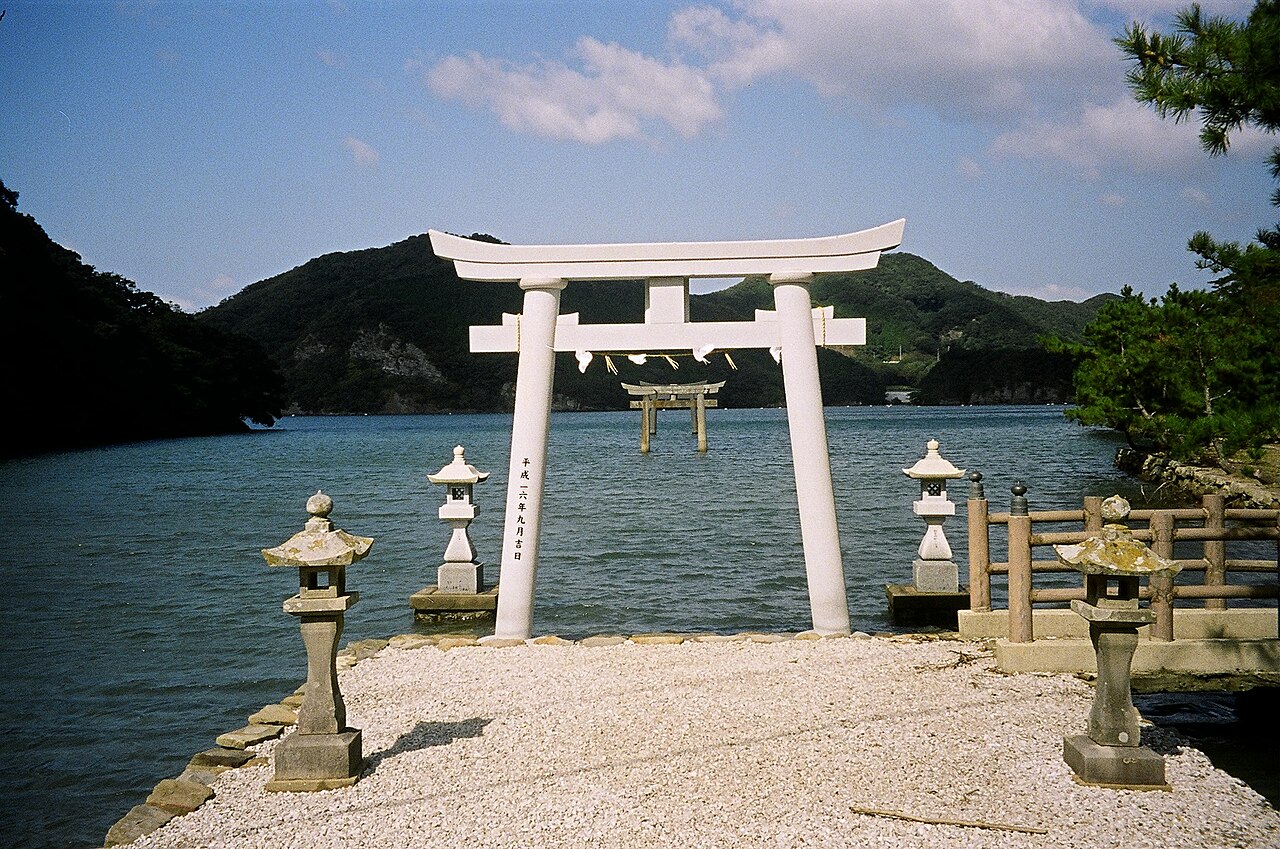
Watatsumi Shrine on Tsushima enshrines Hikohohodemi-no-Mikoto and Toyotamahime-no-Mikoto and carries the tradition of a palace of the sea and of the dragon palace. Of the five torii before the worship hall, two stand in the sea, so the view changes with the tide. As of 24 March 2025 it is not closed, but visitors are asked to understand it as a place of prayer rather than a sight, and a city road towards the shrine is closed with a diversion.
- Five torii before the hall, two of them in the sea
- A view that changes with the tide
- A tradition of the palace of the sea and the dragon palace
- A road closure and diversion on the way in
plan your visit
Visit facts for Watatsumi Shrine
- Access
- About 30 minutes by car from Tsushima airport and about 45 minutes from Izuhara port by the shrine’s ordinary notice. Public emergency information gives a closure and a diversion on the city road towards the shrine, so check the route before setting out rather than assuming the usual time.
- Nearest station
- Watatsumi Shrine (by car)
- Hours
- As of 24 March 2025 the shrine is not closed, but visitors are asked to understand it as a place of prayer rather than a sight and to come with the intention of praying. The same page gives the road closure and diversion; check both on the day.
- Fees
- Ordinary worship is by offering. The shrine gives its reception as 9:00 to 17:00, apart from 12:00 to 13:00. Prayers and amulets are separate and by choice.
- Parking
- Available in Japanese only: 普通車20台の無料駐車場案内があります。観光バスは神話の里駐車場を利用します。
- Typical visit
- About 30 minutes (Unmeguri's estimate, not an official figure)
- Facts checked
- 2026-10-22
background
Enshrined deities
Hikohohodemi-no-Mikoto · Toyotamahime-no-Mikoto
The shrine relates the palace of the sea and the dragon palace; the torii and the tide are what can be seen, the dragon palace is a story of belief, and nothing here is stated to give anything from the sea, to bring love about or to make travel safe.
etiquette
Visiting with respect
- Take worship at the hall on the shore side as the range of a visit.
- Do not wade out to the torii in the sea.
- Do not add the back approach or the rock seat, and do not photograph at length.
- Come with the intention of praying, as the public information asks.
- Check the road closure and the diversion before you set out.
- Hours, fees and reception can change; check the official information before you go.
faq
Common questions
How do I get to Watatsumi Shrine?
About 30 minutes by car from Tsushima airport and about 45 minutes from Izuhara port by the shrine’s ordinary notice. Public emergency information gives a closure and a diversion on the city road towards the shrine, so check the route before setting out rather than assuming the usual time. Nearest station: Watatsumi Shrine (by car).
How much does it cost to visit Watatsumi Shrine?
Ordinary worship is by offering. The shrine gives its reception as 9:00 to 17:00, apart from 12:00 to 13:00. Prayers and amulets are separate and by choice.
What are the opening hours of Watatsumi Shrine?
As of 24 March 2025 the shrine is not closed, but visitors are asked to understand it as a place of prayer rather than a sight and to come with the intention of praying. The same page gives the road closure and diversion; check both on the day.
Is there parking at Watatsumi Shrine?
Parking information for Watatsumi Shrine is available in Japanese only: 普通車20台の無料駐車場案内があります。観光バスは神話の里駐車場を利用します。
How long should I spend at Watatsumi Shrine?
Unmeguri's estimate for a visit is about 30 minutes. This is an editorial estimate, not an official figure.
Which deities are enshrined?
Hikohohodemi-no-Mikoto and Toyotamahime-no-Mikoto.
What about the torii in the sea?
Two of the five torii before the hall stand in the sea, so the view changes with the tide. Do not wade out to them.
What are the reception hours?
The shrine gives 9:00 to 17:00, apart from 12:00 to 13:00.
Is it open to visitors?
As of 24 March 2025 it is not closed, but it asks to be understood as a place of prayer rather than a sight.
sources
Sources and checked dates
- 和多都美神社 公式サイト(opens in a new tab)
- 和多都美神社の立入方針|対馬観光物産協会(opens in a new tab)
- 対馬の歴史と和多都美神社(opens in a new tab)
- 対馬の王道を巡る(opens in a new tab)
- 和多都美神社古式大祭(opens in a new tab)
- お守り|和多都美神社(opens in a new tab)
Facts last checked on 2026-10-22. Sources are in Japanese. Unmeguri separates officially documented facts from its own editorial reading, and does not promise that any wish or outcome will be realized.