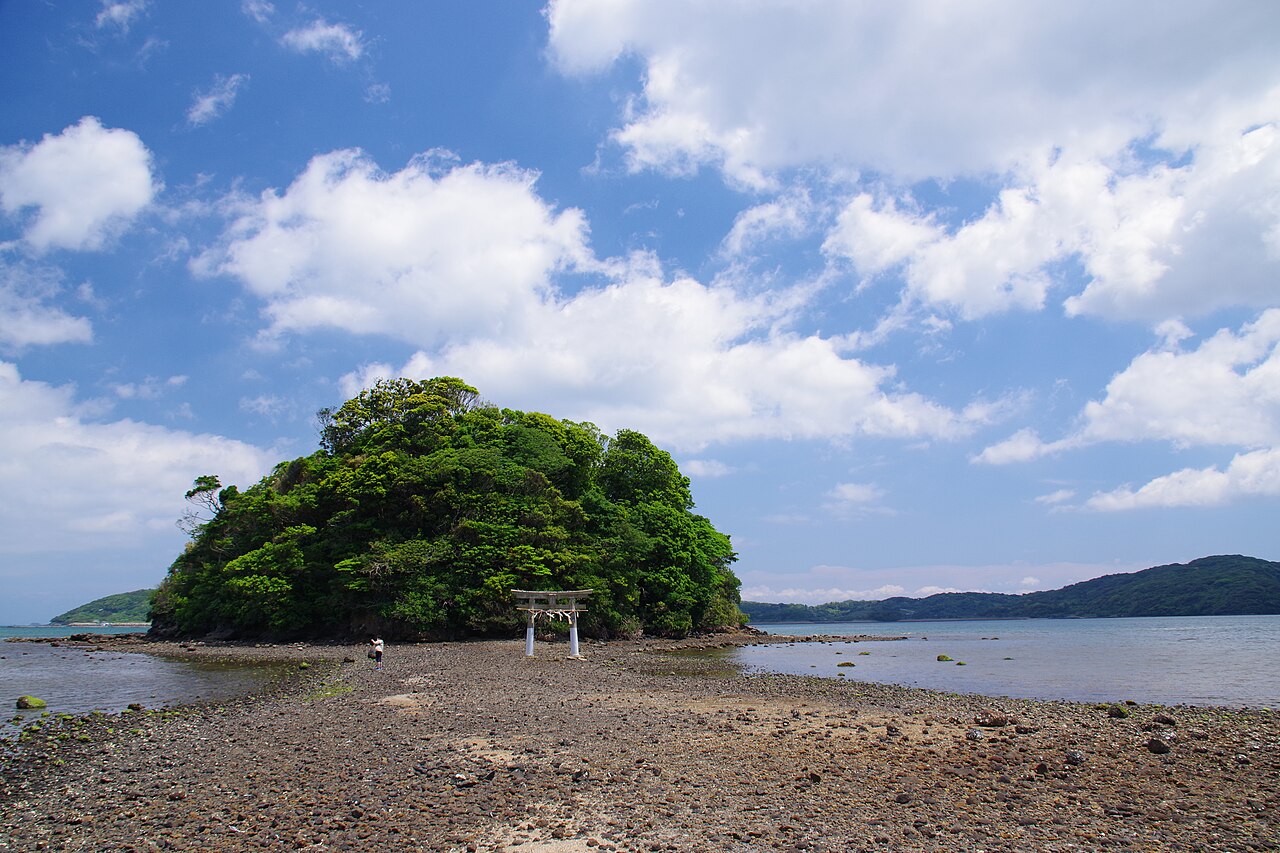
Kojima Shrine
Kojima Jinja · Iki Kojima · 小島神社
overview
What this place is
Kojima Shrine on Iki stands on an island reached only when a sand path appears for a few hours around low water. The whole island is held as sacred ground, and the custom is that not even a twig is carried away. Work on the steps of the approach finished on 30 September 2024, and ordinary worship is possible again. Uchime Bay is part of the Japan Heritage story of the border islands.
- A path from the sea that appears around low water
- The whole island held as sacred ground
- A custom of carrying nothing away, not even a twig
- Steps repaired and reopened on 30 September 2024
plan your visit
Visit facts for Kojima Shrine
- Access
- About 7 minutes by car from Ashibe port, as the island tourism site gives it. Check not only the tide but island transport and the time of your way back first.
- Nearest station
- Kojima Shrine (by car)
- Hours
- The path appears only for a limited time around low water. Work on the steps finished on 30 September 2024 and ordinary worship is possible, but check the tide, the waves, the wind and how slippery it is on the spot; if you cannot be sure of getting back, worship from the sea wall.
- Fees
- Ordinary worship is by offering. Goshuin are best confirmed by telephone in advance and may not be available depending on the priest.
- Parking
- Available in Japanese only: 普通車10台の案内があります。大型・中型バスは駐車できません。
- Typical visit
- About 30 minutes (Unmeguri's estimate, not an official figure)
- Facts checked
- 2026-10-22
background
Enshrined deity
The deity of Kojima Shrine, with the whole island as sacred ground
The appearing of the path at low water is a natural event and the sacredness of the island is a matter of belief; the two are kept apart, and crossing is not stated to bring love, fortune or a change in the body.
etiquette
Visiting with respect
- The rocks are many and slippery, and there is no toilet.
- Even the repaired steps have level changes; worshipping from the sea wall alone completes the visit.
- Carry nothing away from the island, not even a twig.
- Do not cross if you cannot be sure of the time to get back.
- Do not read the crossing as bringing anything about.
- Hours, fees and reception can change; check the official information before you go.
faq
Common questions
How do I get to Kojima Shrine?
About 7 minutes by car from Ashibe port, as the island tourism site gives it. Check not only the tide but island transport and the time of your way back first. Nearest station: Kojima Shrine (by car).
How much does it cost to visit Kojima Shrine?
Ordinary worship is by offering. Goshuin are best confirmed by telephone in advance and may not be available depending on the priest.
What are the opening hours of Kojima Shrine?
The path appears only for a limited time around low water. Work on the steps finished on 30 September 2024 and ordinary worship is possible, but check the tide, the waves, the wind and how slippery it is on the spot; if you cannot be sure of getting back, worship from the sea wall.
Is there parking at Kojima Shrine?
Parking information for Kojima Shrine is available in Japanese only: 普通車10台の案内があります。大型・中型バスは駐車できません。
How long should I spend at Kojima Shrine?
Unmeguri's estimate for a visit is about 30 minutes. This is an editorial estimate, not an official figure.
When can I cross?
Only for a few hours around low water, when the sand path appears from the sea.
Are the steps usable?
Yes. Work on them finished on 30 September 2024 and ordinary worship is possible again.
Can I pick something up as a keepsake?
No. The whole island is sacred ground and the custom is to carry nothing away, not even a twig.
Which deity is enshrined?
Current primary sources do not settle the name, so it is not given here.
sources
Sources and checked dates
Facts last checked on 2026-10-22. Sources are in Japanese. Unmeguri separates officially documented facts from its own editorial reading, and does not promise that any wish or outcome will be realized.