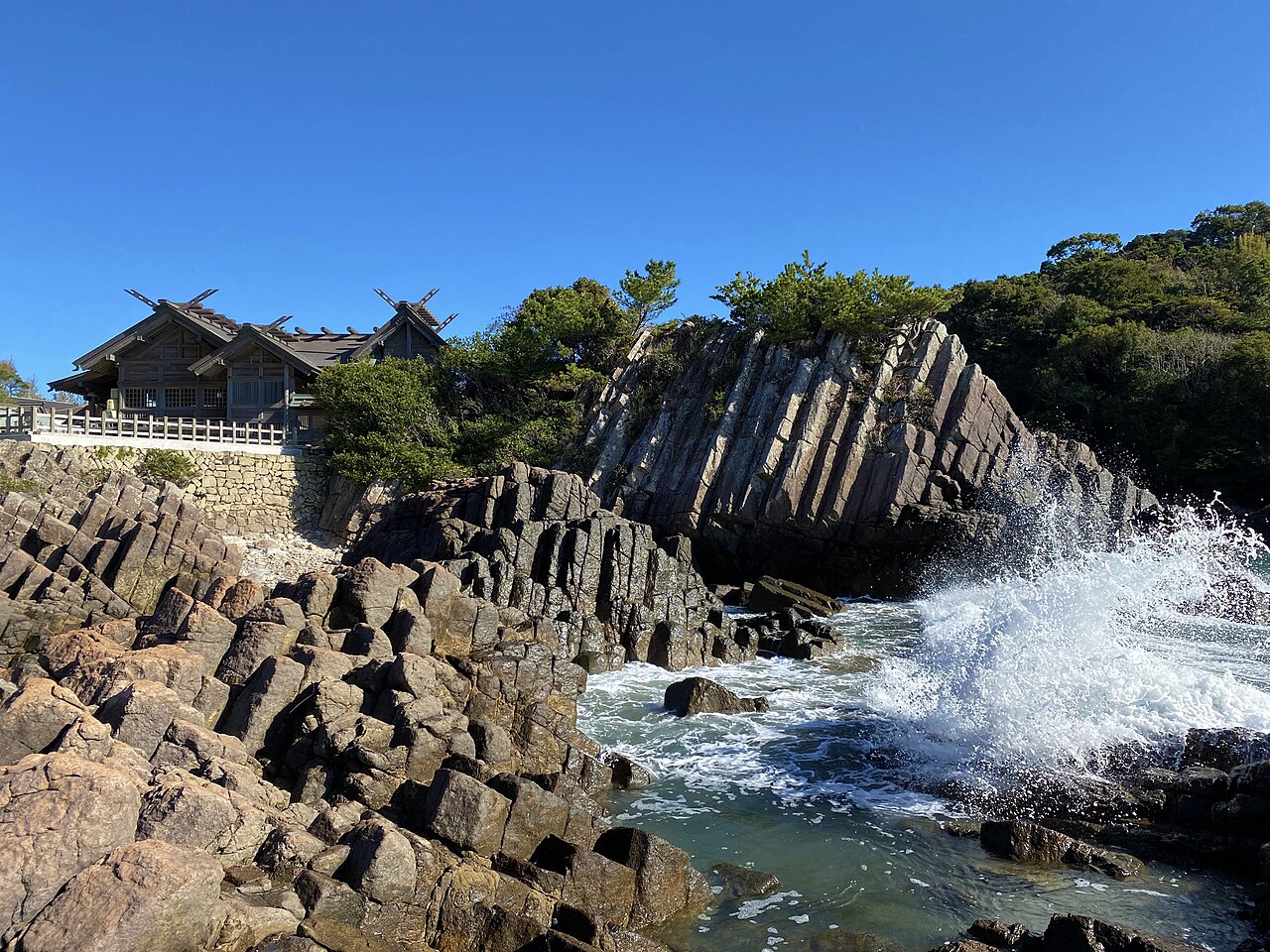
Omi Shrine
Omi Jinja · Hyuga Omi Shrine · 大御神社
overview
What this place is
Omi Shrine in Hyuga enshrines Amaterasu Sume Okami, and its own history states that the date of founding is not known. The present halls were entirely rebuilt in 1938, and the main hall, offering hall and worship hall are registered tangible cultural properties. The shrine ties the great rocks and the cave in its grounds to a following around a dragon deity.
- Amaterasu Sume Okami, with a founding date not known
- Halls rebuilt in 1938 and registered as cultural property
- Welded tuff and columnar jointing along the shore
- A following around a dragon deity, as the shrine sets it out
plan your visit
Visit facts for Omi Shrine
- Access
- About 3.5 kilometres from JR Hyugashi Station, about 10 minutes by car or about 45 minutes on foot, as the shrine gives it. Settle how you will get back first.
- Nearest station
- JR Hyugashi Station
- Hours
- Worship in the grounds in daylight is the standard, and the fixed hours of the gate and the desk are best checked on the spot. The shore and the cave of the Udo shrine here are added by choice, judging the weather, the waves and your footing.
- Fees
- Ordinary worship is by offering. The current list and prices of amulets and prayers cannot be confirmed safely from the official material, so check on the spot.
- Parking
- Available in Japanese only: 公式アクセス案内に従い指定駐車場を利用します。海岸や道路への駐車はしません。
- Typical visit
- About 50 minutes (Unmeguri's estimate, not an official figure)
- Facts checked
- 2026-10-22
background
Enshrined deity
Amaterasu Sume Okami
What the shrine’s own site calls an ancient site of five thousand years ago, and the dragon deity, are given here as the shrine’s reading and belief; they are not treated as settled archaeology, as a dragon that exists, or as anything entering the body. The rising dragon is the shrine’s way of seeing the outline of light at the cave mouth from inside.
etiquette
Visiting with respect
- The grounds and the shore and cave have different footing.
- Ordinary worship completes the visit; not going on to wet rock or into the cave counts the same.
- Read the account of five thousand years and the dragon as the shrine’s own reading.
- Do not go out onto the rocks when the waves are up.
- Follow the notices on photography.
- Hours, fees and reception can change; check the official information before you go.
faq
Common questions
How do I get to Omi Shrine?
About 3.5 kilometres from JR Hyugashi Station, about 10 minutes by car or about 45 minutes on foot, as the shrine gives it. Settle how you will get back first. Nearest station: JR Hyugashi Station.
How much does it cost to visit Omi Shrine?
Ordinary worship is by offering. The current list and prices of amulets and prayers cannot be confirmed safely from the official material, so check on the spot.
What are the opening hours of Omi Shrine?
Worship in the grounds in daylight is the standard, and the fixed hours of the gate and the desk are best checked on the spot. The shore and the cave of the Udo shrine here are added by choice, judging the weather, the waves and your footing.
Is there parking at Omi Shrine?
Parking information for Omi Shrine is available in Japanese only: 公式アクセス案内に従い指定駐車場を利用します。海岸や道路への駐車はしません。
How long should I spend at Omi Shrine?
Unmeguri's estimate for a visit is about 50 minutes. This is an editorial estimate, not an official figure.
Which deity is enshrined?
Amaterasu Sume Okami. The shrine states that the date of founding is not known.
When were the halls built?
They were entirely rebuilt in 1938, and the main, offering and worship halls are registered tangible cultural properties.
What is the rising dragon?
The shrine’s way of seeing the outline of light at the cave mouth from inside; it is a reading, not a claim of fact.
sources
Sources and checked dates
- 御由緒・境内案内|大御神社(opens in a new tab)
- 龍神信仰の案内|大御神社(opens in a new tab)
- 交通アクセス|大御神社(opens in a new tab)
- 大御神社|宮崎県公式観光サイト(opens in a new tab)
Facts last checked on 2026-10-22. Sources are in Japanese. Unmeguri separates officially documented facts from its own editorial reading, and does not promise that any wish or outcome will be realized.