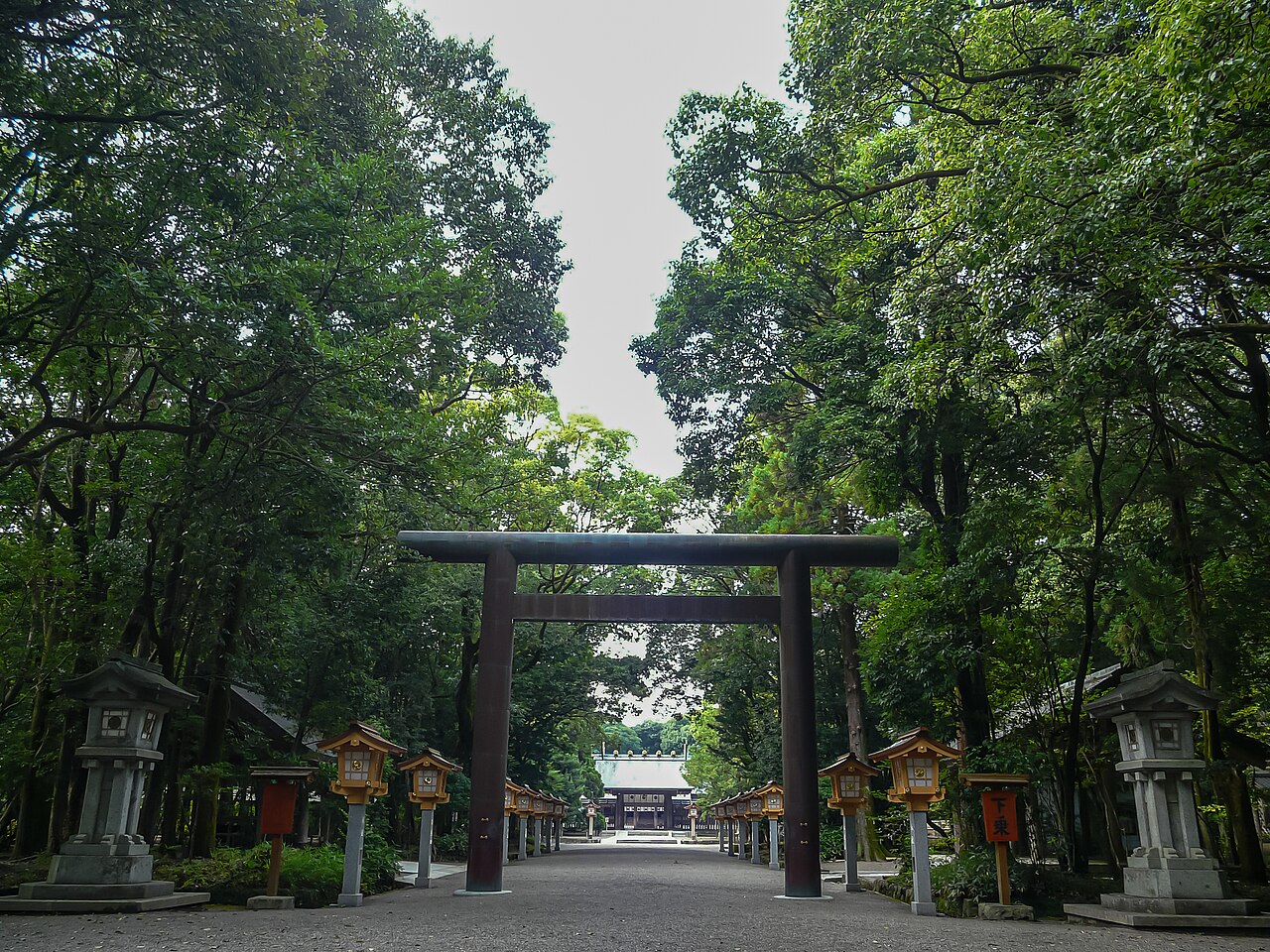
Miyazaki Jingu Shrine
Miyazaki Shrine · Miyazaki Jingu · 宮﨑神宮
overview
What this place is
Miyazaki Jingu enshrines Kamuyamato Iwarebiko-no-Sumeramikoto, that is Emperor Jimmu, with Ugayafukiaezu-no-Mikoto and Tamayorihime-no-Mikoto enshrined alongside as his parents. What is said of Emperor Jimmu is the shrine’s traditional account, kept apart from the building history: the present halls were built in 1907 in Sanogawara cedar.
- Emperor Jimmu as the principal deity, with his parents alongside
- Halls built in 1907 in Sanogawara cedar
- A long approach through the grounds
- Prayers received without booking for individuals
plan your visit
Visit facts for Miyazaki Jingu Shrine
- Access
- About 10 minutes on foot from JR Miyazaki Jingu Station, or about 5 minutes from the Miyazaki Jingu bus stop.
- Nearest station
- JR Miyazaki Jingu Station
- Hours
- The shrine gives the gate as 5:30 to 17:30, the halls as 6:00 to 17:30 and the amulet desk as 8:00 to 17:00. Prayers run from 9:00 to 16:30; individuals need not book, but check for changes during rites.
- Fees
- Ordinary worship is by offering. A prayer is 5,000 yen for an individual and 20,000 yen for a group or company, applied for separately and by choice.
- Parking
- Available in Japanese only: 公式は西神苑の駐車場を案内しています。祭事時は規制と誘導を優先します。
- Goshuin (seal stamps)
- Goshuin are set out in the shrine’s own information; check the desk and its hours on the day.
- Typical visit
- About 50 minutes (Unmeguri's estimate, not an official figure)
- Facts checked
- 2026-10-22
background
Enshrined deities
Kamuyamato Iwarebiko-no-Sumeramikoto (Emperor Jimmu) · Ugayafukiaezu-no-Mikoto · Tamayorihime-no-Mikoto
The shrine’s prayer pages set out many purposes, including household safety, warding off misfortune and road safety; no result in a household, in the body or in an accident is assured.
etiquette
Visiting with respect
- The approach is long, with gravel and level changes.
- Worship before the halls completes the visit; a prayer or the whole grounds need not be added.
- Keep the shrine’s traditional account of Emperor Jimmu apart from the building history.
- Check the hours during rites before you go.
- Follow the notices on photography in the grounds.
- Hours, fees and reception can change; check the official information before you go.
faq
Common questions
How do I get to Miyazaki Jingu Shrine?
About 10 minutes on foot from JR Miyazaki Jingu Station, or about 5 minutes from the Miyazaki Jingu bus stop. Nearest station: JR Miyazaki Jingu Station.
How much does it cost to visit Miyazaki Jingu Shrine?
Ordinary worship is by offering. A prayer is 5,000 yen for an individual and 20,000 yen for a group or company, applied for separately and by choice.
What are the opening hours of Miyazaki Jingu Shrine?
The shrine gives the gate as 5:30 to 17:30, the halls as 6:00 to 17:30 and the amulet desk as 8:00 to 17:00. Prayers run from 9:00 to 16:30; individuals need not book, but check for changes during rites.
Is there parking at Miyazaki Jingu Shrine?
Parking information for Miyazaki Jingu Shrine is available in Japanese only: 公式は西神苑の駐車場を案内しています。祭事時は規制と誘導を優先します。
How long should I spend at Miyazaki Jingu Shrine?
Unmeguri's estimate for a visit is about 50 minutes. This is an editorial estimate, not an official figure.
Can I get a goshuin at Miyazaki Jingu Shrine?
Goshuin are set out in the shrine’s own information; check the desk and its hours on the day.
Which deities are enshrined?
Emperor Jimmu as the principal deity, with Ugayafukiaezu-no-Mikoto and Tamayorihime-no-Mikoto alongside.
What does a prayer cost?
5,000 yen for an individual and 20,000 yen for a group or company.
When were the halls built?
The present halls were built in 1907 in Sanogawara cedar.
sources
Sources and checked dates
- 宮﨑神宮について・御祭神(opens in a new tab)
- 交通案内|宮﨑神宮(opens in a new tab)
- 開閉門・授与所時間|宮﨑神宮(opens in a new tab)
- 御祈願案内|宮﨑神宮(opens in a new tab)
- 御守・御札|宮﨑神宮(opens in a new tab)
- 御朱印|宮﨑神宮(opens in a new tab)
- 宮﨑神宮|宮崎市観光サイト(opens in a new tab)
Facts last checked on 2026-10-22. Sources are in Japanese. Unmeguri separates officially documented facts from its own editorial reading, and does not promise that any wish or outcome will be realized.