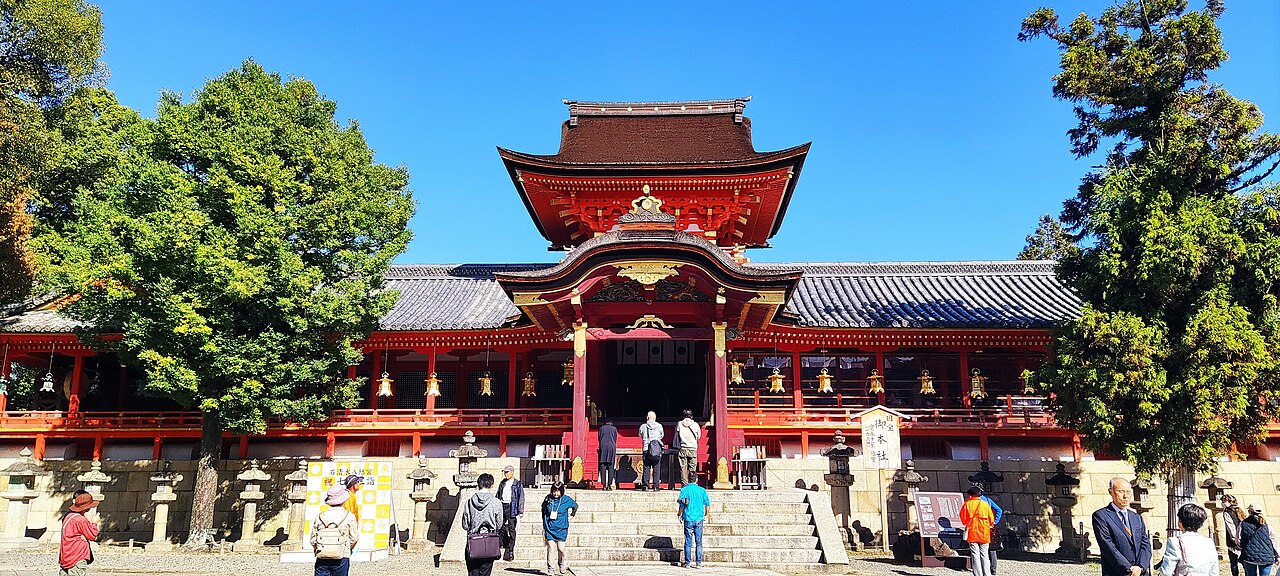
Iwashimizu Hachimangu Shrine
Iwashimizu Hachiman-gu · Iwashimizu Hachimangū · 石清水八幡宮
overview
What this place is
Iwashimizu Hachimangu is a Shinto shrine on Mount Otokoyama in Yawata, Kyoto Prefecture, founded in 859 when the monk Gyokyo enshrined the spirit of the Hachiman deity from Usa on this hill. Long revered as a shrine of national protection, its present buildings date from a rebuilding under the third Tokugawa shogun, Iemitsu, and ten structures including the main hall were designated National Treasures in 2016. A short cable car ride connects the foot of the hill with the upper shrine.
- A vermilion romon gate and corridors that form part of a National Treasure shrine complex
- Described as the oldest and largest surviving main hall in the Hachiman-zukuri style
- Mount Otokoyama overlooks the point where the Kizu, Uji, and Katsura rivers merge
- The Iwashimizu Festival, held on September 15 with origins in a rite of 863, counted among the three great imperial festivals
plan your visit
Visit facts for Iwashimizu Hachimangu Shrine
- Access
- About 180 minutes from Tokyo Station by Shinkansen and the Keihan lines, then a short cable car ride and about 5 minutes on foot from Hachimangu-sanjo Station.
- Nearest station
- Iwashimizu-hachimangu Station (Keihan Main Line) / Hachimangu-sanjo Station (Sando Cable)
- Hours
- The south gate is generally open from 6:00 to 18:00, and the amulet office, goshuin desk, and prayer reception from 9:00 to 16:00. The cable car pauses for maintenance on some days, so check the official information before you visit.
- Fees
- The shrine grounds are free to enter. The cable car costs 300 yen one way for adults, and prayer services and amulets are charged separately.
- Parking
- Available in Japanese only: 山麓の一ノ鳥居を過ぎた右側に公式駐車場があり、通常は9:00〜16:00、普通車最大500円、約60台です。正月・桜期は料金が変わり、正月三が日や祭典で利用できない日があります。駐車場から山上本社へはケーブルまたは徒歩で、駐車できても本社へ車で上がれるという意味ではありません。満車待ちや路上停車をせず、最新条件を社務所へ確認します。
- Goshuin (seal stamps)
- Goshuin (shrine seal stamps) are offered at the amulet office beside the main shrine from 9:00 to 16:00; follow the on-site guidance.
- Typical visit
- About 90 minutes (Unmeguri's estimate, not an official figure)
- Facts checked
- 2026-10-22
background
Enshrined deities
Emperor Ojin (Hondawake-no-Mikoto) · Hime-Okami · Empress Jingu (Okinagatarashihime-no-Mikoto)
The shrine enshrines Emperor Ojin in the central seat, Hime-Okami in the western seat, and Empress Jingu in the eastern seat, together revered as Hachiman Okami. It has been honored as a shrine of national protection and, together with Ise Jingu, was called one of the two ancestral mausoleums of the imperial house.
etiquette
Visiting with respect
- Bow lightly once before passing through the torii gates, and keep to the sides of the approach.
- Rinse your hands at the temizuya water basin before approaching the main shrine.
- The common way to pray at a shrine is two bows, two claps, and one final bow.
- A few flights of steps remain between the cable car station and the main shrine; check accessibility with the shrine office if needed.
- Riding the cable car and walking up past the three torii gates are equally respectful ways to visit.
- Hours, fees and reception can change; check the official information before you go.
faq
Common questions
How do I get to Iwashimizu Hachimangu Shrine?
About 180 minutes from Tokyo Station by Shinkansen and the Keihan lines, then a short cable car ride and about 5 minutes on foot from Hachimangu-sanjo Station. Nearest station: Iwashimizu-hachimangu Station (Keihan Main Line) / Hachimangu-sanjo Station (Sando Cable).
How much does it cost to visit Iwashimizu Hachimangu Shrine?
The shrine grounds are free to enter. The cable car costs 300 yen one way for adults, and prayer services and amulets are charged separately.
What are the opening hours of Iwashimizu Hachimangu Shrine?
The south gate is generally open from 6:00 to 18:00, and the amulet office, goshuin desk, and prayer reception from 9:00 to 16:00. The cable car pauses for maintenance on some days, so check the official information before you visit.
Is there parking at Iwashimizu Hachimangu Shrine?
Parking information for Iwashimizu Hachimangu Shrine is available in Japanese only: 山麓の一ノ鳥居を過ぎた右側に公式駐車場があり、通常は9:00〜16:00、普通車最大500円、約60台です。正月・桜期は料金が変わり、正月三が日や祭典で利用できない日があります。駐車場から山上本社へはケーブルまたは徒歩で、駐車できても本社へ車で上がれるという意味ではありません。満車待ちや路上停車をせず、最新条件を社務所へ確認します。
How long should I spend at Iwashimizu Hachimangu Shrine?
Unmeguri's estimate for a visit is about 90 minutes. This is an editorial estimate, not an official figure.
Can I get a goshuin at Iwashimizu Hachimangu Shrine?
Goshuin (shrine seal stamps) are offered at the amulet office beside the main shrine from 9:00 to 16:00; follow the on-site guidance.
What is Iwashimizu Hachimangu known for?
Founded in 859, it is revered as a shrine of national protection, and its main hall and other buildings from the Tokugawa-era rebuilding are designated National Treasures.
sources
Sources and checked dates
- 石清水八幡宮 公式サイト(opens in a new tab)
- 歴史・御祭神・境内案内|石清水八幡宮(opens in a new tab)
- 石清水八幡宮にまつわる話(opens in a new tab)
- 交通アクセス|石清水八幡宮(opens in a new tab)
- よくあるご質問|石清水八幡宮(opens in a new tab)
- 開閉門・授与所・祈祷受付時間|石清水八幡宮(opens in a new tab)
- ご祈祷のご案内|石清水八幡宮(opens in a new tab)
- ご祈祷願意一覧・ご祈祷料|石清水八幡宮(opens in a new tab)
- 授与品のご案内|石清水八幡宮(opens in a new tab)
- 御朱印のご案内|石清水八幡宮(opens in a new tab)
- 祭典行事・石清水祭|石清水八幡宮(opens in a new tab)
- 石清水八幡宮参道ケーブル 運賃・時刻表|京阪電車(opens in a new tab)
- 2026年7月 参道ケーブル運転休止|京阪電車(opens in a new tab)
- 石清水八幡宮|京都観光Navi(opens in a new tab)
Facts last checked on 2026-10-22. Sources are in Japanese. Unmeguri separates officially documented facts from its own editorial reading, and does not promise that any wish or outcome will be realized.