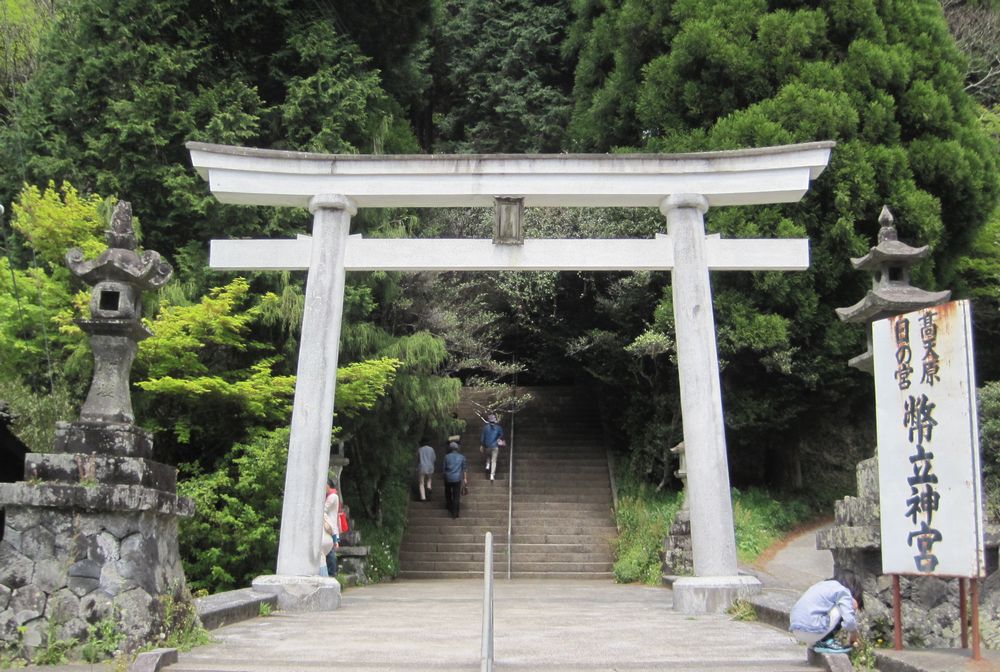
Heitate Jingu Shrine
Heitate Jingu · Heitate · 幣立神宮
overview
What this place is
Heitate Jingu stands on a hill in Yamato, where the tourism association describes the inner and outer shrines of Ise, the twelve shrines of Aso and the north shrine as enshrined together. The hill is on the divide between the Midori River, which flows west, and the Gokase River, which flows east. A cedar avenue runs along the side approach, with the Ioe cedar among the trees.
- A hill on the divide between two rivers
- Several shrines described as enshrined together
- A cedar avenue along the side approach
- The Ioe cedar among the trees
plan your visit
Visit facts for Heitate Jingu Shrine
- Access
- The tourism association gives about two hours by bus towards Mamihara from the Kumamoto direction. Check what runs and how you will get back on the day.
- Nearest station
- Ono district, Yamato town
- Hours
- Current visiting hours cannot be confirmed from an official source, so take ordinary worship in daylight as the standard and put rites, the signs on the spot and the weather first.
- Fees
- Ordinary worship is by offering. A current official list of prayers, amulets and offerings cannot be confirmed; ask on the spot if you want any of them.
- Parking
- Available in Japanese only: 駐車台数や利用条件を現行の公的案内で確認できないため、路上や私有地へ停めず現地表示に従います。
- Typical visit
- About 50 minutes (Unmeguri's estimate, not an official figure)
- Facts checked
- 2026-10-22
background
Enshrined deity
The deities described as enshrined together at Heitate Jingu
The account that Takeiwatatsu-no-Mikoto set up an offering staff here and worshipped the deities is a tradition related by the tourism association; it is not settled as history or as an outcome of a visit, and the names of individual deities and the date of founding are not guessed at.
etiquette
Visiting with respect
- Stone steps lead up to the grounds on the hill.
- A step-free route cannot be confirmed in public information; check in advance how far you can get and what help you need.
- Do not guess at the names of the deities or the date of founding.
- Strong claims about the age of the trees or any ranking among shrines are left out for want of public grounds.
- Follow the signs on the spot.
- Hours, fees and reception can change; check the official information before you go.
faq
Common questions
How do I get to Heitate Jingu Shrine?
The tourism association gives about two hours by bus towards Mamihara from the Kumamoto direction. Check what runs and how you will get back on the day. Nearest station: Ono district, Yamato town.
How much does it cost to visit Heitate Jingu Shrine?
Ordinary worship is by offering. A current official list of prayers, amulets and offerings cannot be confirmed; ask on the spot if you want any of them.
What are the opening hours of Heitate Jingu Shrine?
Current visiting hours cannot be confirmed from an official source, so take ordinary worship in daylight as the standard and put rites, the signs on the spot and the weather first.
Is there parking at Heitate Jingu Shrine?
Parking information for Heitate Jingu Shrine is available in Japanese only: 駐車台数や利用条件を現行の公的案内で確認できないため、路上や私有地へ停めず現地表示に従います。
How long should I spend at Heitate Jingu Shrine?
Unmeguri's estimate for a visit is about 50 minutes. This is an editorial estimate, not an official figure.
What is enshrined here?
The tourism association describes the inner and outer shrines of Ise, the twelve shrines of Aso and the north shrine as enshrined together.
Where does the name come from?
From an account that Takeiwatatsu-no-Mikoto set up an offering staff here; it is a tradition, not settled history.
What is notable about the hill?
It lies on the divide between the Midori River flowing west and the Gokase River flowing east.
sources
Sources and checked dates
Facts last checked on 2026-10-22. Sources are in Japanese. Unmeguri separates officially documented facts from its own editorial reading, and does not promise that any wish or outcome will be realized.