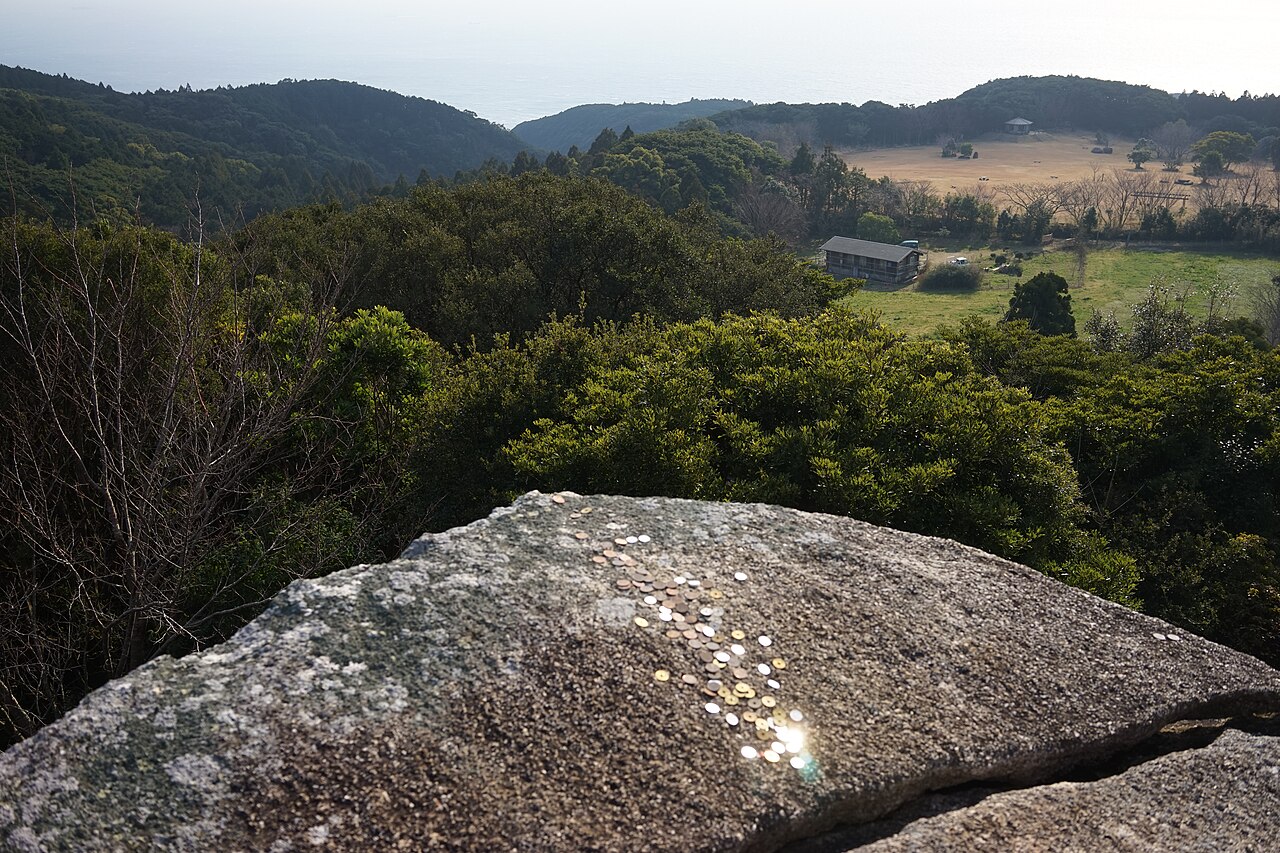
The Tojindaba Site
Tojindaba · Tojin-daba · 唐人駄場遺跡
overview
What this place is
Tojindaba on the Ashizuri peninsula is a place where traces of Jomon settlement and great granite boulders stand together. Public information gives the settlement as of the Jomon period, from about 10,000 to 300 BCE, and explains the boulders, up to about 7 metres, as granite that hardened from magma deep underground and was brought to the surface by crustal movement.
- Traces of Jomon settlement on the Ashizuri peninsula
- Granite boulders up to about 7 metres
- Rock formed underground and raised by crustal movement
- Outcrops and piled boulders along the southern coast of the peninsula
plan your visit
Visit facts for The Tojindaba Site
- Access
- About 105 minutes from Nakamura Station on the Tosa Kuroshio Railway. Reaching the entrance by public transport alone is limited; arrange a taxi from central Tosashimizu or around Cape Ashizuri and secure your way back.
- Nearest station
- The nearest stop on the Cape Ashizuri routes (Kochi Seinan Kotsu bus)
- Hours
- This is an outdoor site. Weather, fallen trees, grass height and any local restriction change how far you can walk. Keep to what the park and the signboards open, and do not climb on the rocks.
- Fees
- There is no charge to look. A guide or transport is charged separately.
- Parking
- Available in Japanese only: 駐車位置と転回場所は現地表示を確認し、農地・生活道路・路肩を塞ぎません。
- Typical visit
- About 50 minutes (Unmeguri's estimate, not an official figure)
- Facts checked
- 2026-10-22
background
Central feature
The extent of the Jomon-period site · Naturally formed granite boulders
Tojindaba is a place where a Jomon site and granite boulders up to about 7 metres stand together; the natural forming of the rock and the traces of settlement can be checked, while no religious property of the boulders is asserted from the public sources.
etiquette
Visiting with respect
- Do not climb the boulders; take the area around the signboards as the range of a visit.
- The ground is unpaved and grassy and turns slippery in rain.
- Do not present the boulders as placed by people, as an altar, or as a device of any ancient civilisation; the public sources do not support it.
- Do not take stones or disturb the ground.
- Secure your way back before you set out.
- Hours, fees and reception can change; check the official information before you go.
faq
Common questions
How do I get to The Tojindaba Site?
About 105 minutes from Nakamura Station on the Tosa Kuroshio Railway. Reaching the entrance by public transport alone is limited; arrange a taxi from central Tosashimizu or around Cape Ashizuri and secure your way back. Nearest station: The nearest stop on the Cape Ashizuri routes (Kochi Seinan Kotsu bus).
How much does it cost to visit The Tojindaba Site?
There is no charge to look. A guide or transport is charged separately.
What are the opening hours of The Tojindaba Site?
This is an outdoor site. Weather, fallen trees, grass height and any local restriction change how far you can walk. Keep to what the park and the signboards open, and do not climb on the rocks.
Is there parking at The Tojindaba Site?
Parking information for The Tojindaba Site is available in Japanese only: 駐車位置と転回場所は現地表示を確認し、農地・生活道路・路肩を塞ぎません。
How long should I spend at The Tojindaba Site?
Unmeguri's estimate for a visit is about 50 minutes. This is an editorial estimate, not an official figure.
What is Tojindaba?
A place where traces of Jomon settlement and great granite boulders stand together, on the Ashizuri peninsula.
How big are the boulders?
Up to about 7 metres. They are granite raised to the surface by crustal movement.
Were the stones placed there?
The public sources describe them as naturally formed; no account of them being placed can be confirmed from those sources.
sources
Sources and checked dates
- 縄文時代の遺跡と花崗岩巨石の形成|国土交通省観光庁(opens in a new tab)
- 所在地・周辺地形・アクセス|土佐清水市(opens in a new tab)
- 唐人駄場遺跡|こうち旅ネット(opens in a new tab)
Facts last checked on 2026-10-22. Sources are in Japanese. Unmeguri separates officially documented facts from its own editorial reading, and does not promise that any wish or outcome will be realized.