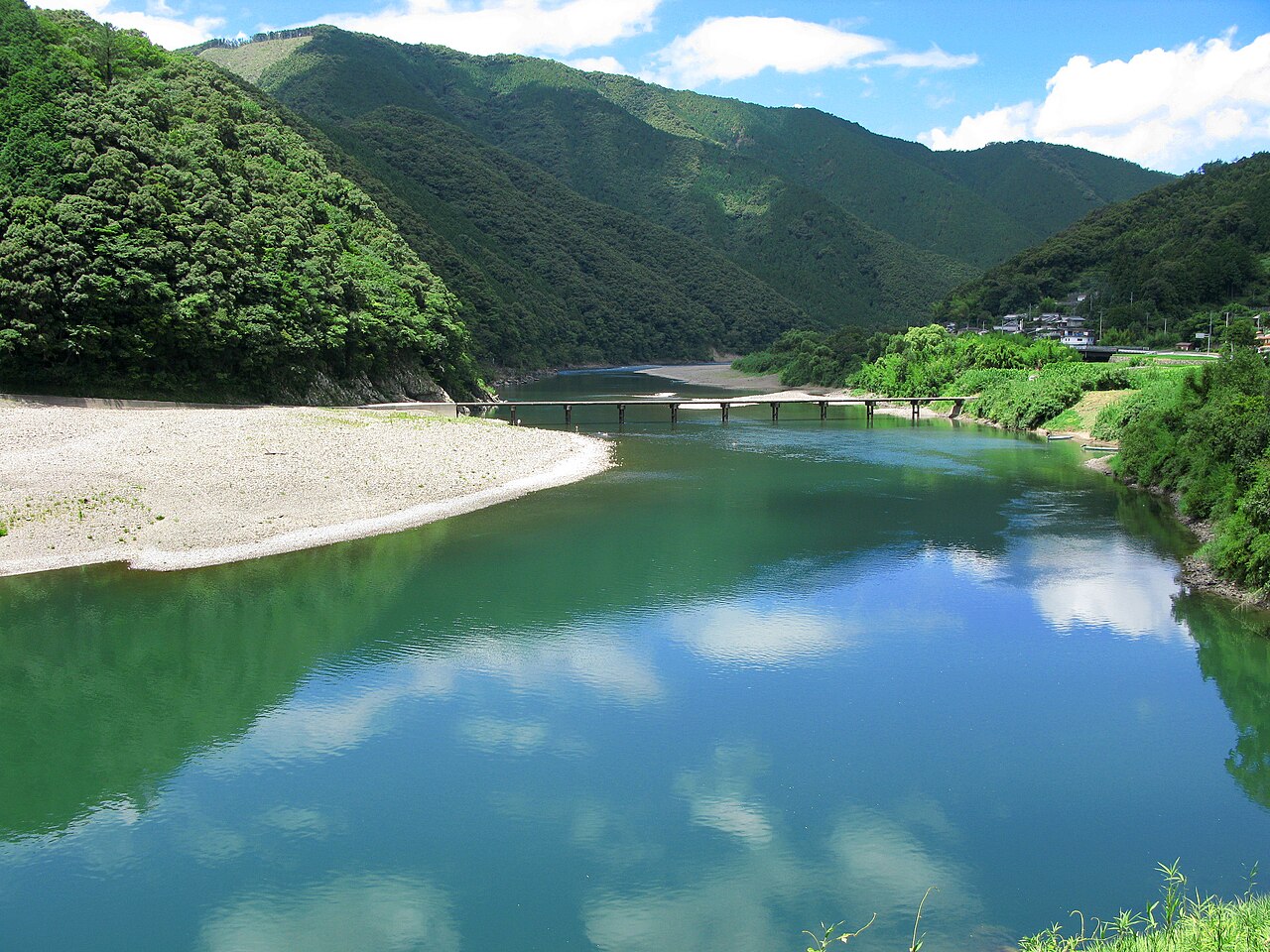
The Shimanto River at Iwama
Shimanto River · Iwama Chinkabashi · 四万十川
overview
What this place is
The Shimanto runs 196 kilometres from its source on Mount Irazu to the Pacific, and the landscape of its basin was selected as an Important Cultural Landscape in 2009, taking in farming, forestry, fishing, settlement and transport along with the river itself. The submersible bridges have no railings, so that flood water and driftwood meet less resistance; the Iwama bridge was built in 1966 and is 120 metres long.
- A river of 196 kilometres from source to sea
- An Important Cultural Landscape selected in 2009
- Submersible bridges built without railings for flood water
- The Iwama bridge of 1966, 120 metres long
plan your visit
Visit facts for The Shimanto River at Iwama
- Access
- About 20 minutes by car from JR Ekawasaki Station to the Iwama bridge, as the city tourist association gives it. Check public transport, taxis and your way back in advance.
- Nearest station
- JR Ekawasaki Station
- Hours
- This is a river and a working road. Heavy rain, high water, typhoons, road closures and vehicle restrictions change what you can see; check road information before you go, and stay away when the water is high.
- Fees
- Looking around the Iwama bridge is free. Guides, transport, parking and river activities are charged separately.
- Parking
- Available in Japanese only: 現地の駐車・車両規制に従い、橋上、生活道路、集落の出入口へ駐車しません。
- Typical visit
- About 45 minutes (Unmeguri's estimate, not an official figure)
- Facts checked
- 2026-10-22
background
Central feature
The nature and working life of the Shimanto basin · The lived landscape of the Iwama submersible bridge
The Shimanto is treated as an Important Cultural Landscape shaped by living and working along it, rather than through the image of a last clear stream alone; the submersible bridge is a piece of everyday infrastructure built for floods, not a stage for anything else.
etiquette
Visiting with respect
- Take a viewing point on land by the Iwama bridge as the range of the visit rather than following the whole 196 kilometres.
- Do not walk out onto the bridge, which has no railings; seeing it from the bank is a complete visit.
- The bridge is a road in daily use; do not block it for photographs.
- Stay away when the water is high, and check road information before setting out.
- Read the landscape as one of floods, fishing, transport and settlement rather than of clear water alone.
- Hours, fees and reception can change; check the official information before you go.
faq
Common questions
How do I get to The Shimanto River at Iwama?
About 20 minutes by car from JR Ekawasaki Station to the Iwama bridge, as the city tourist association gives it. Check public transport, taxis and your way back in advance. Nearest station: JR Ekawasaki Station.
How much does it cost to visit The Shimanto River at Iwama?
Looking around the Iwama bridge is free. Guides, transport, parking and river activities are charged separately.
What are the opening hours of The Shimanto River at Iwama?
This is a river and a working road. Heavy rain, high water, typhoons, road closures and vehicle restrictions change what you can see; check road information before you go, and stay away when the water is high.
Is there parking at The Shimanto River at Iwama?
Parking information for The Shimanto River at Iwama is available in Japanese only: 現地の駐車・車両規制に従い、橋上、生活道路、集落の出入口へ駐車しません。
How long should I spend at The Shimanto River at Iwama?
Unmeguri's estimate for a visit is about 45 minutes. This is an editorial estimate, not an official figure.
How long is the river?
196 kilometres, from its source on Mount Irazu to the Pacific.
Why do the bridges have no railings?
So that flood water and driftwood meet less resistance. They remain roads in daily use.
How big is the Iwama bridge?
It was built in 1966 and is 120 metres long, as the city tourist association gives it.
sources
Sources and checked dates
- 四万十川流域の重要文化的景観と規模|四万十川財団(opens in a new tab)
- 四万十川の暮らし・洪水・沈下橋|国土交通省観光庁(opens in a new tab)
- 沈下橋と岩間橋の生活・景観|国土交通省観光庁(opens in a new tab)
- 沈下橋保存方針と重要文化的景観|高知県(opens in a new tab)
- 岩間沈下橋の現行案内・車両規制|四万十市観光協会(opens in a new tab)
- 道路交通規制情報|四万十市(opens in a new tab)
Facts last checked on 2026-10-22. Sources are in Japanese. Unmeguri separates officially documented facts from its own editorial reading, and does not promise that any wish or outcome will be realized.