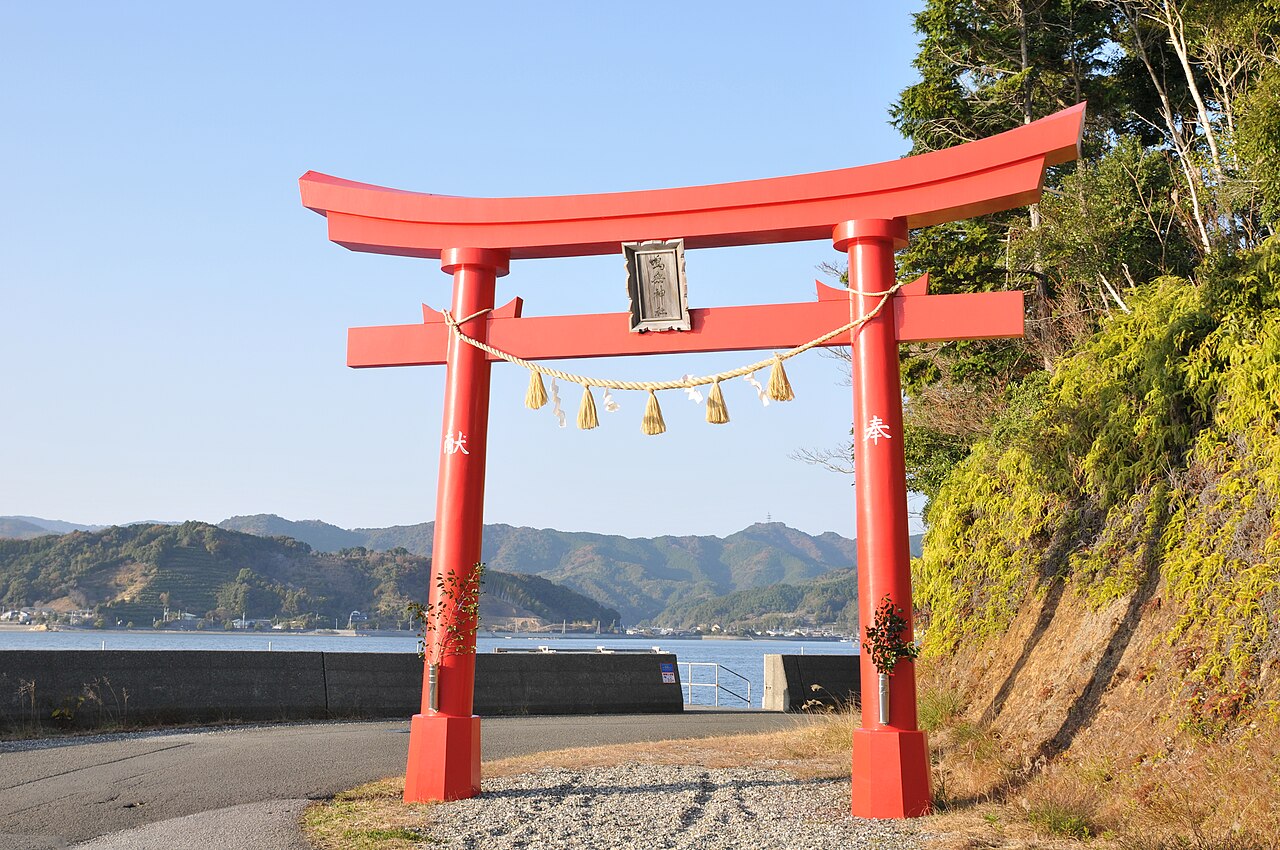
Otonashi Shrine
Otonashi Jinja · Miyajima of Tosa · 鳴無神社
overview
What this place is
Otonashi Shrine in Susaki faces the sea, with an approach that runs down to the water, and is known locally for a following around ties between people. Its founding date and its relation to Tosa Shrine are given differently in different accounts. The present halls are given as rebuilt in 1663, and the Agency for Cultural Affairs describes them as an important survival in the line of early Edo Toshogu building.
- Halls facing the sea, with an approach running down to the water
- A rebuilding given as 1663
- A survival in the line of early Edo Toshogu building
- The Shinane festival on 25 August and the Chiriheppo rite
plan your visit
Visit facts for Otonashi Shrine
- Access
- About 25 minutes from JR Tanogo Station. Public transport connections are limited, so check a taxi from central Susaki or the current bus first. Arrival by boat belongs to the rites and the setting, not to ordinary access.
- Nearest station
- JR Tanogo Station
- Hours
- The grounds are a place of local worship and rites. Do not assume the office or amulets are always attended; follow the signs on the spot and keep festival days and ordinary days apart.
- Fees
- Ordinary worship is by offering. Check the kinds of amulet and fortune slip, their offerings and the hours on the day.
- Parking
- Available in Japanese only: 須崎市観光協会は駐車場ありと案内しています。地域の通行と祭事を妨げない位置を使います。
- Typical visit
- About 40 minutes (Unmeguri's estimate, not an official figure)
- Facts checked
- 2026-10-22
background
Enshrined deity
Ajisukitakahikone-no-Kami (Hitokotonushi-no-Kami)
Public tourism information describes Otonashi Shrine as known for a following around ties between people, with an approach facing the sea and rites kept by the district; a tie is a matter of belief and no particular person or outcome is assured.
etiquette
Visiting with respect
- Take the approach on the land side as the standard range, up to the worship hall.
- Do not go down to the sea from the end of the approach; watch the tide and the wet footing.
- Do not read the accounts of the founding as settled; they differ across sources.
- Keep festival days apart from ordinary days when you plan the visit.
- Do not touch the halls, which are cultural property.
- Hours, fees and reception can change; check the official information before you go.
faq
Common questions
How do I get to Otonashi Shrine?
About 25 minutes from JR Tanogo Station. Public transport connections are limited, so check a taxi from central Susaki or the current bus first. Arrival by boat belongs to the rites and the setting, not to ordinary access. Nearest station: JR Tanogo Station.
How much does it cost to visit Otonashi Shrine?
Ordinary worship is by offering. Check the kinds of amulet and fortune slip, their offerings and the hours on the day.
What are the opening hours of Otonashi Shrine?
The grounds are a place of local worship and rites. Do not assume the office or amulets are always attended; follow the signs on the spot and keep festival days and ordinary days apart.
Is there parking at Otonashi Shrine?
Parking information for Otonashi Shrine is available in Japanese only: 須崎市観光協会は駐車場ありと案内しています。地域の通行と祭事を妨げない位置を使います。
How long should I spend at Otonashi Shrine?
Unmeguri's estimate for a visit is about 40 minutes. This is an editorial estimate, not an official figure.
Why is it called the Miyajima of Tosa?
Because the approach runs as if entering from the sea and the halls face the water.
When were the halls rebuilt?
They are given as rebuilt in 1663, in the line of early Edo Toshogu building.
What rites are held?
The Shinane festival on 25 August, and the old Chiriheppo rite on the twenty-third day of the eighth lunar month.
sources
Sources and checked dates
- 鳴無神社の歴史・祭事・海参道|須崎市観光協会(opens in a new tab)
- 鳴無神社社殿の文化財情報|文化庁(opens in a new tab)
- 鳴無神社の参拝・交通|こうち旅ネット(opens in a new tab)
Facts last checked on 2026-10-22. Sources are in Japanese. Unmeguri separates officially documented facts from its own editorial reading, and does not promise that any wish or outcome will be realized.