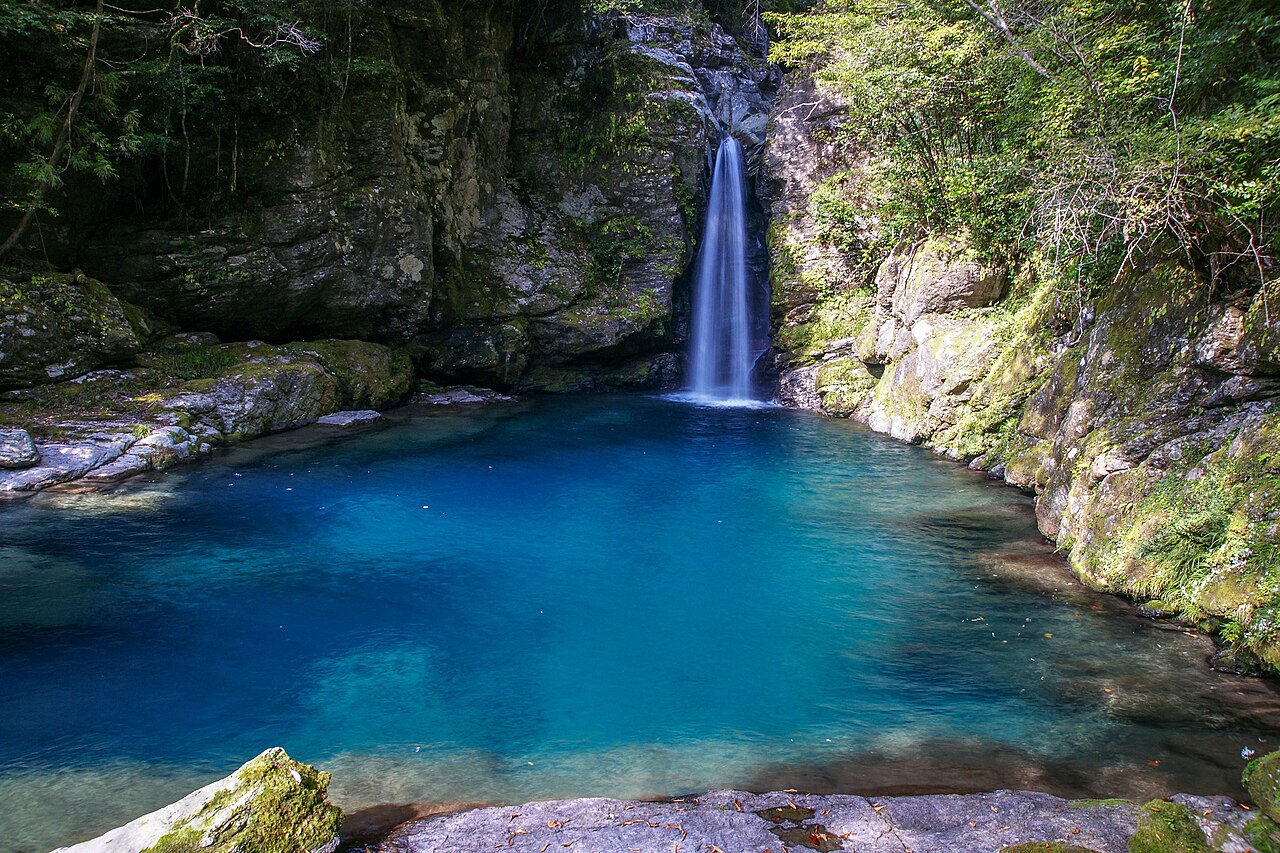
Nikobuchi
Niko Buchi · Nikobuchi Pool · にこ淵
overview
What this place is
Nikobuchi is a plunge pool on the Edagawa, a tributary of the Niyodo, in Ino, and is described as a place local people hold sacred. The colour of the water changes with the angle of the light and the season. A local tale tells of a great serpent held to be the form of a water deity; the tourist association notes it may have been told to keep the headwaters clean, and does not present it as fact.
- A plunge pool on the Edagawa, a tributary of the Niyodo
- Water whose colour changes with light and season
- A local tale of a great serpent as the form of a water deity
- A newer first route with a gentle slope and a viewing platform
plan your visit
Visit facts for Nikobuchi
- Access
- About 50 minutes by bus from JR Ino Station towards Nagasawa or Doi, then about 20 minutes on foot from the Hodono-iriguchi or Doi stop. Check how many buses run and your way back first.
- Nearest station
- Hodono-iriguchi or Doi bus stop
- Hours
- This is a natural site; the water after heavy rain, the forest road, crowds and any local restriction change what you can see. Check the tourist association’s live camera and its crowding forecast before you go.
- Fees
- There is no charge to look. Check parking and transport conditions in the information for the day.
- Parking
- Available in Japanese only: 林道は狭く、非常に混雑する日は駐車場まで2時間以上かかりUターンも困難と観光協会が警告しています。混雑日は来訪を見送ります。
- Typical visit
- About 40 minutes (Unmeguri's estimate, not an official figure)
- Facts checked
- 2026-10-22
background
Central feature
The plunge pool and water of the Edagawa · The tale of a great serpent held to be the form of a water deity
Nikobuchi is a natural landform on a tributary of the Niyodo which local people hold sacred; the blue of the water changes with light and season and is not a sign of any cleansing or effect on the body.
etiquette
Visiting with respect
- Do not enter the water; the tourist association sets this out among its rules.
- Take the first route with its gentle slope and the viewing platform; finishing there is a complete visit.
- Do not take the second, steeper route as the standard.
- Read the tale of the serpent as a local tale, as the tourist association itself presents it.
- Carry out everything you bring in and keep the headwaters clean.
- Hours, fees and reception can change; check the official information before you go.
faq
Common questions
How do I get to Nikobuchi?
About 50 minutes by bus from JR Ino Station towards Nagasawa or Doi, then about 20 minutes on foot from the Hodono-iriguchi or Doi stop. Check how many buses run and your way back first. Nearest station: Hodono-iriguchi or Doi bus stop.
How much does it cost to visit Nikobuchi?
There is no charge to look. Check parking and transport conditions in the information for the day.
What are the opening hours of Nikobuchi?
This is a natural site; the water after heavy rain, the forest road, crowds and any local restriction change what you can see. Check the tourist association’s live camera and its crowding forecast before you go.
Is there parking at Nikobuchi?
Parking information for Nikobuchi is available in Japanese only: 林道は狭く、非常に混雑する日は駐車場まで2時間以上かかりUターンも困難と観光協会が警告しています。混雑日は来訪を見送ります。
How long should I spend at Nikobuchi?
Unmeguri's estimate for a visit is about 40 minutes. This is an editorial estimate, not an official figure.
What is Nikobuchi?
A plunge pool on the Edagawa, a tributary of the Niyodo, which local people hold sacred.
Can I swim?
No. Entering the water is set out among the rules by the tourist association.
Which route should I take?
The newer first route, with a gentle slope and a viewing platform; the second route is for the sure-footed.
Why does the water look different each time?
The colour changes with the angle of the light and with the season.
sources
Sources and checked dates
Facts last checked on 2026-10-22. Sources are in Japanese. Unmeguri separates officially documented facts from its own editorial reading, and does not promise that any wish or outcome will be realized.