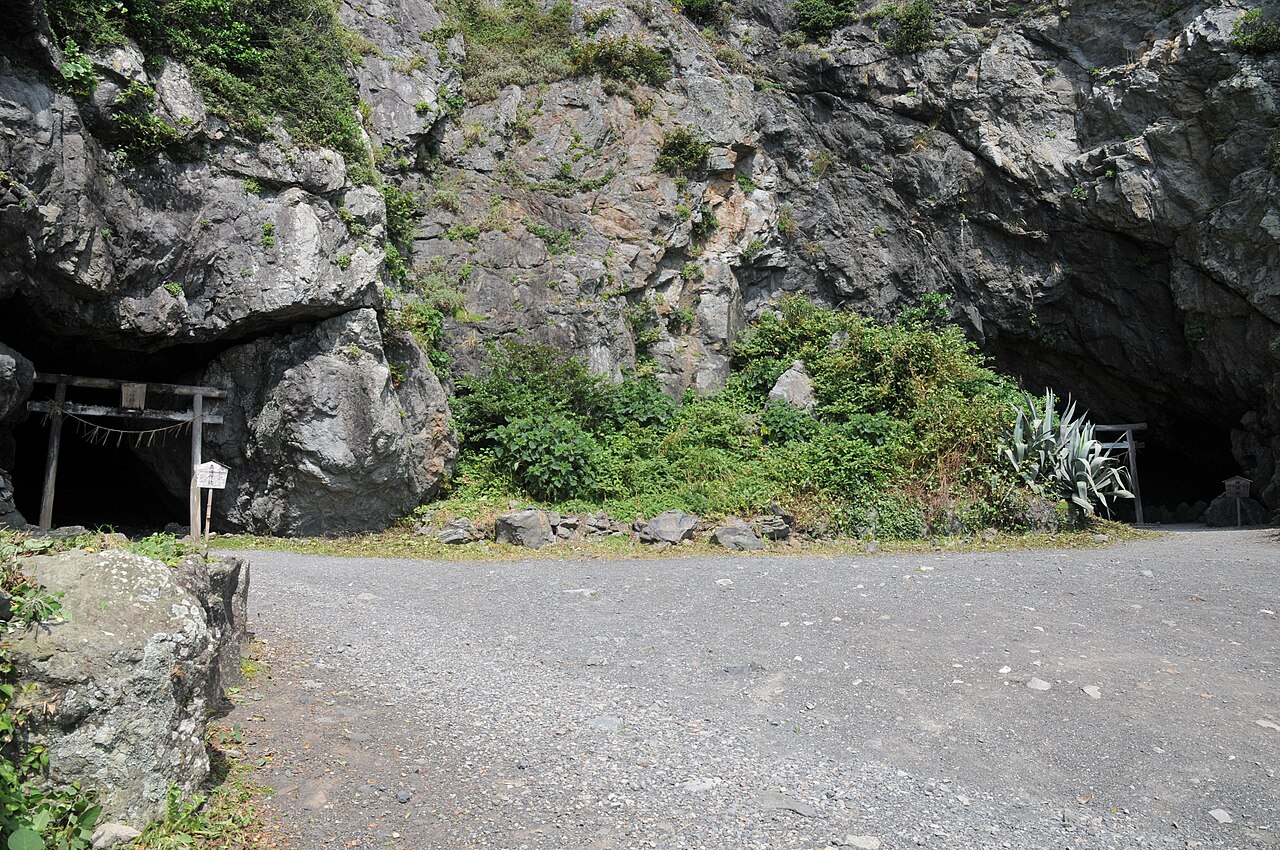
Mikurodo and Shinmeikutsu
Mikuro-do · Shinmei-kutsu · 御厨人窟・神明窟
overview
What this place is
Mikurodo and Shinmeikutsu at Cape Muroto are sea caves cut by waves into the rock face. The Muroto UNESCO Global Geopark describes them both as sea caves and as a place held sacred for the practice of Kukai. The account that he attained realisation here, and that the name Kukai comes from the sky and sea seen from the cave, is local tradition.
- Two sea caves cut by the waves
- A place held sacred for the practice of the young Kukai
- The sound of the waves at Mikurodo, among a hundred soundscapes of Japan
- Protective works and closures that change what can be entered
plan your visit
Visit facts for Mikurodo and Shinmeikutsu
- Access
- About 50 minutes from Nahari Station by bus towards the Muroto Geopark Centre or Kannoura to the Misaki Hotel-mae stop, then about 5 minutes on foot. Check the timetable on the day.
- Nearest station
- Misaki Hotel-mae stop (Kochi Tobu Kotsu bus)
- Hours
- Public tourism information gives it as open through the year and free, though falling rock, waves, works and closures change what can be entered. Follow the protective works and the signs on the day; looking from outside is a complete visit.
- Fees
- Public tourism information gives it as free. It is not treated here as a place of paid prayer or of amulets.
- Parking
- Available in Japanese only: 公的観光案内は無料駐車場ありとしています。路上駐車や海岸側での停車をしません。
- Typical visit
- About 30 minutes (Unmeguri's estimate, not an official figure)
- Facts checked
- 2026-10-22
background
Central feature
The sea caves of Mikurodo and Shinmeikutsu · The tradition of Kukai’s practice
The geopark describes the two caves as sea caves cut by waves and as a sacred place for the practice of Kukai; the geology and the tradition are both kept, and no effect of the cave itself on the body is claimed.
etiquette
Visiting with respect
- Inside is dark, damp and uneven, with the risk of falling rock; do not go in against your own judgment even where entry is allowed.
- Take the standard as looking from outside the protective roof or from the points opened to visitors.
- Do not read the account of the name Kukai as settled history.
- Do not go down to the rocks or the water to get closer.
- Carry out everything you bring in.
- Hours, fees and reception can change; check the official information before you go.
faq
Common questions
How do I get to Mikurodo and Shinmeikutsu?
About 50 minutes from Nahari Station by bus towards the Muroto Geopark Centre or Kannoura to the Misaki Hotel-mae stop, then about 5 minutes on foot. Check the timetable on the day. Nearest station: Misaki Hotel-mae stop (Kochi Tobu Kotsu bus).
How much does it cost to visit Mikurodo and Shinmeikutsu?
Public tourism information gives it as free. It is not treated here as a place of paid prayer or of amulets.
What are the opening hours of Mikurodo and Shinmeikutsu?
Public tourism information gives it as open through the year and free, though falling rock, waves, works and closures change what can be entered. Follow the protective works and the signs on the day; looking from outside is a complete visit.
Is there parking at Mikurodo and Shinmeikutsu?
Parking information for Mikurodo and Shinmeikutsu is available in Japanese only: 公的観光案内は無料駐車場ありとしています。路上駐車や海岸側での停車をしません。
How long should I spend at Mikurodo and Shinmeikutsu?
Unmeguri's estimate for a visit is about 30 minutes. This is an editorial estimate, not an official figure.
What are these caves?
Sea caves cut by waves into the rock face, held sacred for the practice of the young Kukai.
Can I go inside?
What can be entered changes with falling rock, waves, works and closures. Looking from outside is a complete visit.
What is the sound at Mikurodo?
The sound of the waves there is among the hundred soundscapes of Japan.
sources
Sources and checked dates
- 海食洞と空海修行伝承|室戸ユネスコ世界ジオパーク(opens in a new tab)
- 営業時間・料金・交通|こうち旅ネット(opens in a new tab)
- 空海と室戸の伝承|室戸市(opens in a new tab)
Facts last checked on 2026-10-22. Sources are in Japanese. Unmeguri separates officially documented facts from its own editorial reading, and does not promise that any wish or outcome will be realized.