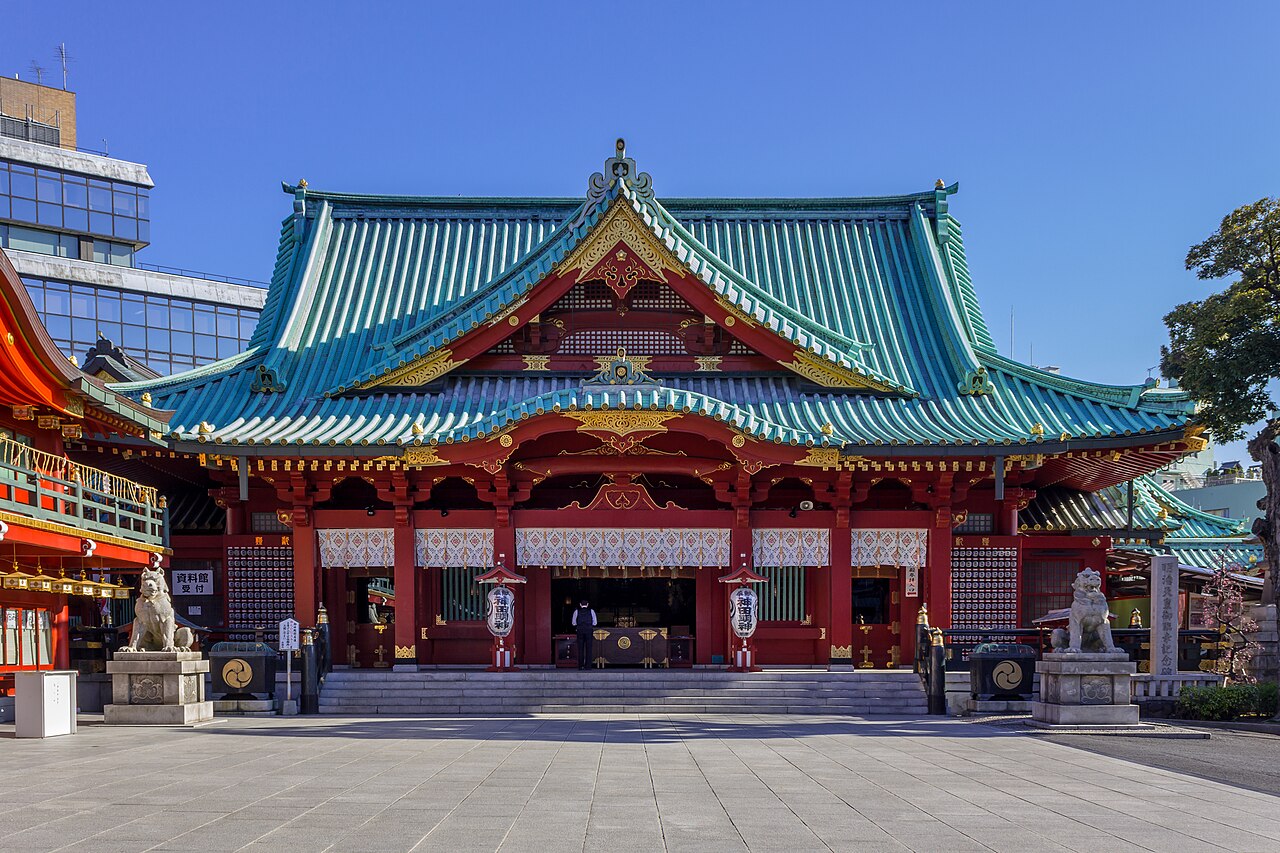
Kanda Myojin Shrine
Kanda Shrine · Kanda Myōjin · 神田明神
overview
What this place is
Kanda Myojin, formally Kanda Shrine, is a Shinto shrine in the Kanda and Akihabara area of Chiyoda, Tokyo. Said to have been founded in 730, it serves as the tutelary shrine of 108 neighborhoods across central Tokyo, including Kanda, Nihonbashi, Akihabara, and Otemachi. It is known for its vermilion-lacquered halls and for community festivals such as the Kanda Matsuri.
- Vermilion-lacquered shrine halls in the Kanda and Akihabara district
- The tutelary shrine of 108 neighborhoods, including Kanda, Nihonbashi, Akihabara, and Otemachi
- A long history said to reach back to its founding in 730
- A gathering place for community festivals, Shinto weddings, and Shichi-Go-San celebrations
plan your visit
Visit facts for Kanda Myojin Shrine
- Access
- About 8 minutes from Tokyo Station by JR and Tokyo Metro, then about 5 minutes on foot from Suehirocho Station.
- Nearest station
- Suehirocho Station (Tokyo Metro)
- Hours
- The shrine grounds are open for worship year-round; hours for hall worship (shoden sanpai) and the cultural hall change, so check the official information before you visit.
- Fees
- The shrine grounds are free to enter. The museum and prayer services (kito) are charged separately.
- Goshuin (seal stamps)
- The official sources we checked do not state whether goshuin (seal stamps) are offered here. Check on site or with the latest official guidance.
- Typical visit
- About 35 minutes (Unmeguri's estimate, not an official figure)
- Facts checked
- 2026-08-12
background
Enshrined deities
Onamuchi-no-Mikoto (Daikoku) · Sukunahikona-no-Mikoto (Ebisu) · Taira no Masakado
The shrine is said to have been founded in 730 and enshrines Onamuchi-no-Mikoto and Sukunahikona-no-Mikoto together with Taira no Masakado. It serves as the tutelary shrine of 108 neighborhoods across central Tokyo, including Kanda, Nihonbashi, Akihabara, and Otemachi.
etiquette
Visiting with respect
- Bow lightly once before passing through the torii gate, and keep to the sides of the approach rather than the center.
- Rinse your hands at the temizuya water basin before approaching the main hall.
- The common way to pray at a shrine is two bows, two claps, and one final bow.
- The grounds can be very crowded during festivals such as the Kanda Matsuri, so follow staff guidance and on-site signs about photography.
- Hours, fees and reception can change; check the official information before you go.
faq
Common questions
How do I get to Kanda Myojin Shrine?
About 8 minutes from Tokyo Station by JR and Tokyo Metro, then about 5 minutes on foot from Suehirocho Station. Nearest station: Suehirocho Station (Tokyo Metro).
How much does it cost to visit Kanda Myojin Shrine?
The shrine grounds are free to enter. The museum and prayer services (kito) are charged separately.
What are the opening hours of Kanda Myojin Shrine?
The shrine grounds are open for worship year-round; hours for hall worship (shoden sanpai) and the cultural hall change, so check the official information before you visit.
How long should I spend at Kanda Myojin Shrine?
Unmeguri's estimate for a visit is about 35 minutes. This is an editorial estimate, not an official figure.
Can I get a goshuin at Kanda Myojin Shrine?
The official sources we checked do not state whether goshuin (seal stamps) are offered here. Check on site or with the latest official guidance.
What is Kanda Myojin known for?
Said to have been founded in 730, it is the tutelary shrine of 108 neighborhoods including Kanda, Nihonbashi, Akihabara, and Otemachi, and is known for its vermilion halls and the Kanda Matsuri.
sources
Sources and checked dates
- 江戸総鎮守 神田明神(opens in a new tab)
- 神田明神/東京の観光公式サイトGO TOKYO(opens in a new tab)
- 神田明神について|神田明神(opens in a new tab)
- お札・お守|神田明神(opens in a new tab)
- ご祈祷のご案内|神田明神(opens in a new tab)
Facts last checked on 2026-08-12. Sources are in Japanese. Unmeguri separates officially documented facts from its own editorial reading, and does not promise that any wish or outcome will be realized.