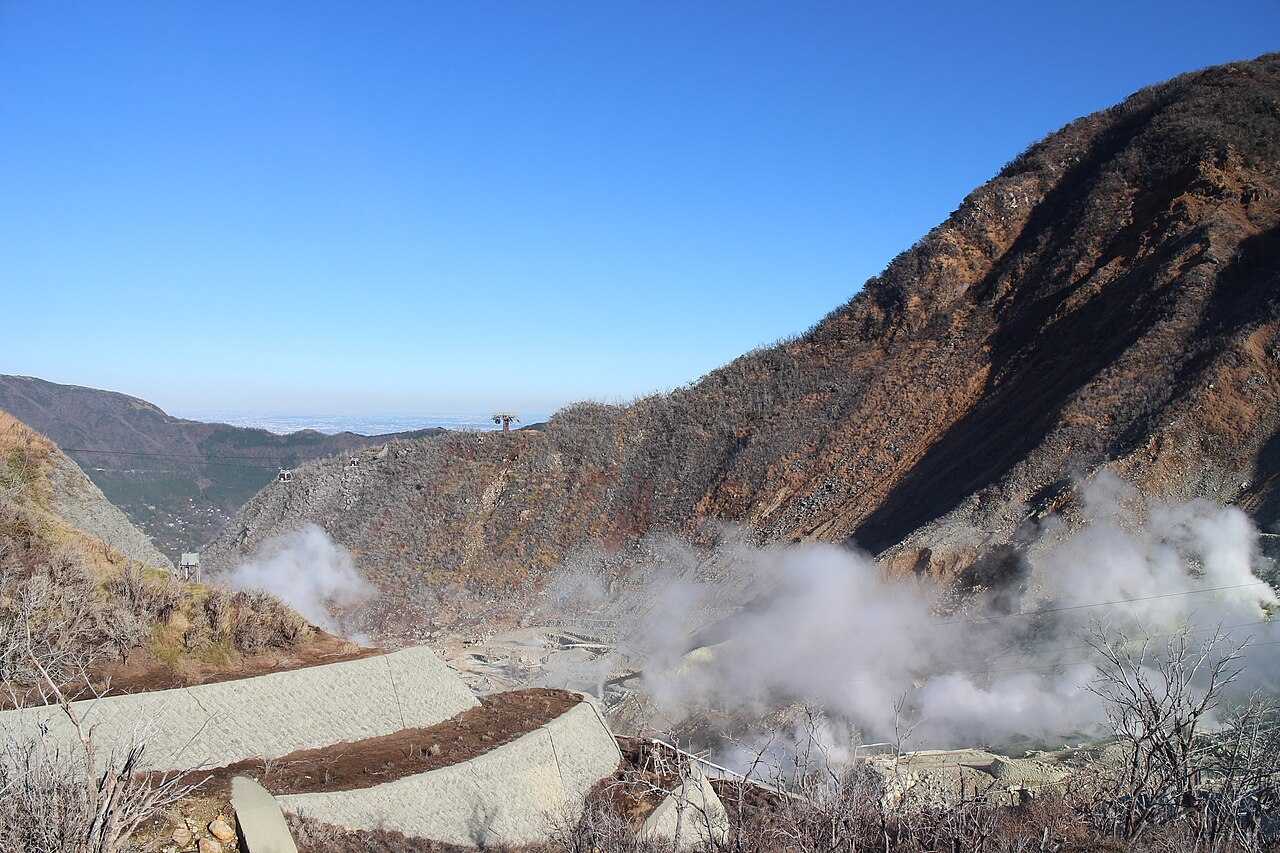
Owakudani Valley
Owakudani · Ōwakudani · 大涌谷
overview
What this place is
Owakudani is a volcanic valley in the Sengokuhara area of Hakone, Kanagawa, formed by the volcanic activity of Mount Hakone about 3,000 years ago. Steam vents and sulfur-stained terrain can be viewed from the open area around Owakudani Station on the Hakone Ropeway, under round-the-clock volcanic gas monitoring. It is a natural scenic site rather than a religious one, and access can be restricted depending on volcanic conditions.
- A steaming fumarole field created by the volcanic activity of Mount Hakone about 3,000 years ago
- Views over the volcanic terrain, with Mount Fuji visible in clear weather
- A valley once called a great hell for its landscape, now open under volcanic gas monitoring and entry management
- A separate nature trail that requires advance booking, a guide, and health conditions, distinct from the free station-area viewing
plan your visit
Visit facts for Owakudani Valley
- Access
- About 45 minutes from Hakone-Yumoto Station by the Hakone Tozan Train, cable car, and ropeway, then about 3 minutes on foot from Owakudani Station. Services can be suspended for maintenance or volcanic conditions.
- Nearest station
- Owakudani Station (Hakone Ropeway)
- Hours
- Volcanic gas is monitored around the clock. Ordinary viewing around the station and parking area is separate from the nature trail, which requires booking, a guide, and health conditions, and the area closes during restrictions, so check the official information before you visit.
- Fees
- Viewing around the station area is free. The nature trail booking, parking, the ropeway, and food and drink are charged separately.
- Parking
- Available in Japanese only: 有料駐車場は混雑・規制・入場待ちを確認。公共交通の運休時も無理に迂回しません。
- Typical visit
- About 60 minutes (Unmeguri's estimate, not an official figure)
- Facts checked
- 2026-10-22
background
Central feature
The volcanic fumarole field of Mount Hakone
Owakudani is not a religious site. It is a natural scenic area where visitors observe a fumarole field formed by volcanic activity about 3,000 years ago, within the range opened under safety monitoring.
etiquette
Visiting with respect
- People easily affected by volcanic gas, those who are pregnant, and anyone feeling unwell should follow the official conditions and stay off the nature trail.
- Stay inside the fences and away from closed areas; do not approach the steam vents or put anything into them.
- If you feel unwell while viewing, move away from the area promptly.
- Enjoy the local black eggs (kuro-tamago) as a regional specialty rather than as a promise about health or lifespan.
- Hours, fees and reception can change; check the official information before you go.
faq
Common questions
How do I get to Owakudani Valley?
About 45 minutes from Hakone-Yumoto Station by the Hakone Tozan Train, cable car, and ropeway, then about 3 minutes on foot from Owakudani Station. Services can be suspended for maintenance or volcanic conditions. Nearest station: Owakudani Station (Hakone Ropeway).
How much does it cost to visit Owakudani Valley?
Viewing around the station area is free. The nature trail booking, parking, the ropeway, and food and drink are charged separately.
What are the opening hours of Owakudani Valley?
Volcanic gas is monitored around the clock. Ordinary viewing around the station and parking area is separate from the nature trail, which requires booking, a guide, and health conditions, and the area closes during restrictions, so check the official information before you visit.
Is there parking at Owakudani Valley?
Parking information for Owakudani Valley is available in Japanese only: 有料駐車場は混雑・規制・入場待ちを確認。公共交通の運休時も無理に迂回しません。
How long should I spend at Owakudani Valley?
Unmeguri's estimate for a visit is about 60 minutes. This is an editorial estimate, not an official figure.
Can I walk the Owakudani nature trail?
The nature trail is a separate experience from ordinary viewing: it requires an advance booking, a guided group, and meeting official health conditions, and it has stairs and slopes. Without these, the station-area viewing completes the visit.
sources
Sources and checked dates
Facts last checked on 2026-10-22. Sources are in Japanese. Unmeguri separates officially documented facts from its own editorial reading, and does not promise that any wish or outcome will be realized.