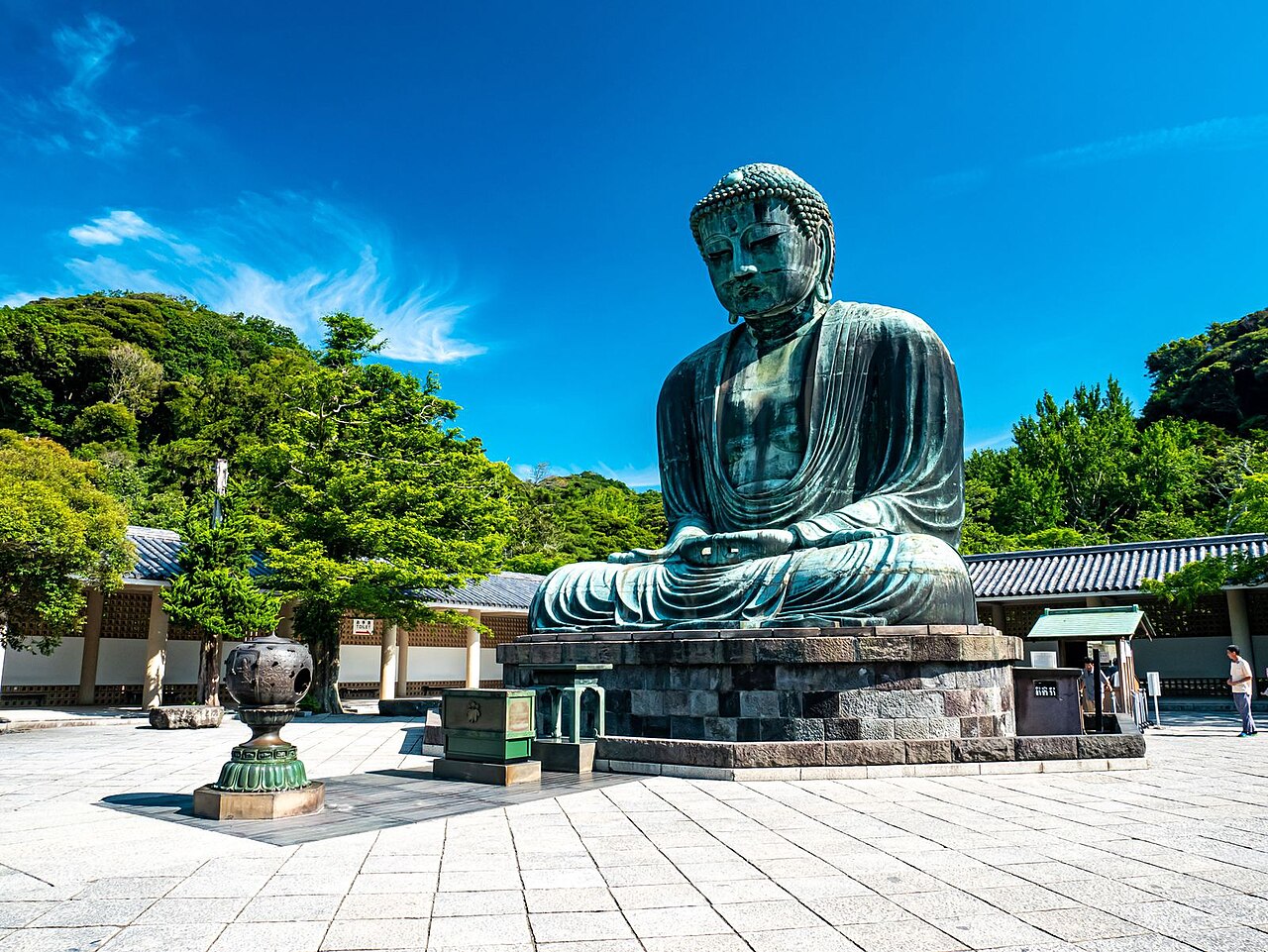
Kotoku-in Temple
The Great Buddha of Kamakura · Kamakura Daibutsu · Kōtoku-in · 高徳院
overview
What this place is
Kotoku-in is a Buddhist temple of the Jodo (Pure Land) school in the Hase district of Kamakura, Kanagawa, home to the Great Buddha of Kamakura. Its principal image is a bronze seated statue of Amida Nyorai, designated a National Treasure, cast in the 13th century and left sitting in the open air after the hall that once housed it was lost. Traces of the casting process and later repairs remain on the statue, and its interior can be viewed when conditions allow.
- The Great Buddha of Kamakura, a National Treasure bronze seated statue of Amida Nyorai from the 13th century
- The open-air setting, preserved since the statue lost its hall, with the foundation stones of the former hall on the grounds
- Traces of the casting process and later repairs visible on the statue itself
- An interior viewing (tainai) of the statue, available when conditions allow
plan your visit
Visit facts for Kotoku-in Temple
- Access
- About 8 minutes from Kamakura Station by the Enoden line, then about 7 minutes on foot from Hase Station. Expect queues and crowded sidewalks in busy seasons.
- Nearest station
- Hase Station (Enoshima Electric Railway)
- Hours
- Viewing hours, including the statue interior, change with the season, high temperatures, and safety management, so check the official information before you visit.
- Fees
- A grounds admission fee applies, and the statue interior (tainai) charges a separate fee; check the official information for current prices.
- Parking
- Available in Japanese only: 境内に一般参拝者用駐車場はない前提で公共交通を使い、周辺の無断駐車をしません。
- Goshuin (seal stamps)
- Goshuin (temple seal stamps) are offered as a record of your visit; reception hours and format can change, so check the official and on-site guidance.
- Typical visit
- About 50 minutes (Unmeguri's estimate, not an official figure)
- Facts checked
- 2026-10-22
background
Principal image
Amida Nyorai (Amitabha Buddha)
The principal image of Kotoku-in is the National Treasure bronze seated statue of Amida Nyorai, worshipped as the Great Buddha of Kamakura. Cast in the 13th century, it has been handed down in the open air since the loss of its hall.
etiquette
Visiting with respect
- Worship facing the Great Buddha before taking photographs, rather than ending the visit with photos alone.
- Do not touch the statue, the foundation stones, or other cultural properties, and do not cross barriers or signs.
- The statue interior is a narrow stairway and may be closed in heat or crowds; do not press to enter, as worship from outside completes the visit.
- There is no visitor parking on the grounds, so use public transport and do not park in the surrounding neighborhood.
- Hours, fees and reception can change; check the official information before you go.
faq
Common questions
How do I get to Kotoku-in Temple?
About 8 minutes from Kamakura Station by the Enoden line, then about 7 minutes on foot from Hase Station. Expect queues and crowded sidewalks in busy seasons. Nearest station: Hase Station (Enoshima Electric Railway).
How much does it cost to visit Kotoku-in Temple?
A grounds admission fee applies, and the statue interior (tainai) charges a separate fee; check the official information for current prices.
What are the opening hours of Kotoku-in Temple?
Viewing hours, including the statue interior, change with the season, high temperatures, and safety management, so check the official information before you visit.
Is there parking at Kotoku-in Temple?
Parking information for Kotoku-in Temple is available in Japanese only: 境内に一般参拝者用駐車場はない前提で公共交通を使い、周辺の無断駐車をしません。
How long should I spend at Kotoku-in Temple?
Unmeguri's estimate for a visit is about 50 minutes. This is an editorial estimate, not an official figure.
Can I get a goshuin at Kotoku-in Temple?
Goshuin (temple seal stamps) are offered as a record of your visit; reception hours and format can change, so check the official and on-site guidance.
Can I go inside the Great Buddha?
An interior viewing (tainai) is offered for a separate fee when conditions allow, via a narrow stairway. It can be limited by high temperatures or crowding, and worship from outside completes the visit.
sources
Sources and checked dates
Facts last checked on 2026-10-22. Sources are in Japanese. Unmeguri separates officially documented facts from its own editorial reading, and does not promise that any wish or outcome will be realized.