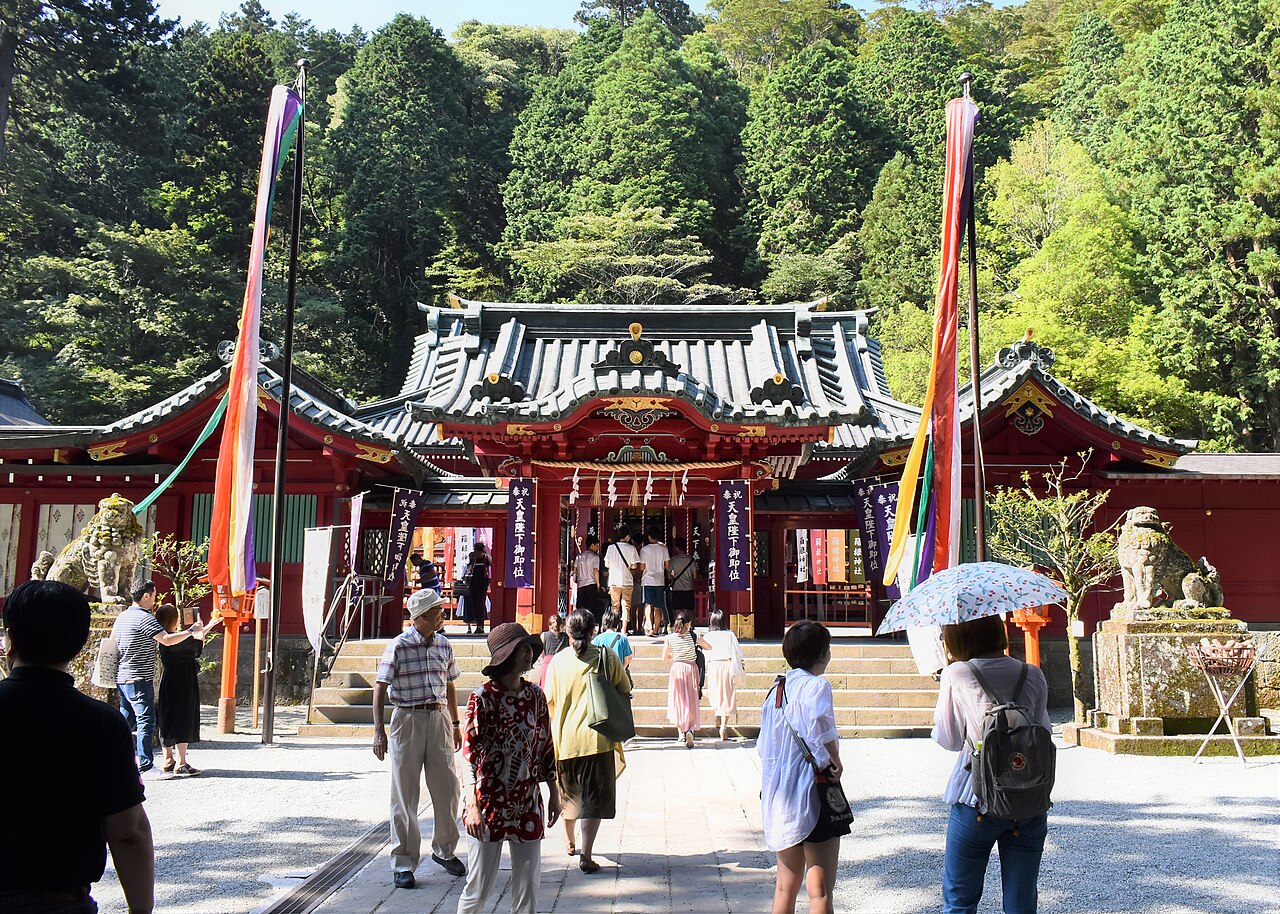
Hakone Shrine
Hakone Jinja · Hakone-jinja · 箱根神社
overview
What this place is
Hakone Shrine is a Shinto shrine on the shore of Lake Ashi in Moto-Hakone, Hakone, Kanagawa. It enshrines three deities collectively worshipped as Hakone Okami, and its history reaches back to the mountain worship of Mount Hakone, with shrine halls said to have been built at the present site by the priest Mangan in 757. The lakeside precinct is known for its cedar-lined approach and the Peace Torii gate standing in the water of Lake Ashi.
- The Peace Torii (Heiwa no Torii), a vermilion gate standing in the water of Lake Ashi
- A cedar-lined approach leading up to the main shrine halls
- A long history of samurai devotion, including pilgrimages by Minamoto no Yoritomo, and prayers for safe travel on the old Tokaido road
- A choice of routes to the halls: a main stone stairway of about 90 steps, a gentler side approach, and a wheelchair-accessible route
plan your visit
Visit facts for Hakone Shrine
- Access
- About 40 minutes from Hakone-Yumoto Station by Hakone Tozan Bus to Moto-Hakone-ko, then about 10 minutes on foot.
- Nearest station
- Moto-Hakone-ko bus stop (Hakone Tozan Bus)
- Hours
- The shrine grounds are open for worship year-round. Hours for prayer services, the amulet office, the treasure hall, and festivals vary, so check the official information before you visit.
- Fees
- The shrine grounds are free to enter. The treasure hall, prayer services, amulets, and transport or parking are charged separately.
- Parking
- Available in Japanese only: 神社・元箱根周辺の公式駐車場を利用。繁忙期は公共交通と混雑情報を確認します。
- Goshuin (seal stamps)
- Goshuin (shrine seal stamps) for Hakone Shrine, Kuzuryu Shrine, and Hakone Motomiya are offered at the Hakone Shrine office; reception conditions differ by shrine, so follow the official guidance.
- Typical visit
- About 65 minutes (Unmeguri's estimate, not an official figure)
- Facts checked
- 2026-10-22
background
Enshrined deities
Ninigi-no-Mikoto · Konohanasakuya-hime-no-Mikoto · Hikohohodemi-no-Mikoto
The three deities are enshrined together as Hakone Okami. The shrine grew out of the mountain worship of Mount Hakone, and its official history describes long-standing faith in good fortune, protection from misfortune, the fulfillment of wishes, safe travel, and good relationships.
etiquette
Visiting with respect
- Bow lightly once before passing through a torii gate, and keep to the sides of the approach.
- Rinse your hands at the temizuya water basin before approaching the main hall.
- The common way to pray at a shrine is two bows, two claps, and one final bow.
- The photo line at the Peace Torii can be long; do not block the lakeshore, road, or approach, and your visit is complete even without the photo.
- Give priority to festivals, prayer services, and weddings in progress, and follow on-site signs about photography.
- Hours, fees and reception can change; check the official information before you go.
faq
Common questions
How do I get to Hakone Shrine?
About 40 minutes from Hakone-Yumoto Station by Hakone Tozan Bus to Moto-Hakone-ko, then about 10 minutes on foot. Nearest station: Moto-Hakone-ko bus stop (Hakone Tozan Bus).
How much does it cost to visit Hakone Shrine?
The shrine grounds are free to enter. The treasure hall, prayer services, amulets, and transport or parking are charged separately.
What are the opening hours of Hakone Shrine?
The shrine grounds are open for worship year-round. Hours for prayer services, the amulet office, the treasure hall, and festivals vary, so check the official information before you visit.
Is there parking at Hakone Shrine?
Parking information for Hakone Shrine is available in Japanese only: 神社・元箱根周辺の公式駐車場を利用。繁忙期は公共交通と混雑情報を確認します。
How long should I spend at Hakone Shrine?
Unmeguri's estimate for a visit is about 65 minutes. This is an editorial estimate, not an official figure.
Can I get a goshuin at Hakone Shrine?
Goshuin (shrine seal stamps) for Hakone Shrine, Kuzuryu Shrine, and Hakone Motomiya are offered at the Hakone Shrine office; reception conditions differ by shrine, so follow the official guidance.
What is Hakone Shrine known for?
It enshrines Hakone Okami on the shore of Lake Ashi, with a history said to begin with the priest Mangan in 757, and is known for the Peace Torii standing in the lake and its ties to samurai history and the old Tokaido road.
sources
Sources and checked dates
Facts last checked on 2026-10-22. Sources are in Japanese. Unmeguri separates officially documented facts from its own editorial reading, and does not promise that any wish or outcome will be realized.