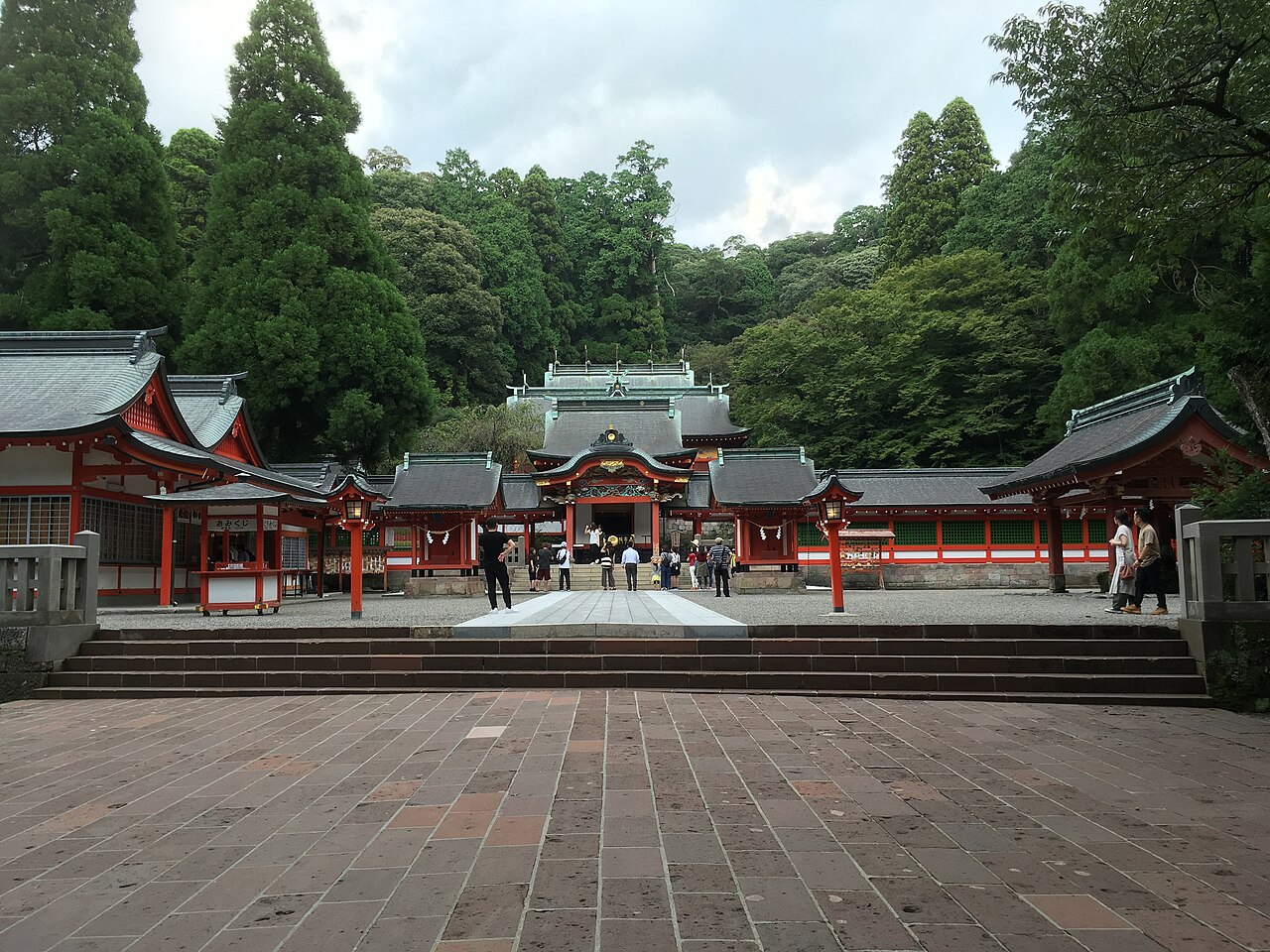
Kirishima Jingu Shrine
Kirishima Jingu · Kirishima Shrine · 霧島神宮
overview
What this place is
Kirishima Jingu enshrines seven deities beginning with Amenikishi Kuninikishi Amatsuhitaka Hikoho Ninigi-no-Mikoto. The shrine relates a first founding near the peak of Takachiho and later moves tied to eruptions of the Kirishima range. The present halls were rebuilt in 1715, and the main hall, offering hall and worship hall were designated National Treasures on 9 February 2022.
- Seven enshrined deities
- Halls rebuilt in 1715, National Treasures since 2022
- A history of moves related to eruptions
- A long stone stair, with a wheelchair route set out officially
plan your visit
Visit facts for Kirishima Jingu Shrine
- Access
- About 15 minutes by local bus or car from JR Kirishima Jingu Station. Routes and times change, so check the shrine’s own access page for the day.
- Nearest station
- Kirishima Jingu-mae bus stop
- Hours
- The shrine gives reception for prayers as 9:00 to 16:30. Keep that apart from the hours of the amulet desk, and from ordinary worship.
- Fees
- Ordinary worship in the grounds is by offering. Prayers have their own purposes and terms; check the official information only if you want one.
- Parking
- Available in Japanese only: 神宮公式は無料駐車場500台を案内しています。祭典時は現地誘導を優先します。
- Typical visit
- About 60 minutes (Unmeguri's estimate, not an official figure)
- Facts checked
- 2026-11-15
background
Enshrined deities
Amenikishi Kuninikishi Amatsuhitaka Hikoho Ninigi-no-Mikoto · Konohanasakuya-hime-no-Mikoto · Hikohohodemi-no-Mikoto · Toyotamahime-no-Mikoto · Ugayafukiaezu-no-Mikoto · Tamayorihime-no-Mikoto · Kamuyamato Iwarebiko-no-Mikoto
The seven deities and the purposes the shrine sets out for prayers are matters of belief; worship is not stated to produce a particular result in work, in a relationship or in the body.
etiquette
Visiting with respect
- The front approach has a long stone stair; the shrine sets out a wheelchair route, so check it and any help you need in advance.
- Parts of the wall paintings and dragon pillars around the main hall are not open; do not go in to see them.
- Keep the myth and the shrine’s own account, the eruptions, and the date of the standing buildings as separate layers.
- Do not touch the halls, which are National Treasures.
- Follow the notices on photography in the grounds.
- Hours, fees and reception can change; check the official information before you go.
faq
Common questions
How do I get to Kirishima Jingu Shrine?
About 15 minutes by local bus or car from JR Kirishima Jingu Station. Routes and times change, so check the shrine’s own access page for the day. Nearest station: Kirishima Jingu-mae bus stop.
How much does it cost to visit Kirishima Jingu Shrine?
Ordinary worship in the grounds is by offering. Prayers have their own purposes and terms; check the official information only if you want one.
What are the opening hours of Kirishima Jingu Shrine?
The shrine gives reception for prayers as 9:00 to 16:30. Keep that apart from the hours of the amulet desk, and from ordinary worship.
Is there parking at Kirishima Jingu Shrine?
Parking information for Kirishima Jingu Shrine is available in Japanese only: 神宮公式は無料駐車場500台を案内しています。祭典時は現地誘導を優先します。
How long should I spend at Kirishima Jingu Shrine?
Unmeguri's estimate for a visit is about 60 minutes. This is an editorial estimate, not an official figure.
How many deities are enshrined?
Seven, beginning with Amenikishi Kuninikishi Amatsuhitaka Hikoho Ninigi-no-Mikoto.
When were the halls built?
They were rebuilt in 1715 and designated National Treasures on 9 February 2022.
What are the hours for prayers?
Reception runs from 9:00 to 16:30.
Is there a way in without the stair?
The shrine sets out a wheelchair route; check it and any help you need in advance.
sources
Sources and checked dates
- 御由緒|霧島神宮(opens in a new tab)
- 境内ご案内|霧島神宮(opens in a new tab)
- 御祈願|霧島神宮(opens in a new tab)
- 交通・利用案内|霧島神宮(opens in a new tab)
- 霧島神宮|鹿児島県公式観光サイト(opens in a new tab)
Facts last checked on 2026-11-15. Sources are in Japanese. Unmeguri separates officially documented facts from its own editorial reading, and does not promise that any wish or outcome will be realized.