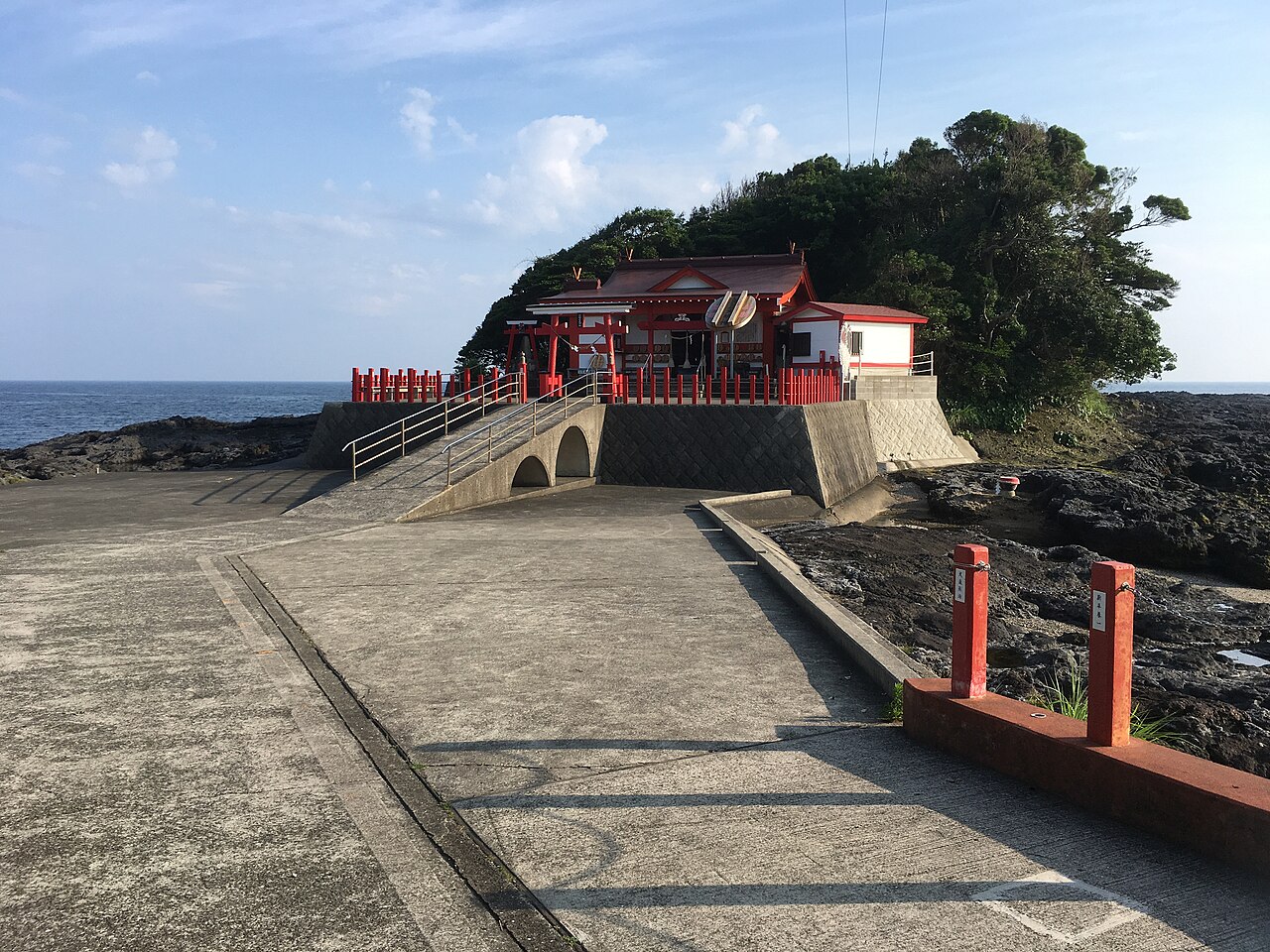
Itate Hyozu Shrine (Kamafuta Shrine)
Kamafuta Jinja · Itate Hyozu Jinja · 釜蓋神社
overview
What this place is
The shrine formally named Itate Hyozu, and known as Kamafuta, stands on the shore of Ei in Minamikyushu and enshrines Susanoo-no-Mikoto. The city relates as local tradition that the lid of a pot used in cooking for a rite was blown by the wind to this place. The practice with the pot lid is a matter of choice.
- Susanoo-no-Mikoto enshrined on the shore
- A local tradition about a pot lid carried by the wind
- A practice with the pot lid, by choice
- About 15 minutes on foot from JR Ei-Okawa Station
plan your visit
Visit facts for Itate Hyozu Shrine (Kamafuta Shrine)
- Access
- About 15 minutes on foot from JR Ei-Okawa Station. Check the weather on the shore and the times of the trains back first.
- Nearest station
- JR Ei-Okawa Station
- Hours
- Ordinary worship in the grounds is the standard. The city gives the office as attended from 10:00 to 16:00 and advises contacting the shrine in advance.
- Fees
- Ordinary worship is by offering. The city gives a pre-written goshuin as 500 yen. The practice with the pot lid is a matter of choice.
- Parking
- Available in Japanese only: 南九州市は駐車場約100台とバス専用区画を案内しています。料金と利用条件は現地表示を確認します。
- Goshuin (seal stamps)
- The city gives a pre-written goshuin as 500 yen; check the office hours and whether it is being given on the day.
- Typical visit
- About 40 minutes (Unmeguri's estimate, not an official figure)
- Facts checked
- 2026-10-22
background
Enshrined deity
Susanoo-no-Mikoto
The city describes a following around arms, opening the land and warding off misfortune; the wartime accounts of worship here and success with the pot lid are not turned into an assurance of winning or into praise of force.
etiquette
Visiting with respect
- There is a walk from the station and a shore surface underfoot.
- Details of a wheelchair route cannot be confirmed officially; ask the office in advance how far you can get.
- Read the account of the pot lid as local tradition rather than as fact.
- Do not turn the wartime accounts into an assurance about winning.
- Do not go down to the rocks or the water’s edge.
- Hours, fees and reception can change; check the official information before you go.
faq
Common questions
How do I get to Itate Hyozu Shrine (Kamafuta Shrine)?
About 15 minutes on foot from JR Ei-Okawa Station. Check the weather on the shore and the times of the trains back first. Nearest station: JR Ei-Okawa Station.
How much does it cost to visit Itate Hyozu Shrine (Kamafuta Shrine)?
Ordinary worship is by offering. The city gives a pre-written goshuin as 500 yen. The practice with the pot lid is a matter of choice.
What are the opening hours of Itate Hyozu Shrine (Kamafuta Shrine)?
Ordinary worship in the grounds is the standard. The city gives the office as attended from 10:00 to 16:00 and advises contacting the shrine in advance.
Is there parking at Itate Hyozu Shrine (Kamafuta Shrine)?
Parking information for Itate Hyozu Shrine (Kamafuta Shrine) is available in Japanese only: 南九州市は駐車場約100台とバス専用区画を案内しています。料金と利用条件は現地表示を確認します。
How long should I spend at Itate Hyozu Shrine (Kamafuta Shrine)?
Unmeguri's estimate for a visit is about 40 minutes. This is an editorial estimate, not an official figure.
Can I get a goshuin at Itate Hyozu Shrine (Kamafuta Shrine)?
The city gives a pre-written goshuin as 500 yen; check the office hours and whether it is being given on the day.
What is the shrine’s formal name?
Itate Hyozu Shrine, on the shore at Beppu in Ei, Minamikyushu; it is known as Kamafuta.
Which deity is enshrined?
Susanoo-no-Mikoto, as the city gives it.
Where does the name come from?
A local tradition that the lid of a pot used in cooking for a rite was blown here by the wind.
Are goshuin available?
A pre-written goshuin is given as 500 yen; the office is attended from 10:00 to 16:00.
sources
Sources and checked dates
- 釜蓋神社(射楯兵主神社)|南九州市(opens in a new tab)
- 釜蓋参り|南九州市(opens in a new tab)
- 釜蓋神社|鹿児島県公式観光サイト(opens in a new tab)
Facts last checked on 2026-10-22. Sources are in Japanese. Unmeguri separates officially documented facts from its own editorial reading, and does not promise that any wish or outcome will be realized.