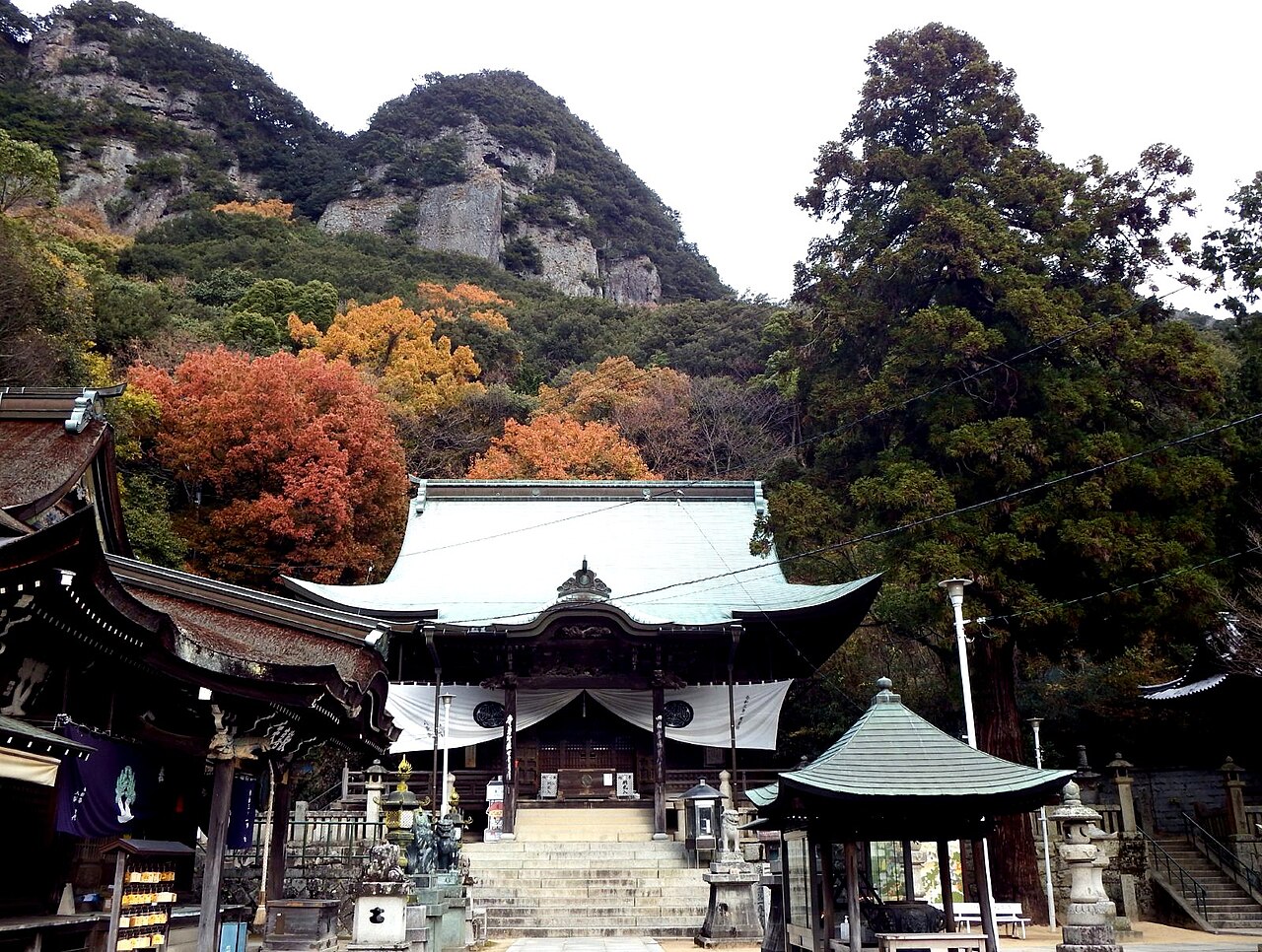
Yakuriji Temple
Yakuri-ji · Temple 85 · 八栗寺
overview
What this place is
Yakuriji in Takamatsu is the eighty-fifth temple of the Shikoku pilgrimage, with a Sho Kannon as its principal image, at the foot of Gokenzan. The temple relates that Kobo Daishi laid five swords here and planted eight chestnuts, and carries a following around Kangiten and a tengu tradition of Chujobo Daigongen. Gokenzan, a rocky peak of 375 metres, is closed to climbing for the risk of collapse.
- A Sho Kannon as the principal image
- The tradition of five swords and eight chestnuts
- Kangiten, a hidden image, with the next opening given as 2027
- Gokenzan at 375 metres, closed to climbing
plan your visit
Visit facts for Yakuriji Temple
- Access
- From the foot by the Yakuri cable car or on foot up the approach. Check whether the cable car is running, your way back, and how much light is left on the walking route.
- Nearest station
- Kotoden Yakuri-shindo Station or the cable car foot station
- Hours
- The temple gives reception for prayers as 7:00 to 17:00. Check the cable car, events, the weather and any traffic control at the New Year on the day.
- Fees
- Ordinary worship is by offering. A prayer to Kangiten is from 3,000 yen to 30,000 yen. The cable car is charged separately; check its running and fares on its own site.
- Parking
- Available in Japanese only: 公式は麓の駐車場を7:00〜18:00、普通車250台等と案内しています。ケーブルの運行状況と行事時の誘導を優先します。
- Typical visit
- About 60 minutes (Unmeguri's estimate, not an official figure)
- Facts checked
- 2026-10-22
background
Principal image
Sho Kannon
Good ties, trade, study and difficult wishes are ways the temple describes the following around Kangiten and its prayers; nothing is stated about a wish being met or about the legs, the eyes or the body.
etiquette
Visiting with respect
- Worship at the opened main hall, reached by cable car or on foot, completes the visit.
- Gokenzan is closed to climbing for the risk of collapse; do not include it in your route.
- Do not clap at a temple, and follow the notices on quiet and photography.
- Kangiten is a hidden image; do not expect to see it.
- Read the account of the swords and chestnuts as the temple’s own tradition.
- Hours, fees and reception can change; check the official information before you go.
faq
Common questions
How do I get to Yakuriji Temple?
From the foot by the Yakuri cable car or on foot up the approach. Check whether the cable car is running, your way back, and how much light is left on the walking route. Nearest station: Kotoden Yakuri-shindo Station or the cable car foot station.
How much does it cost to visit Yakuriji Temple?
Ordinary worship is by offering. A prayer to Kangiten is from 3,000 yen to 30,000 yen. The cable car is charged separately; check its running and fares on its own site.
What are the opening hours of Yakuriji Temple?
The temple gives reception for prayers as 7:00 to 17:00. Check the cable car, events, the weather and any traffic control at the New Year on the day.
Is there parking at Yakuriji Temple?
Parking information for Yakuriji Temple is available in Japanese only: 公式は麓の駐車場を7:00〜18:00、普通車250台等と案内しています。ケーブルの運行状況と行事時の誘導を優先します。
How long should I spend at Yakuriji Temple?
Unmeguri's estimate for a visit is about 60 minutes. This is an editorial estimate, not an official figure.
What is the principal image?
A Sho Kannon. The temple is the eighty-fifth of the Shikoku pilgrimage.
Can I climb Gokenzan?
No. The temple states that it is closed to climbing for the risk of collapse.
What does a prayer cost?
A prayer to Kangiten is from 3,000 yen to 30,000 yen; reception runs from 7:00 to 17:00.
When is Kangiten shown?
It is a hidden image, and the temple gives the next opening, once in fifty years, as 2027.
sources
Sources and checked dates
- 八栗寺の物語(opens in a new tab)
- 五剣山について|八栗寺(opens in a new tab)
- お聖天さま|八栗寺(opens in a new tab)
- 中将坊大権現|八栗寺(opens in a new tab)
- ご祈祷|八栗寺(opens in a new tab)
- 交通アクセス|八栗寺(opens in a new tab)
- よくあるご質問|八栗寺(opens in a new tab)
- 八栗寺|うどん県旅ネット(opens in a new tab)
Facts last checked on 2026-10-22. Sources are in Japanese. Unmeguri separates officially documented facts from its own editorial reading, and does not promise that any wish or outcome will be realized.