Takaya Shrine
Takaya Jinja · the torii in the sky · 高屋神社
overview
What this place is
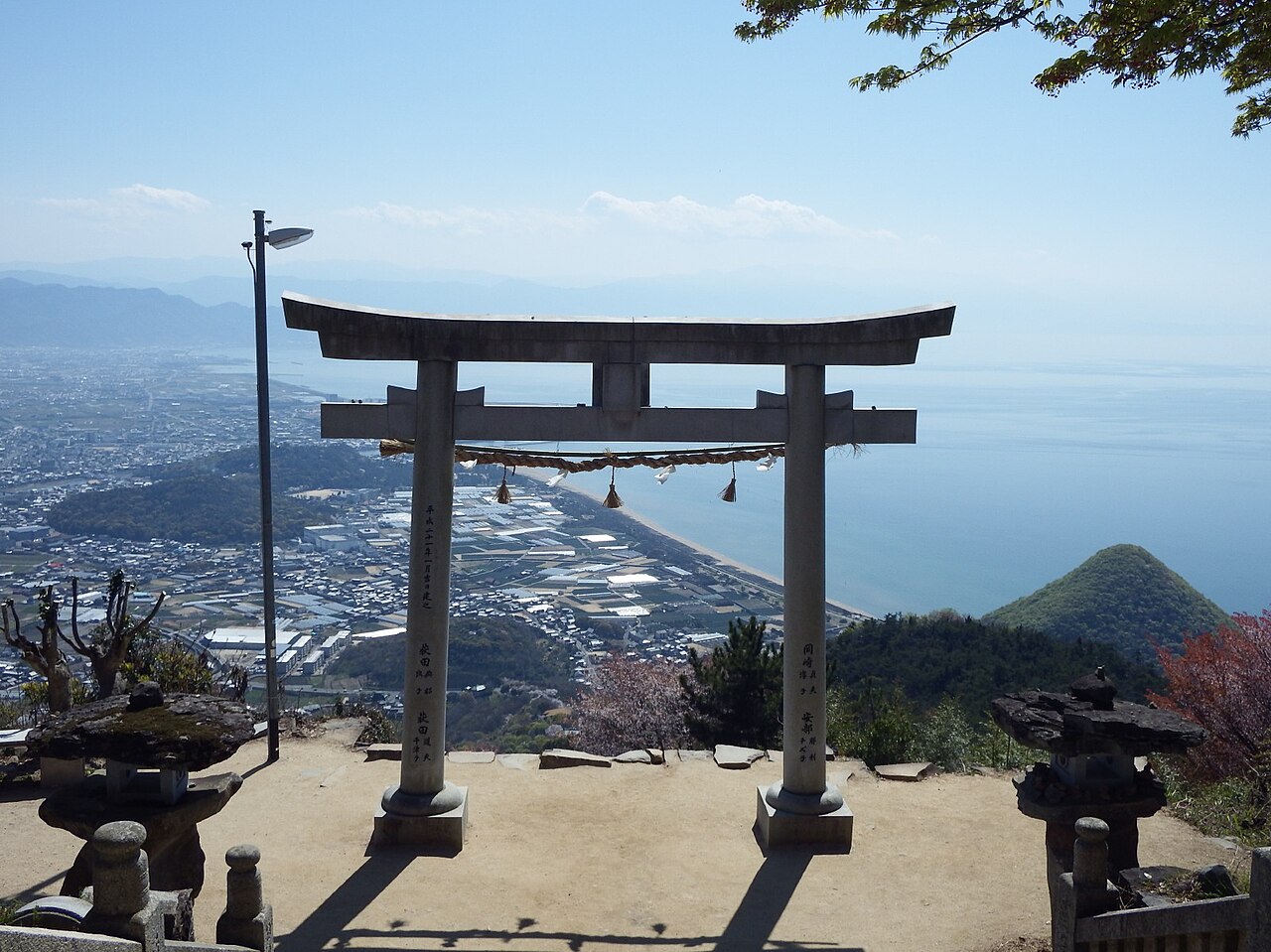
Takaya Shrine in Kanonji has its main hall on the summit of Inazumiyama at 404 metres, looking over the town and the Seto Inland Sea. The local tourist association relates that the shrine was moved from the summit to the foot and later built again on the summit, and that it is known as Inazumi-san and followed as a deity of rice. From the lower hall it is about 40 minutes up, ending in a broad, steep flight of 270 steps.
- A main hall on the summit at 404 metres
- About 40 minutes up from the lower hall
- A broad, steep flight of 270 steps at the end
- A shuttle bus at weekends and on holidays, on set days
plan your visit
Visit facts for Takaya Shrine
- Access
- From JR Kanonji Station. The shuttle at weekends and on holidays runs on days that change month by month; check the official days, the stop and any suspension for weather on the day, and do not drive up to the summit side while the shuttle is running.
- Nearest station
- JR Kanonji Station
- Hours
- The grounds are outdoors. Access on the summit side changes with weather, the road and the shuttle, and can be restricted; check the monthly information and the directions on the spot on the day.
- Fees
- Ordinary worship is by offering. The shuttle at weekends and on holidays is given as 1,500 yen return for adults and 700 yen for primary school pupils and people with disabilities; check the monthly information again.
- Parking
- Available in Japanese only: 山頂への車道は狭く、すれ違いが困難です。シャトル運行日の普通車通行禁止と、駐車位置から鳥居までの急坂を先に確認します。
- Typical visit
- About 60 minutes (Unmeguri's estimate, not an official figure)
- Facts checked
- 2026-08-12
background
Central feature
The summit hall of Takaya Shrine and its torii
The following as a deity of rice is attributed to the local tourist association; the names of the enshrined deities cannot be confirmed safely from current primary sources and are not guessed here, and neither climbing, touching the torii nor photographing it is stated to change fortune or the body.
etiquette
Visiting with respect
- The path from the lower hall is steep and unpaved; worshipping at the lower hall and finishing there is a complete visit.
- Do not treat reaching the summit or taking a photograph as required.
- Do not drive up to the summit side while the shuttle is running.
- Do not guess at the names of the deities; current sources do not settle them.
- Do not touch or climb on the torii.
- Hours, fees and reception can change; check the official information before you go.
faq
Common questions
How do I get to Takaya Shrine?
From JR Kanonji Station. The shuttle at weekends and on holidays runs on days that change month by month; check the official days, the stop and any suspension for weather on the day, and do not drive up to the summit side while the shuttle is running. Nearest station: JR Kanonji Station.
How much does it cost to visit Takaya Shrine?
Ordinary worship is by offering. The shuttle at weekends and on holidays is given as 1,500 yen return for adults and 700 yen for primary school pupils and people with disabilities; check the monthly information again.
What are the opening hours of Takaya Shrine?
The grounds are outdoors. Access on the summit side changes with weather, the road and the shuttle, and can be restricted; check the monthly information and the directions on the spot on the day.
Is there parking at Takaya Shrine?
Parking information for Takaya Shrine is available in Japanese only: 山頂への車道は狭く、すれ違いが困難です。シャトル運行日の普通車通行禁止と、駐車位置から鳥居までの急坂を先に確認します。
How long should I spend at Takaya Shrine?
Unmeguri's estimate for a visit is about 60 minutes. This is an editorial estimate, not an official figure.
How high is the summit hall?
404 metres, on the summit of Inazumiyama, looking over the town and the Seto Inland Sea.
How long is the climb?
About 40 minutes from the lower hall, ending in a broad, steep flight of 270 steps.
What does the shuttle cost?
1,500 yen return for adults and 700 yen for primary school pupils and people with disabilities, on the days it runs.
Which deities are enshrined?
Current primary sources do not settle the names, so they are not given here; the association relates a following as a deity of rice.
sources
Sources and checked dates
Facts last checked on 2026-08-12. Sources are in Japanese. Unmeguri separates officially documented facts from its own editorial reading, and does not promise that any wish or outcome will be realized.