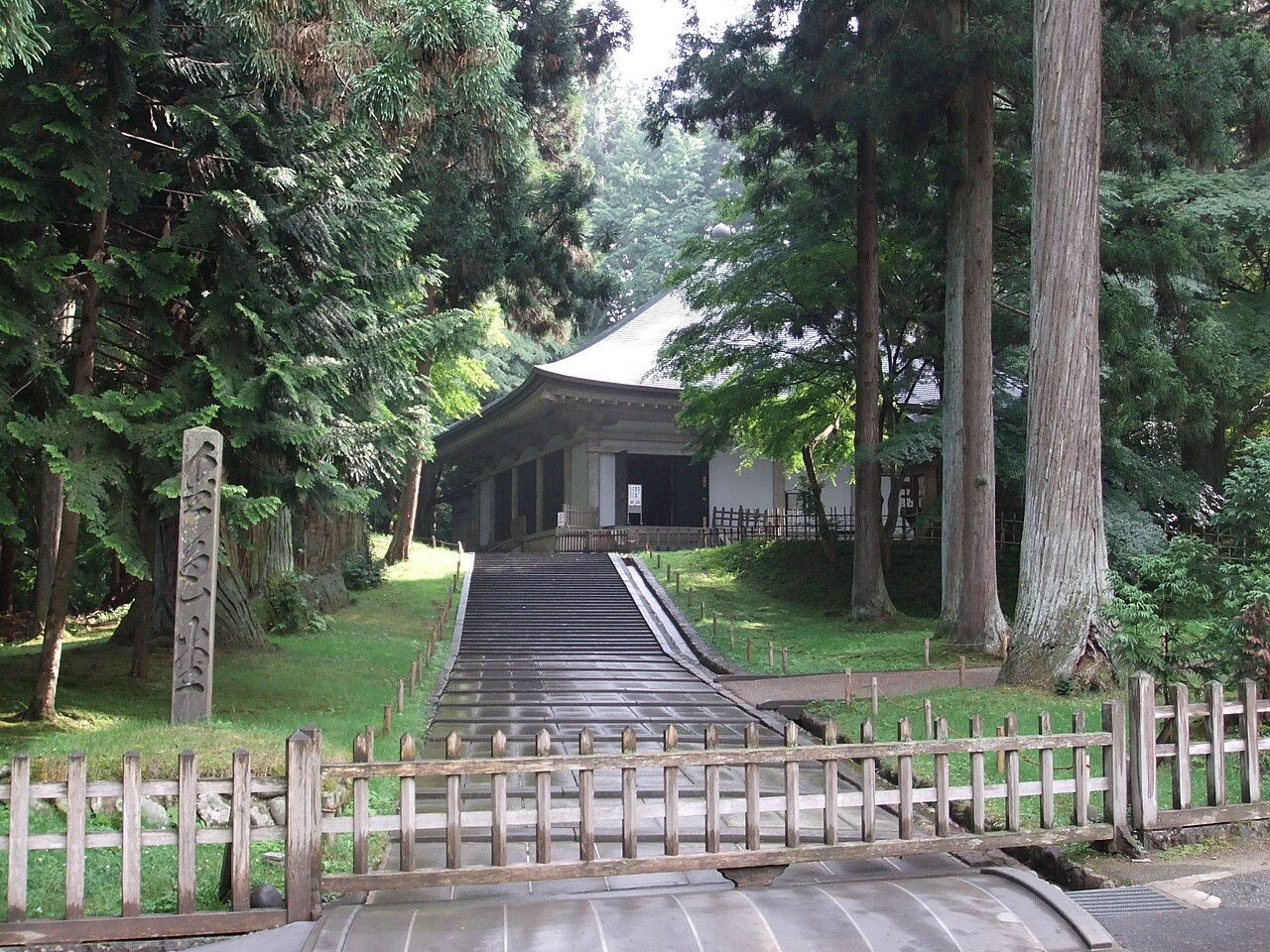
Chusonji Temple
Chuson-ji · Hiraizumi Chusonji · 中尊寺
overview
What this place is
Chusonji in Hiraizumi is a great temple of the Tendai school in the north-east and part of the World Heritage listing of Hiraizumi. Its main hall has Shaka Nyorai as its principal image, and many halls stand within the grounds, among them the Konjikido, a hall of Amida. The temple relates that Fujiwara no Kiyohira, mourning the dead of the earlier and later Nine Years’ wars without regard to which side they fought on, built it in the hope of a buddha land.
- A main hall with Shaka Nyorai as its principal image
- The Konjikido, a hall of Amida, within the grounds
- A World Heritage listing as part of Hiraizumi
- The Tsukimizaka, a long climb up to the halls
plan your visit
Visit facts for Chusonji Temple
- Access
- About 35 minutes from JR Ichinoseki Station, going on from Hiraizumi Station by bus or on foot to the foot of the Tsukimizaka, then about 5 minutes on foot. Check which days the bus runs and the last service.
- Nearest station
- JR Hiraizumi Station (bus from there)
- Hours
- Visiting hours, admission to the Konjikido and the Sankozo, and the goshuin desk change with the season and with events; check the temple’s own information.
- Fees
- Visiting the grounds is free. The Konjikido, the Sankozo and the like are charged. Goshuin carry their own offering.
- Parking
- Available in Japanese only: 町営・周辺駐車場の営業時間と大型車・歩行者動線を確認します。
- Goshuin (seal stamps)
- Goshuin are given for their own offering; the desk and its hours change with the season, so check on the day.
- Typical visit
- About 120 minutes (Unmeguri's estimate, not an official figure)
- Facts checked
- 2026-10-22
background
Principal image
Shaka Nyorai
The main hall of Chusonji has Shaka Nyorai as its principal image, and many halls stand within the grounds, among them the Konjikido, which is a hall of Amida. Keep the two apart rather than treating the grounds as one object of worship.
etiquette
Visiting with respect
- The Tsukimizaka is a long climb; ask separately about the route up, about vehicle or assisted access and about the distances between the halls.
- The main hall and the Konjikido are different halls with different images; do not treat them as one.
- These are World Heritage buildings in daily use; do not touch them and follow the notices on photography.
- Reaching the grounds is a complete visit; the paid halls are further choices.
- Check the bus times both ways before you go.
- Hours, fees and reception can change; check the official information before you go.
faq
Common questions
How do I get to Chusonji Temple?
About 35 minutes from JR Ichinoseki Station, going on from Hiraizumi Station by bus or on foot to the foot of the Tsukimizaka, then about 5 minutes on foot. Check which days the bus runs and the last service. Nearest station: JR Hiraizumi Station (bus from there).
How much does it cost to visit Chusonji Temple?
Visiting the grounds is free. The Konjikido, the Sankozo and the like are charged. Goshuin carry their own offering.
What are the opening hours of Chusonji Temple?
Visiting hours, admission to the Konjikido and the Sankozo, and the goshuin desk change with the season and with events; check the temple’s own information.
Is there parking at Chusonji Temple?
Parking information for Chusonji Temple is available in Japanese only: 町営・周辺駐車場の営業時間と大型車・歩行者動線を確認します。
How long should I spend at Chusonji Temple?
Unmeguri's estimate for a visit is about 120 minutes. This is an editorial estimate, not an official figure.
Can I get a goshuin at Chusonji Temple?
Goshuin are given for their own offering; the desk and its hours change with the season, so check on the day.
What is the principal image at Chusonji?
Shaka Nyorai, in the main hall. The Konjikido within the grounds is a separate hall, of Amida.
How hard is the approach?
The Tsukimizaka is a long climb, and the halls are set some way apart; ask about assisted access if you need it.
sources
Sources and checked dates
Facts last checked on 2026-10-22. Sources are in Japanese. Unmeguri separates officially documented facts from its own editorial reading, and does not promise that any wish or outcome will be realized.