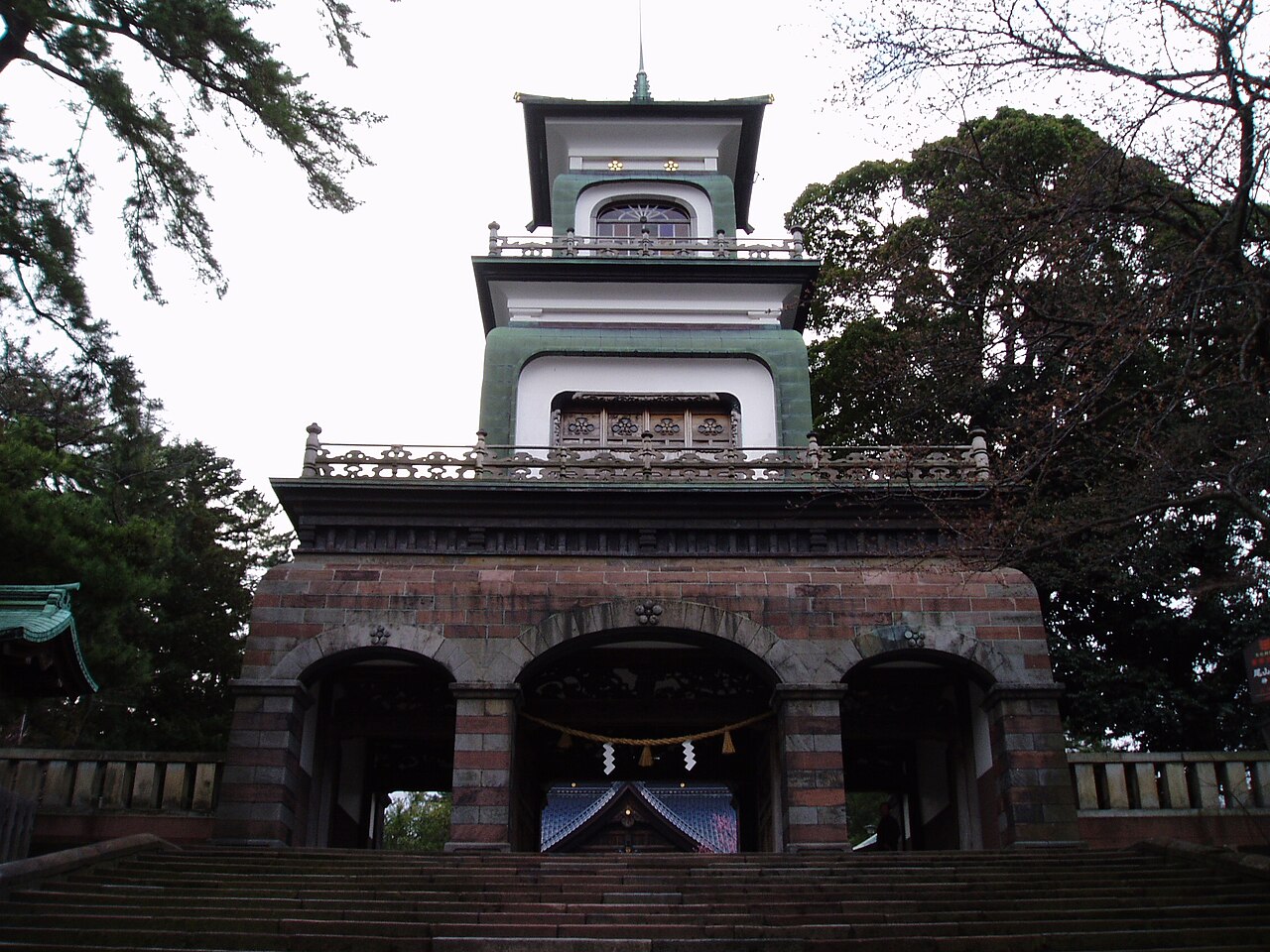
Oyama Jinja Shrine
尾山神社 · Oyama Shrine · Oyama-jinja
overview
What this place is
Oyama Jinja is a Shinto shrine in central Kanazawa, Ishikawa Prefecture, dedicated to Maeda Toshiie, the founding lord of the Kaga domain, and his wife Omatsu-no-Kata. Founded in 1873, it is best known for its shinmon gate, completed in 1875, which blends Japanese, Chinese, and Western design and is crowned with colored stained glass. The compact precinct also includes the Shin-en garden with a pond and old trees.
- The shinmon gate of 1875, blending Japanese, Chinese, and Western design with colored stained glass
- The Shin-en garden, a landscape garden with a pond within the precinct
- A shrine to Maeda Toshiie and Omatsu-no-Kata, a married couple at the root of Kanazawa history
- A compact city-center precinct within walking distance of central Kanazawa
plan your visit
Visit facts for Oyama Jinja Shrine
- Access
- About 10 minutes by local bus from JR Kanazawa Station, then about 4 minutes on foot from the Minamicho-Oyamajinja bus stop. The shrine can also be reached on foot from central Kanazawa.
- Nearest station
- Minamicho-Oyamajinja bus stop (Hokutetsu Bus)
- Hours
- The shrine grounds are open for worship year-round. Hours for the amulet office, prayer services, the garden, and festivals vary, so check the official information before you visit.
- Fees
- The shrine grounds are free to enter. Prayer services and amulets are charged separately.
- Parking
- Available in Japanese only: 公共交通または周辺の有料駐車場を利用し、参道前へ停車しません。
- Goshuin (seal stamps)
- Goshuin (shrine seal stamps) are offered at the shrine office; reception hours can change, so follow the on-site guidance.
- Typical visit
- About 35 minutes (Unmeguri's estimate, not an official figure)
- Facts checked
- 2026-10-22
background
Enshrined deities
Maeda Toshiie · Omatsu-no-Kata (Lady Matsu)
The shrine enshrines Maeda Toshiie, founding lord of the Kaga domain, together with his wife Omatsu-no-Kata. Its gate and garden carry the history of Kanazawa from the feudal era into the modern age.
etiquette
Visiting with respect
- Bow lightly once before passing through the gate, and avoid blocking the flow of worshippers when photographing the shinmon.
- Rinse your hands at the temizuya water basin before approaching the main hall.
- The common way to pray at a shrine is two bows, two claps, and one final bow.
- Keep to the paths in the Shin-en garden and do not step among the plantings, stones, or the water's edge.
- Hours, fees and reception can change; check the official information before you go.
faq
Common questions
How do I get to Oyama Jinja Shrine?
About 10 minutes by local bus from JR Kanazawa Station, then about 4 minutes on foot from the Minamicho-Oyamajinja bus stop. The shrine can also be reached on foot from central Kanazawa. Nearest station: Minamicho-Oyamajinja bus stop (Hokutetsu Bus).
How much does it cost to visit Oyama Jinja Shrine?
The shrine grounds are free to enter. Prayer services and amulets are charged separately.
What are the opening hours of Oyama Jinja Shrine?
The shrine grounds are open for worship year-round. Hours for the amulet office, prayer services, the garden, and festivals vary, so check the official information before you visit.
Is there parking at Oyama Jinja Shrine?
Parking information for Oyama Jinja Shrine is available in Japanese only: 公共交通または周辺の有料駐車場を利用し、参道前へ停車しません。
How long should I spend at Oyama Jinja Shrine?
Unmeguri's estimate for a visit is about 35 minutes. This is an editorial estimate, not an official figure.
Can I get a goshuin at Oyama Jinja Shrine?
Goshuin (shrine seal stamps) are offered at the shrine office; reception hours can change, so follow the on-site guidance.
What is Oyama Jinja known for?
It enshrines Maeda Toshiie and Omatsu-no-Kata, and is known for its 1875 shinmon gate blending Japanese, Chinese, and Western design with stained glass.
sources
Sources and checked dates
Facts last checked on 2026-10-22. Sources are in Japanese. Unmeguri separates officially documented facts from its own editorial reading, and does not promise that any wish or outcome will be realized.