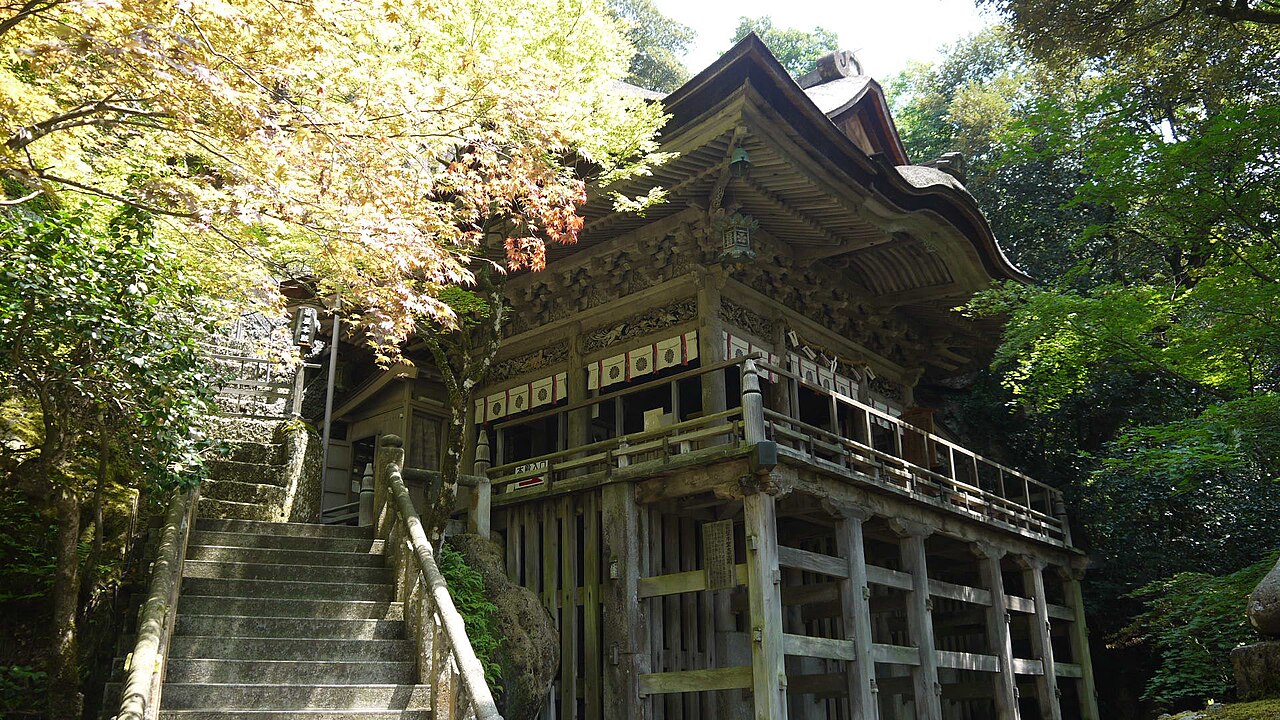
Natadera Temple
Natadera · Nata-dera · 那谷寺
overview
What this place is
Natadera is a Buddhist temple in Komatsu, Ishikawa Prefecture, whose grounds weave together caves, moss-covered woods, and the rock formations known as Kiganyusenkyo. Temple tradition holds that it was founded in 717 by the monk Taicho and later given the name Natadera by the retired Emperor Kazan. The Kondo hall, main shrine hall, three-storied pagoda, and rock landscape are preserved together as a single natural and cultural setting.
- The Kiganyusenkyo, a landscape of weathered rock formations rising over the temple grounds
- Caves and grottoes tied to a tradition that likens them to a womb from which visitors emerge renewed
- Moss-covered grounds, wooded paths, and an observation deck along the visiting route
- A standard visiting course of about 30 to 40 minutes through halls and rock scenery
plan your visit
Visit facts for Natadera Temple
- Access
- About 35 minutes by local bus from JR Kaga-Onsen Station, then about 1 minute on foot from the Natadera bus stop. Check bus days, times, and the return trip in advance.
- Nearest station
- Natadera bus stop (Hokutetsu Kaga Bus)
- Hours
- Check the official information for regular visiting hours and closures. The special viewing area has had extended closures for garden maintenance, so check its current status before you go.
- Fees
- General admission is 1,000 yen for adults and 300 yen for elementary school children. The special viewing area, when open, charges a separate fee.
- Parking
- Available in Japanese only: 公式無料駐車場を利用し、周辺道路へ駐車しません。
- Goshuin (seal stamps)
- Goshuin (temple seal stamps) are offered as a record of your visit; confirm same-day reception after worship.
- Typical visit
- About 60 minutes (Unmeguri's estimate, not an official figure)
- Facts checked
- 2026-10-22
background
Principal image
Juichimen Senju Kannon (Eleven-Headed, Thousand-Armed Kannon)
The temple joins the worship of Mount Hakusan with a tradition that regards its caves as a womb, and its principal image is a hidden statue of the Eleven-Headed, Thousand-Armed Kannon.
etiquette
Visiting with respect
- Keep off the rock faces, moss, and any steps beyond the barriers, and follow the signs protecting the cultural properties.
- Do not enter the special viewing area while it is closed for garden maintenance.
- At the halls, place a donation in the offering box, put your hands together quietly, and bow; unlike at a shrine, you do not clap at a temple.
- Prayers for health and recovery are a matter of faith and are not a substitute for medical care.
- Hours, fees and reception can change; check the official information before you go.
faq
Common questions
How do I get to Natadera Temple?
About 35 minutes by local bus from JR Kaga-Onsen Station, then about 1 minute on foot from the Natadera bus stop. Check bus days, times, and the return trip in advance. Nearest station: Natadera bus stop (Hokutetsu Kaga Bus).
How much does it cost to visit Natadera Temple?
General admission is 1,000 yen for adults and 300 yen for elementary school children. The special viewing area, when open, charges a separate fee.
What are the opening hours of Natadera Temple?
Check the official information for regular visiting hours and closures. The special viewing area has had extended closures for garden maintenance, so check its current status before you go.
Is there parking at Natadera Temple?
Parking information for Natadera Temple is available in Japanese only: 公式無料駐車場を利用し、周辺道路へ駐車しません。
How long should I spend at Natadera Temple?
Unmeguri's estimate for a visit is about 60 minutes. This is an editorial estimate, not an official figure.
Can I get a goshuin at Natadera Temple?
Goshuin (temple seal stamps) are offered as a record of your visit; confirm same-day reception after worship.
What is Natadera known for?
It is known for the Kiganyusenkyo rock formations, caves tied to a tradition of renewal, moss-covered grounds, and a three-storied pagoda, with a temple history said to begin in 717.
sources
Sources and checked dates
Facts last checked on 2026-10-22. Sources are in Japanese. Unmeguri separates officially documented facts from its own editorial reading, and does not promise that any wish or outcome will be realized.