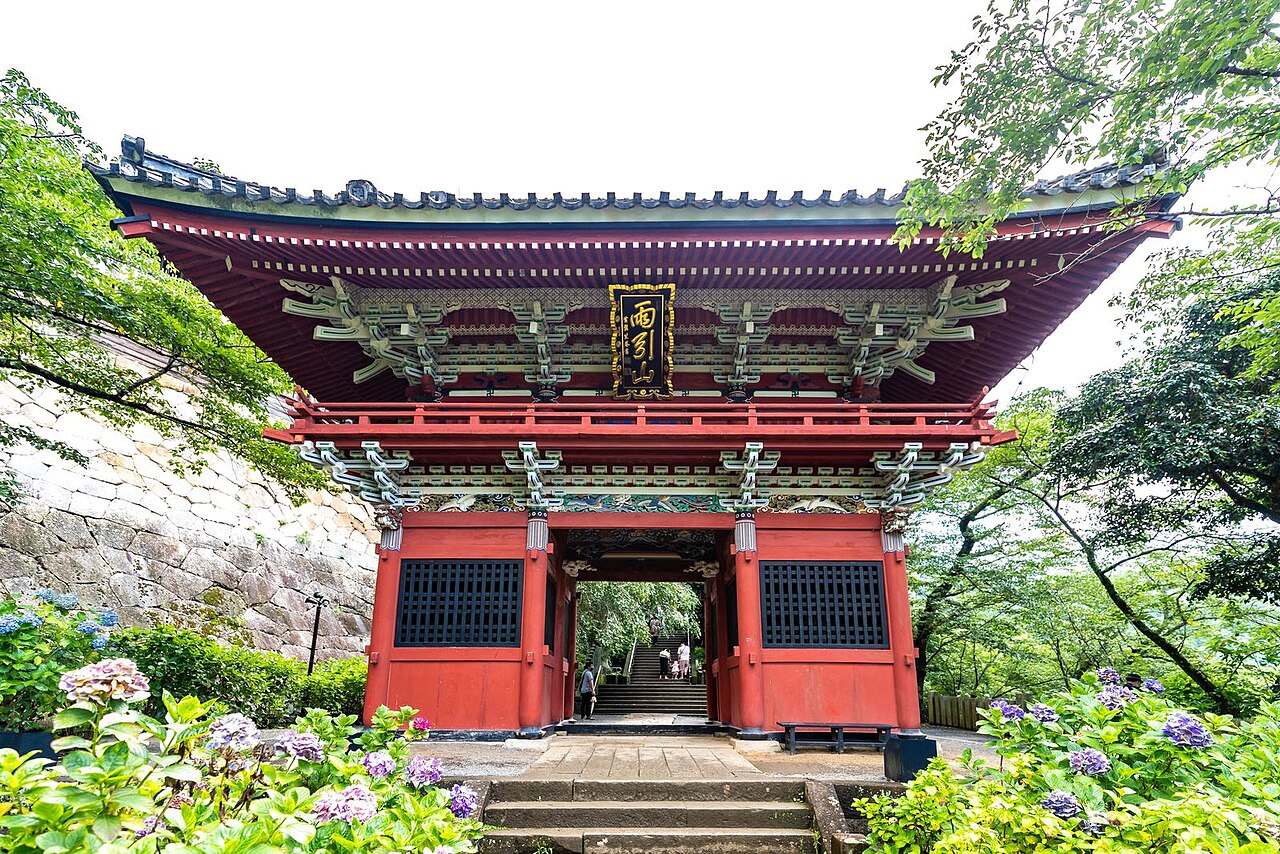
Amabikisan Rakuhoji Temple
Amabiki Kannon · Rakuho-ji · 雨引山楽法寺
overview
What this place is
Rakuhoji in Sakuragawa, known as Amabiki Kannon, is the twenty-fourth of the thirty-three Bando Kannon temples and has the Enmei Kannon as its principal image. The city relates that Horin Dokushu Koji, who had come from China, opened it in 587, that it received the devotion of Emperor Shomu and Empress Komyo, and that it later became a Shingon hall under Kobo Daishi. It is widely known today for safe childbirth and the raising of children.
- The twenty-fourth of the thirty-three Bando Kannon temples
- The Enmei Kannon, the temple’s principal image
- A fire rite offered every hour through the day
- Cherry blossom and hydrangeas in their seasons, on the hillside grounds
plan your visit
Visit facts for Amabikisan Rakuhoji Temple
- Access
- About 105 minutes from Tokyo Station by JR to Iwase Station, then about 10 to 15 minutes by taxi. Waiting times change the total.
- Nearest station
- JR Iwase Station
- Hours
- Visiting is 8:30 to 17:00, every day. The fire rite is held each hour from 10:00 to 16:00 except during the Obon period, with reception up to about 20 minutes before the hour you want.
- Fees
- Visiting the grounds is free. The fire rite, amulets and the maternity sash are separate.
- Parking
- Available in Japanese only: 第1〜第5駐車場に小型車約300台。公的案内間で台数表記が異なるため、混雑期は最新案内を確認。
- Goshuin (seal stamps)
- The official sources we checked do not state whether goshuin (seal stamps) are offered here. Check on site or with the latest official guidance.
- Typical visit
- About 90 minutes (Unmeguri's estimate, not an official figure)
- Facts checked
- 2026-07-29
background
Principal image
Enmei Kannon
The temple gives the Enmei Kannon as its principal image and describes itself as the twenty-fourth of the thirty-three Bando Kannon temples.
etiquette
Visiting with respect
- The grounds are on a hillside with stone steps and slopes; if you are pregnant, with small children or unsure on your feet, ask the temple beforehand about where to park and how to reach the main hall.
- Reaching the grounds is a complete visit; the fire rite is a further choice with its own reception time.
- The founding in 587 is what the city and the temple relate, not settled history.
- Do not touch the halls or the images, and follow the notices on photography.
- Being the twenty-fourth temple does not fix any order; visit as suits you.
- Hours, fees and reception can change; check the official information before you go.
faq
Common questions
How do I get to Amabikisan Rakuhoji Temple?
About 105 minutes from Tokyo Station by JR to Iwase Station, then about 10 to 15 minutes by taxi. Waiting times change the total. Nearest station: JR Iwase Station.
How much does it cost to visit Amabikisan Rakuhoji Temple?
Visiting the grounds is free. The fire rite, amulets and the maternity sash are separate.
What are the opening hours of Amabikisan Rakuhoji Temple?
Visiting is 8:30 to 17:00, every day. The fire rite is held each hour from 10:00 to 16:00 except during the Obon period, with reception up to about 20 minutes before the hour you want.
Is there parking at Amabikisan Rakuhoji Temple?
Parking information for Amabikisan Rakuhoji Temple is available in Japanese only: 第1〜第5駐車場に小型車約300台。公的案内間で台数表記が異なるため、混雑期は最新案内を確認。
How long should I spend at Amabikisan Rakuhoji Temple?
Unmeguri's estimate for a visit is about 90 minutes. This is an editorial estimate, not an official figure.
Can I get a goshuin at Amabikisan Rakuhoji Temple?
The official sources we checked do not state whether goshuin (seal stamps) are offered here. Check on site or with the latest official guidance.
How do I book the fire rite?
Reception is up to about 20 minutes before the hour you want, on the day. It is held every hour from 10:00 to 16:00.
What is the temple known for?
It is the twenty-fourth Bando Kannon temple and is widely known for safe childbirth and the raising of children.
sources
Sources and checked dates
- 雨引観音公式ホームページ(opens in a new tab)
- 申込手順|雨引観音(opens in a new tab)
- 安産祈願|雨引観音(opens in a new tab)
- お守りの紹介|雨引観音(opens in a new tab)
- 年中行事のご案内|雨引観音(opens in a new tab)
- 雨引観音(雨引山楽法寺)|桜川市(opens in a new tab)
- 雨引観音|観光いばらき(opens in a new tab)
Facts last checked on 2026-07-29. Sources are in Japanese. Unmeguri separates officially documented facts from its own editorial reading, and does not promise that any wish or outcome will be realized.