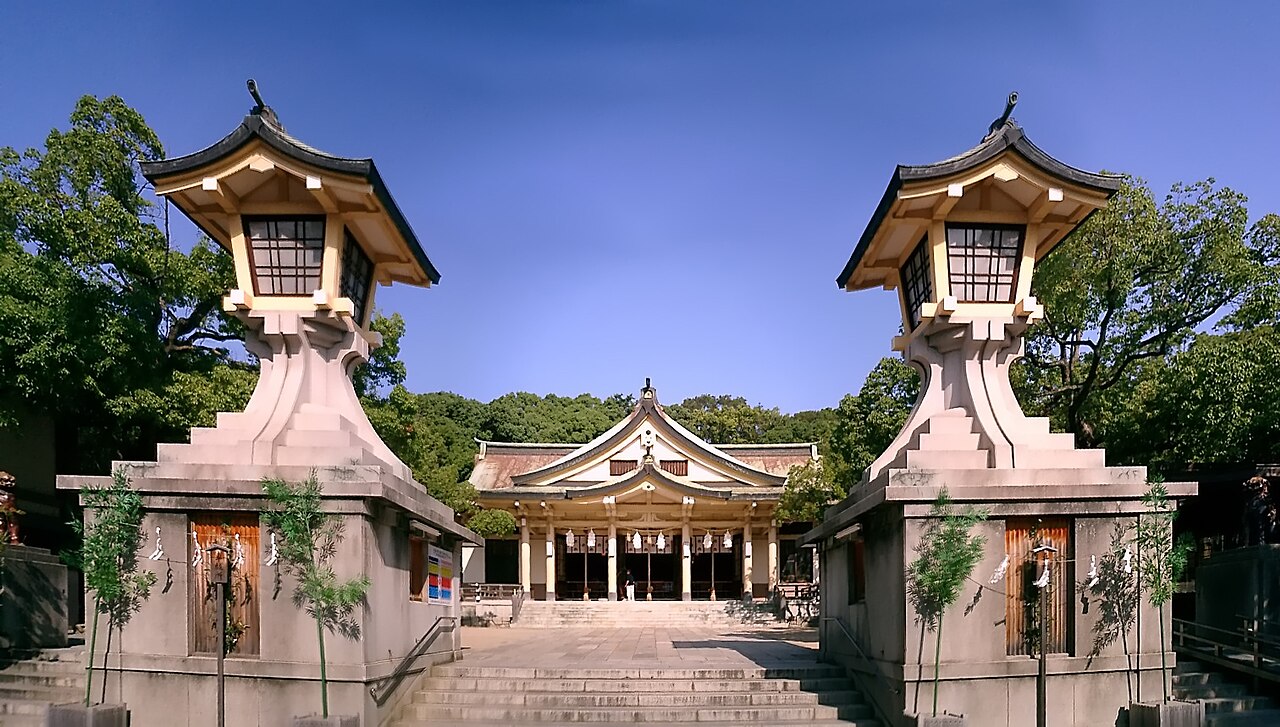
Minatogawa Shrine
Minatogawa Jinja · Nanko-san · 湊川神社
overview
What this place is
Minatogawa Shrine stands about three minutes on foot north of JR Kobe Station. It enshrines Kusunoki Masashige, a commander of the Nanbokucho period, together with his son Masatsura and the sixteen of his kin and Kikuchi Takeyoshi who died at the battle of Minatogawa in 1336. The place where they are said to have died is a nationally designated historic site within the grounds, and the shrine itself was founded in 1872 at the order of the Meiji Emperor.
- The site within the grounds where the dead of 1336 are commemorated, a nationally designated historic site
- The grave, with the monument raised by Tokugawa Mitsukuni in 1692
- A hall rebuilt after the war of 1945, with 164 ceiling paintings offered by artists from across Japan
- A treasure hall holding swords, armour and paintings connected with the shrine
plan your visit
Visit facts for Minatogawa Shrine
- Access
- About 170 minutes from Tokyo Station by Shinkansen to Shin-Kobe and on by subway or JR, then about 3 minutes on foot north from JR Kobe Station. The east ticket gate of Kosoku-Kobe Station comes out beside the shrine.
- Nearest station
- JR Kobe Station / Kosoku-Kobe Station (Hanshin, Hankyu and Sanyo lines)
- Hours
- The gate hours change month by month, so check the official notice before you set out. The amulet office is open from 9:00 to 17:00 and prayer reception until 16:30. The treasure hall is open from 10:00 to 15:00 and closed on Wednesdays.
- Fees
- No admission fee for ordinary worship is published. A prayer service is from 10,000 yen and the special kagura form from 30,000 yen. The treasure hall is 300 yen for adults, 200 yen for high-school and university students and 100 yen for younger pupils. A goshuin is 500 yen.
- Parking
- Available in Japanese only: 公式アクセスは車の経路を案内していますが、通常参拝用駐車場の台数・料金・利用条件を掲載していません。近隣有料駐車場、祈祷車両の入口、祭典時の規制を直前確認し、正門前、多聞通、祈祷車両の動線で待機しません。駅から近いため公共交通も選択肢にします。
- Goshuin (seal stamps)
- A goshuin is 500 yen. The desk follows the amulet office, generally 9:00 to 17:00, and changes for the New Year and the summer festival.
- Typical visit
- About 75 minutes (Unmeguri's estimate, not an official figure)
- Facts checked
- 2026-10-22
background
Enshrined deities
Kusunoki Masashige · Kusunoki Masatsura · The sixteen of his kin who died at Minatogawa, and Kikuchi Takeyoshi
The chief deity is Kusunoki Masashige, a commander of the Nanbokucho period, enshrined with his son Masatsura and with the sixteen of his kin and Kikuchi Takeyoshi who died at the battle of Minatogawa. The official history speaks of wisdom, benevolence and courage, and of wholehearted sincerity; it is a reading of history, not a call to obey without question or to harm oneself.
etiquette
Visiting with respect
- Bow lightly once before passing through the torii gate, and rinse your hands at the water basin before approaching the hall.
- Do not touch, climb or lean on the great stone lanterns, the ropes, the steps, the halls, the grave monument or the marks of the historic site, and do not move the offerings.
- Wisdom, benevolence and courage are not grounds for obeying an employer, an organisation or a partner without question, for unlawful acts, for violence, for overwork or for stopping treatment.
- Do not re-enact or stage the deaths of 1336; the site is a place of quiet remembrance, not a setting for a photograph.
- If thoughts of harming yourself grow stronger, leave the site, do not carry it alone, and reach someone close to you, a doctor or an emergency service.
- The story of the retreat from Akasaka and the later return is part of the same history: withdrawing, postponing, declining or asking for help is not a defeat.
- The sake offered is not an invitation to drink; drivers, those on medication, pregnant visitors and anyone under age need only touch the cup to their lips, as the shrine itself notes.
- Do not read the swords, armour and battle paintings in the treasure hall as encouragement to violence or as hostility towards any people of the past.
- Hours, fees and reception can change; check the official information before you go.
faq
Common questions
How do I get to Minatogawa Shrine?
About 170 minutes from Tokyo Station by Shinkansen to Shin-Kobe and on by subway or JR, then about 3 minutes on foot north from JR Kobe Station. The east ticket gate of Kosoku-Kobe Station comes out beside the shrine. Nearest station: JR Kobe Station / Kosoku-Kobe Station (Hanshin, Hankyu and Sanyo lines).
How much does it cost to visit Minatogawa Shrine?
No admission fee for ordinary worship is published. A prayer service is from 10,000 yen and the special kagura form from 30,000 yen. The treasure hall is 300 yen for adults, 200 yen for high-school and university students and 100 yen for younger pupils. A goshuin is 500 yen.
What are the opening hours of Minatogawa Shrine?
The gate hours change month by month, so check the official notice before you set out. The amulet office is open from 9:00 to 17:00 and prayer reception until 16:30. The treasure hall is open from 10:00 to 15:00 and closed on Wednesdays.
Is there parking at Minatogawa Shrine?
Parking information for Minatogawa Shrine is available in Japanese only: 公式アクセスは車の経路を案内していますが、通常参拝用駐車場の台数・料金・利用条件を掲載していません。近隣有料駐車場、祈祷車両の入口、祭典時の規制を直前確認し、正門前、多聞通、祈祷車両の動線で待機しません。駅から近いため公共交通も選択肢にします。
How long should I spend at Minatogawa Shrine?
Unmeguri's estimate for a visit is about 75 minutes. This is an editorial estimate, not an official figure.
Can I get a goshuin at Minatogawa Shrine?
A goshuin is 500 yen. The desk follows the amulet office, generally 9:00 to 17:00, and changes for the New Year and the summer festival.
What is Minatogawa Shrine known for?
It is known for enshrining Kusunoki Masashige, for the historic site of the battle of 1336 within its grounds, and for the 164 ceiling paintings in its hall.
sources
Sources and checked dates
- 湊川神社 公式サイト(opens in a new tab)
- 湊川神社の由緒(opens in a new tab)
- 楠木正成公のご生涯(opens in a new tab)
- 湊川神社創建の歴史(opens in a new tab)
- 境内案内|湊川神社(opens in a new tab)
- 参拝の作法|湊川神社(opens in a new tab)
- 楠公史跡|湊川神社(opens in a new tab)
- 交通・アクセス|湊川神社(opens in a new tab)
- 年間の開閉門時間|湊川神社(opens in a new tab)
- 祈願・祈祷|湊川神社(opens in a new tab)
- その他一般祈願・祈祷|湊川神社(opens in a new tab)
- 御神札・御守|湊川神社(opens in a new tab)
- 御朱印・御朱印帳|湊川神社(opens in a new tab)
- 宝物殿|湊川神社(opens in a new tab)
- 名所めぐり 湊川神社|兵庫県立歴史博物館(opens in a new tab)
- まもろうよ こころ|厚生労働省(opens in a new tab)
Facts last checked on 2026-10-22. Sources are in Japanese. Unmeguri separates officially documented facts from its own editorial reading, and does not promise that any wish or outcome will be realized.