Izanagi Jingu Shrine
Izanagi Shrine · Izanagi-jingu · 伊弉諾神宮
overview
What this place is
Izanagi Jingu stands in Awaji, Hyogo Prefecture, and is the leading shrine (ichinomiya) of the old Awaji Province. It enshrines Izanagi-no-Okami with Izanami-no-Okami. The shrine relates that, having finished the making of the land, Izanagi entrusted its rule to Amaterasu and passed his last years in a quiet palace at Taga in Awaji, and that the shrine began where his resting place was honoured. It became Izanagi Jingu under that name in 1954.
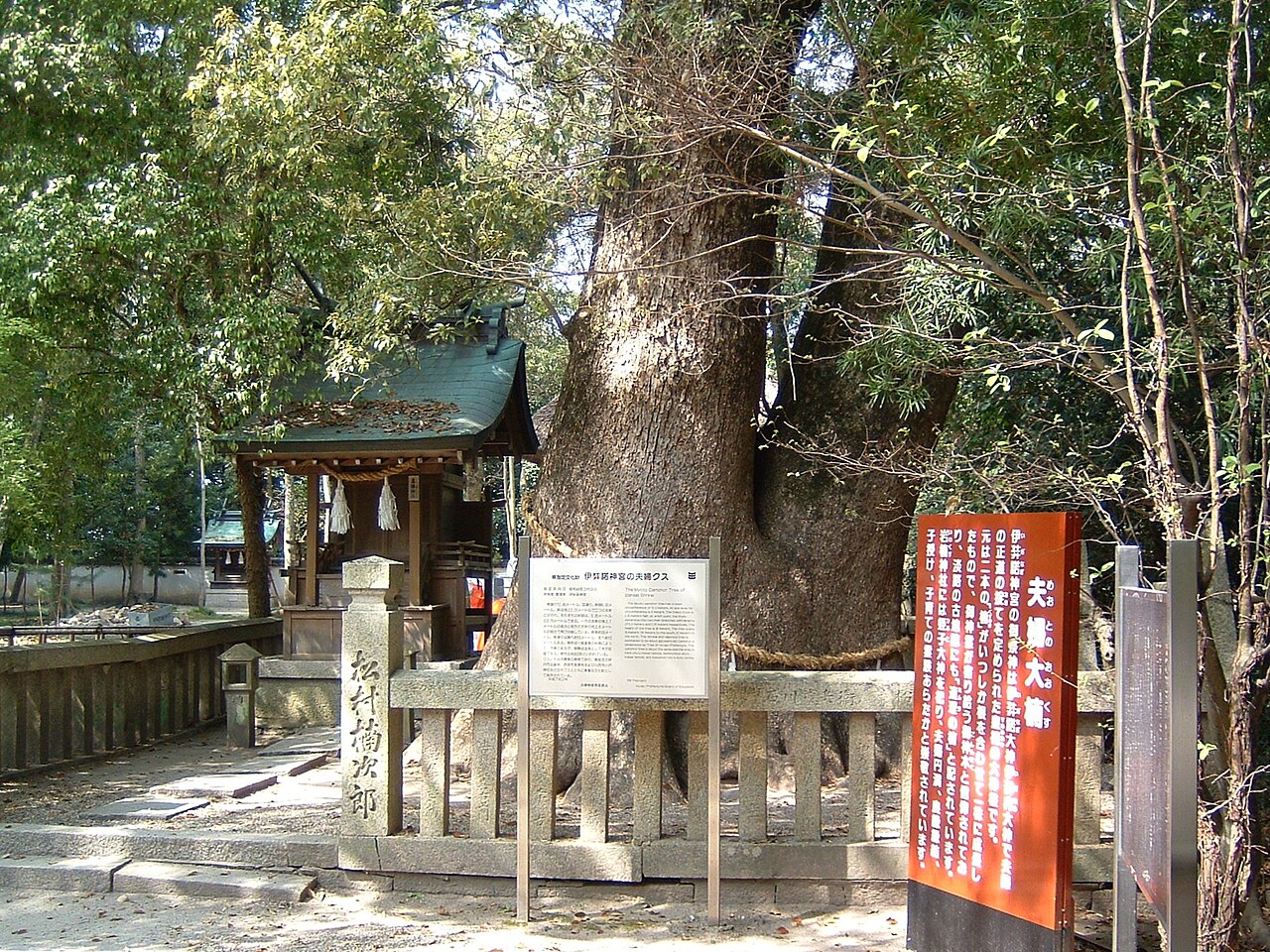
- The Meoto-no-Okusu, a great camphor designated a prefectural natural monument in 1973
- A tree the city gives as about 30 metres high with a spread of 12 to 20.5 metres
- Iwakusu Shrine, standing beside the great camphor
- A shrine listed in the Engishiki as a myojin taisha and revered as the ichinomiya of Awaji since the late Heian period
plan your visit
Visit facts for Izanagi Jingu Shrine
- Access
- About 260 minutes from Tokyo Station by Shinkansen to Shin-Kobe and the subway to Sannomiya, then by highway bus towards the west and north of Awaji to the Izanagi Jingu-mae stop, right by the shrine. Services vary by day, so confirm the return as well as the outward journey.
- Nearest station
- Izanagi Jingu-mae bus stop
- Hours
- Public tourist information gives the shrine as open for worship at any hour, all year, with the shrine office from 8:30 to 17:00. Being open at any hour does not mean lighting, staff, amulets, prayers or buses are available at night; visit in daylight.
- Fees
- The pages available do not set out an admission fee, or the kinds and amounts for prayer services, tablets, amulets, votive tablets and goshuin. Do not assume they are free or guess a price; ask at the shrine office if you need one.
- Parking
- Available in Japanese only: 兵庫県神社庁の施設ページは駐車場欄を空欄とし、淡路島観光協会の現行ページも台数・料金・対応車種を掲載していません。駐車可能と決め付けず、入口、台数、大型車、対応区画、祭典時の規制を神宮へ確認します。津名一宮ICからの所要は渋滞を含めて見積もり、路上待機や送迎場所での長時間停車をしません。
- Typical visit
- About 75 minutes (Unmeguri's estimate, not an official figure)
- Facts checked
- 2026-10-22
background
Enshrined deities
Izanagi-no-Okami · Izanami-no-Okami
The shrine enshrines Izanagi-no-Okami with Izanami-no-Okami. The account of the making of the land and of the birth of the gods, of the pair of deities and of the quiet palace, comes from the Kojiki and the Nihon Shoki and from the shrine tradition; it is read here as belief and as story, not as a description of how land was formed or of how a family should be.
etiquette
Visiting with respect
- Bow lightly once before passing through the torii gate, and rinse your hands at the water basin before approaching the hall.
- Do not touch, climb or lean on the roots, trunk, branches, rope, fence or signs of the great camphor, and do not step inside the fence.
- The two trunks grown into one are a form the tree took; they are not a duty to marry, to live together, to stay together, or a test of how well two people match.
- The faith in ties between people is not a reason to press someone for contact, to wait for them, to follow them or to approach after being refused.
- Where there is violence, threat, surveillance, financial control or coercion, safety comes before any wish to repair a relationship; reach a support service.
- The faith in safe birth and children is not an assurance about pregnancy or delivery, nor a reason to press anyone, nor a substitute for antenatal care.
- Do not look directly at the sun at the sundial monument, and do not treat it as an instrument that measures health, relationships, direction or a decision.
- The old address izanagi-jingu.jp now forwards elsewhere and is not the shrine; use the current site and telephone number given by the tourist association.
- Hours, fees and reception can change; check the official information before you go.
faq
Common questions
How do I get to Izanagi Jingu Shrine?
About 260 minutes from Tokyo Station by Shinkansen to Shin-Kobe and the subway to Sannomiya, then by highway bus towards the west and north of Awaji to the Izanagi Jingu-mae stop, right by the shrine. Services vary by day, so confirm the return as well as the outward journey. Nearest station: Izanagi Jingu-mae bus stop.
How much does it cost to visit Izanagi Jingu Shrine?
The pages available do not set out an admission fee, or the kinds and amounts for prayer services, tablets, amulets, votive tablets and goshuin. Do not assume they are free or guess a price; ask at the shrine office if you need one.
What are the opening hours of Izanagi Jingu Shrine?
Public tourist information gives the shrine as open for worship at any hour, all year, with the shrine office from 8:30 to 17:00. Being open at any hour does not mean lighting, staff, amulets, prayers or buses are available at night; visit in daylight.
Is there parking at Izanagi Jingu Shrine?
Parking information for Izanagi Jingu Shrine is available in Japanese only: 兵庫県神社庁の施設ページは駐車場欄を空欄とし、淡路島観光協会の現行ページも台数・料金・対応車種を掲載していません。駐車可能と決め付けず、入口、台数、大型車、対応区画、祭典時の規制を神宮へ確認します。津名一宮ICからの所要は渋滞を含めて見積もり、路上待機や送迎場所での長時間停車をしません。
How long should I spend at Izanagi Jingu Shrine?
Unmeguri's estimate for a visit is about 75 minutes. This is an editorial estimate, not an official figure.
How old is the great camphor?
The city gives an estimate of about 750 years and the shrine speaks of about 900; both are estimates, and the tree was designated a prefectural natural monument in 1973.
sources
Sources and checked dates
- 伊弉諾神宮 御由緒|せきれいの里(opens in a new tab)
- 幽宮|せきれいの里(opens in a new tab)
- 伊弉諾神宮 境内地図|せきれいの里(opens in a new tab)
- 夫婦大楠|せきれいの里(opens in a new tab)
- 伊弉諾神宮 歳時記|せきれいの里(opens in a new tab)
- 伊弉諾神宮 バスのご案内|せきれいの里(opens in a new tab)
- 伊弉諾神宮|淡路島観光協会(opens in a new tab)
- 伊弉諾神宮|兵庫県神社庁(opens in a new tab)
- 名所めぐり 伊弉諾神宮|兵庫県立歴史博物館(opens in a new tab)
- 伊弉諾神宮の夫婦クス|淡路市(opens in a new tab)
- 淡路一宮 国生み伝説のみち|兵庫県(opens in a new tab)
- 高速バス 時刻表・運賃表|淡路交通(opens in a new tab)
- 性と健康の相談センター事業|こども家庭庁(opens in a new tab)
- 妊娠・出産|こども家庭庁(opens in a new tab)
- DV相談について|内閣府男女共同参画局(opens in a new tab)
Facts last checked on 2026-10-22. Sources are in Japanese. Unmeguri separates officially documented facts from its own editorial reading, and does not promise that any wish or outcome will be realized.